
Last updated November 15, 2026
 Wrought iron
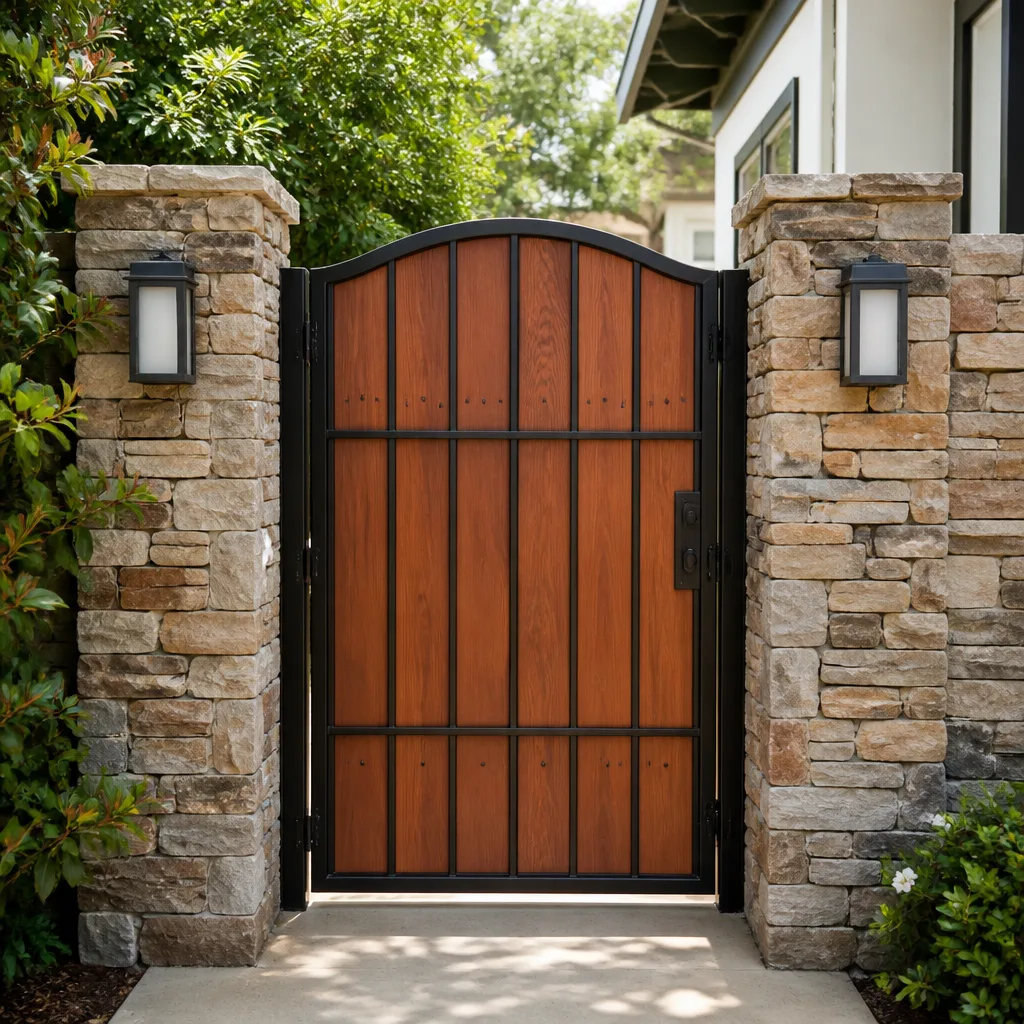 Wood & steel frame
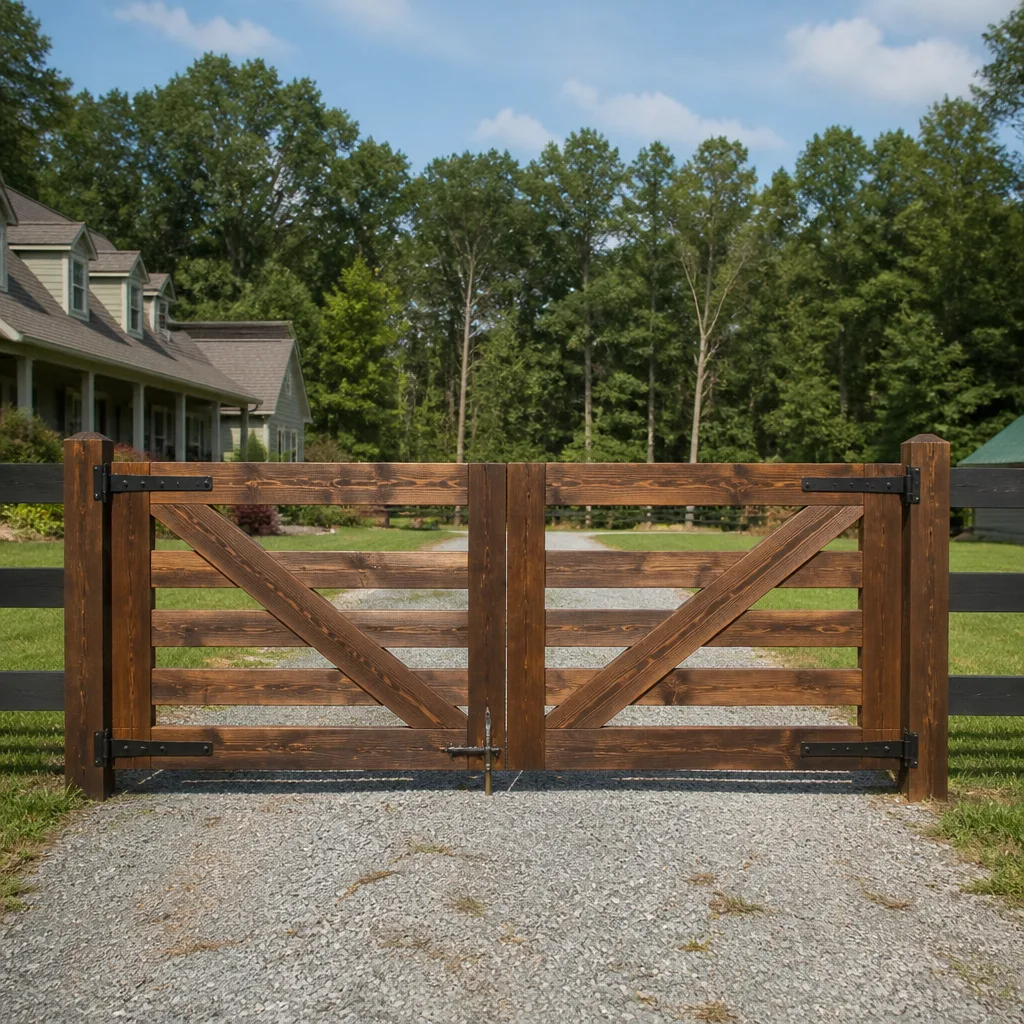 Farm & ranch
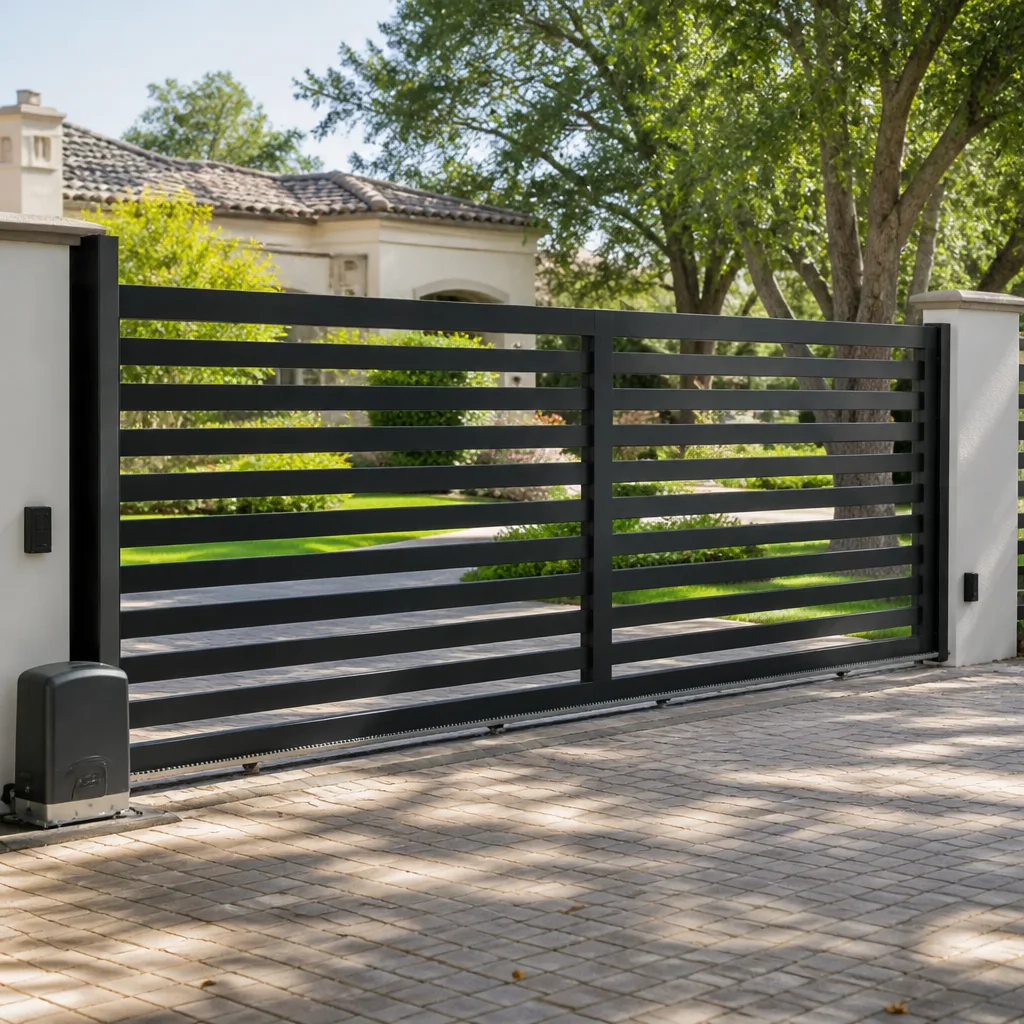 Sliding driveway gates
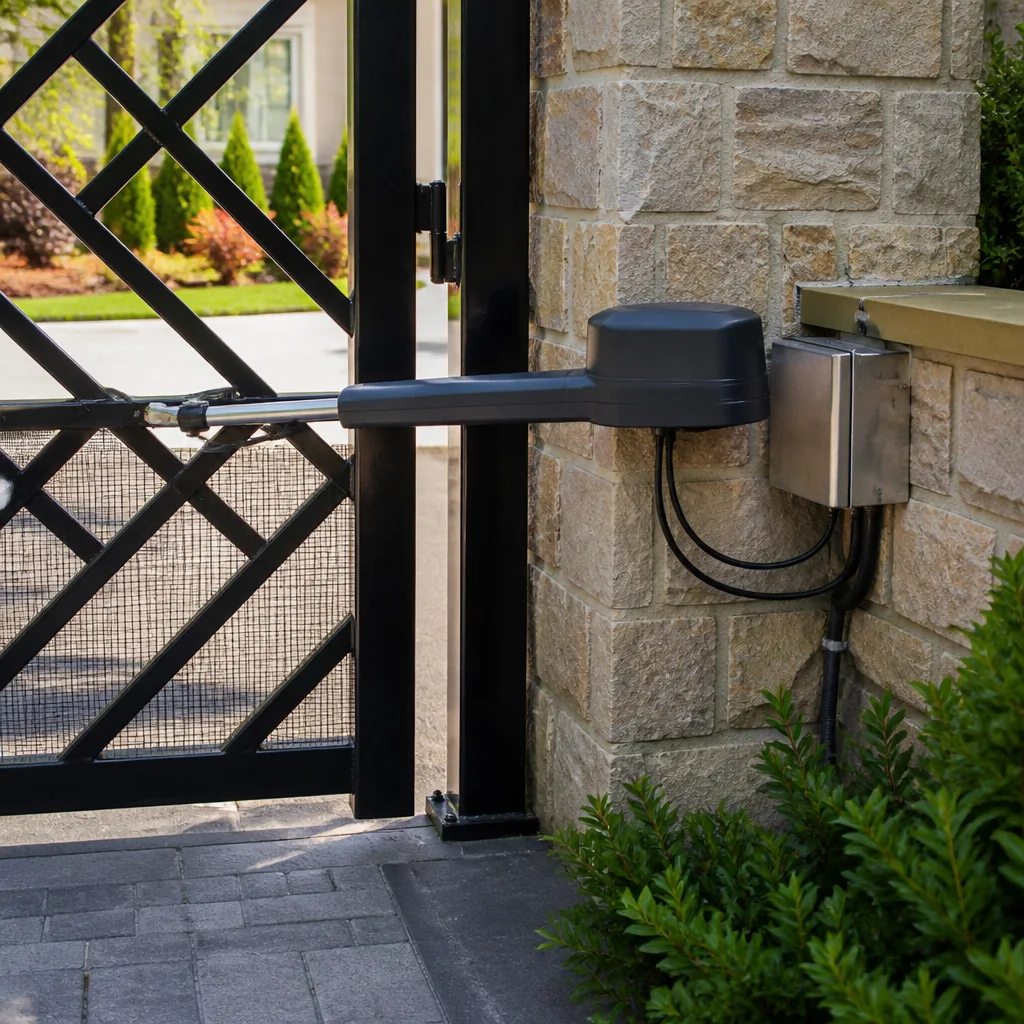 LiftMaster operators
Free on-site gate assessment - hinges, posts, and your LiftMaster or Nice gate operator checked before anything is quoted
The assessment is free and the quote is the invoice.
Get your free estimateGate Repair Permits, Codes & Inspections in Naperville, IL: What You Need to Know
Most Naperville homeowners assume permits attach to the gate itself. They don’t. Swapping a gate operator is usually just equipment work. Running new electrical service to feed that operator is construction, and construction needs a permit. That gap catches people years after the work is done, most often when a buyer’s inspector finds it. In this guide we map where the lines actually fall: what triggers a permit in Naperville, what doesn’t, how the inspection works, and how HOA overlay rules stack on top of city code.
Quick Answer
Replacing a gate operator or repairing a gate mechanism in Naperville generally does not require a building permit. Adding new electrical service, a new circuit, or a new power run to feed an automated gate almost always does, and that electrical work has to be inspected. Fence and gate structures themselves are governed by the city’s fence and zoning rules on height and setback, and many Naperville subdivisions add HOA rules that go further than city code.
Styles & brands we work with
- Wrought iron
- Wood & steel frame
- Farm & ranch
- Sliding driveway gates
- LiftMaster operators
Table of Contents
- Why Gate Permits Trip People Up in Naperville
- What Naperville’s Code Says About Fence and Gate Structures
- When Does a Gate Project Trigger an Electrical Permit?
- HOA Overlay Rules: The Rules That Exist Beside City Code
- What the Inspection Process Looks Like
- How Unpermitted Gate Work Affects Insurance and Disclosures
- Repair, Replacement, or New Installation: Which Path Are You On?
- Common Mistakes to Avoid
Why Gate Permits Trip People Up
The confusion comes from bundling two very different kinds of work into one project. A gate repair is mechanical: a hinge, a roller, a control board, a motor that quit. An electrical permit is about the circuit feeding that equipment, not the equipment itself. When you replace a Mighty Mule operator on an existing circuit, the permit question usually doesn’t come up. When the old gate had no power at all and you’re trenching a line to add a LiftMaster operator, you’ve moved into regulated territory.
Naperville’s housing stock makes this more common than you’d think. Lots of homes here have a driveway gate or a side-yard gate that was manual for years and then got automated, and the electrical side of that upgrade is exactly where paperwork gets skipped. The workmanship can be perfectly fine and the paperwork still missing. That’s the worst combination, because nothing shows up until someone checks.
There’s a seasonal dimension too. Our freeze-thaw cycles push posts, shift hinges, and stress operators harder than in milder climates. That drives a steady volume of Gate Repair Naperville calls, and a good share of them turn into conversations about whether the fix needs a permit. Most of the time it doesn’t. The ones that do are usually electrical.
Here’s what you’ll learn below: the structure rules that apply to gate posts, exactly when an electrical permit is triggered, how HOA overlays interact with city code, what an inspection looks like in practice, and how unpermitted work shows up at insurance and closing time.
What Naperville’s Code Says About Fence and Gate Structures
Naperville regulates fences and gate structures through its fence ordinance and zoning code, and the rules that matter most for gate work are height and setback. The practical ones:
- Height limits. Residential fences and gates have a maximum height, and the limit can differ between a rear yard and a front or corner-side yard. A gate that matches an existing six-foot fence is usually fine in back and sometimes not in front.
- Setback and sight lines. Corner lots get extra attention because of visibility triangles at intersections. A gate placed in the wrong spot on a corner lot can create a code problem even if the height is fine.
- Post replacement counts. If you’re replacing a gate post, the post is part of the structure. Replacing it in the same location at the same height is a repair. Moving it, raising it, or rebuilding the gate wider is a structural change that can pull the project into permit territory.
- Property lines. Gates and fences need to sit on your side of the line. A survey is the only reliable way to know, and Naperville’s older subdivisions have plenty of fences that have crept over the years.
We don’t quote code sections from memory, and neither should anyone advising you. The exact language and current limits belong to the City of Naperville’s building and zoning departments, and a quick call there settles it. If you’re replacing a post in kind, our experience is that it’s treated as maintenance. If the gate is growing, changing position, or changing height, ask before you dig.
When Does a Gate Project Trigger an Electrical Permit?
This is the section that matters most, because it’s where the gray zone lives. Illinois adopts the National Electrical Code as its electrical standard, and Naperville administers permits and inspections locally under that framework. The rule of thumb we give homeowners: if you’re working on the circuit, you need a permit. If you’re working on the equipment plugged into an existing circuit, you usually don’t.
Projects that typically require an electrical permit:
- Running a new buried line from the house or a panel out to a gate operator.
- Adding a new circuit or breaker to feed gate equipment.
- Installing a new receptacle, disconnect, or power pedestal at the gate line.
- Relocating existing gate power, or replacing an underground feed because it failed.
- Any new automated gate where no power existed before.
Projects that typically do not:
- Replacing a failed operator on an existing, permitted circuit.
- Swapping a control board, motor, or limit switch on existing equipment.
- Repairing hinges, rollers, latches, tracks, or gate framing.
- Replacing a battery or solar component on a self-contained system.
Two safety notes belong here. Gate operators combine household voltage with moving machinery and safety edges, and the wiring that feeds them is not a place for guesswork. A gate also has no torsion springs, so the danger isn’t spring tension, it’s the electrical supply, heavy panels that can crush, and slide gates that come off the track. Any work on the power side should be done by a licensed electrician working to code, and any work on the gate mechanism should go to a technician who knows the system. When someone calls us about an electric gate repair, the first question we ask is whether the power side has ever been permitted. It changes how we approach the diagnosis.
One more distinction worth knowing: low-voltage control wiring and safety-edge wiring are usually treated differently from line-voltage power. If the only change is a new safety edge or a control wire, the permit picture is often simpler. Ask the city to confirm for your specific address.
HOA Overlay Rules: The Rules That Exist Beside City Code
Naperville has a large share of planned subdivisions with active associations, and this is where homeowners get blindsided. City code sets the floor. Your HOA sets the ceiling, and the two run on separate tracks. A gate that passes city inspection can still violate the association’s architectural standards, and the association has no obligation to accept the city’s approval as its own.
What we see associations regulate most often:
- Style and material. Ornamental iron, wood, vinyl, and composite each come with rules about what’s allowed on a given lot and what has to match neighboring properties.
- Color. Associations frequently specify acceptable colors or finishes. This is easy to get wrong because gate hardware arrives in a limited set of factory finishes.
- Visibility from the street. Some subdivisions restrict gate height or opacity so the front elevation stays consistent.
- Operator noise and sight lines. For automated gates, some associations care about noise and about how the operator and its housing look from common areas.
- Architectural review. Most associations have a review process before exterior work starts. Paperwork filed afterward is a headache.
The workable approach is simple. Before you order anything, get the association’s written architectural guidelines and submit the request. If the guideline document is vague, ask the board for a written interpretation. Those approvals sit in the same file as your city permit and your written estimate, and together they’re what protects you later.
What the Inspection Process Looks Like
For the electrical side of a gate project, the process in Naperville follows the standard sequence, and knowing it takes the mystery out of the schedule:
- Permit application. The electrician applies with the scope of work: what’s being fed, how, where the trench runs, and what equipment sits at the end of it. A simple layout drawing usually helps.
- Plan review. The city reviews the application. Straightforward residential power runs typically move through quickly.
- Underground inspection. If the line is buried, the trench and conduit get inspected before backfill. This is the step people skip by backfilling early, and it’s a common reason a project stalls.
- Rough-in inspection. Wiring, boxes, and grounding get checked before everything is closed up.
- Final inspection. The inspection happens with the equipment in place. That means the operator, disconnects, and safety devices need to be installed and wired.
- Sign-off. The permit is closed and the inspection record exists in the city’s files.
Timelines vary with the city’s current workload and with how complete the application is. The one thing we’d tell any Naperville homeowner is to build the inspection sequence into the project schedule from the start rather than treating it as an afterthought. When we’re doing a new installation, we want to know the permit status before we touch the gate, because it determines the order of work. For an automated gate on a commercial or HOA property running BFT or DoorKing equipment, the process is the same, but the service and access-control documentation is more involved.
How Unpermitted Gate Work Affects Insurance and Disclosures
This is the part nobody thinks about in year one. Unpermitted electrical work doesn’t announce itself. It sits quietly until one of two things happens: a claim, or a sale.
On the insurance side, a homeowners policy responds to a covered loss, but an insurer can raise questions about work that wasn’t permitted or inspected. If a gate circuit is involved in a claim, the absence of an inspection record gives the insurer a reason to look harder at cause and to question whether the work met code. That’s not a guarantee of denial. It’s added risk in a moment when you need everything to go smoothly.
On the disclosure side, Illinois law requires sellers to disclose known material defects and known conditions affecting the property. Unpermitted work is exactly the kind of condition that becomes a negotiating point. A buyer’s inspector flags the gate circuit, the seller has to explain it, and what was a minor undocumented project becomes a remediation item with a deadline attached. The fix usually isn’t hard. The timing is. A seller with a closing date gets expensive fast, not because the work costs more, but because it has to be squeezed into a window that doesn’t exist.
One practical takeaway: if a prior owner automated the gate and you’ve never seen paperwork, it’s worth checking. A permit search at the city is inexpensive, and knowing now beats knowing at a closing table. Our gate repair technicians run into this on both sides, and the conversation is always easier years before a sale than weeks before one.
Repair, Replacement, or New Installation: Which Path Are You On?
Sort your project into one of three buckets and the permit question usually answers itself.
Repair. The gate frame, hinges, rollers, latches, or an existing operator component failed. This is maintenance on existing equipment. There’s no permit for the mechanism, and the circuit isn’t touched. Typical for older Mighty Mule or Ghost Controls residential operators where the board or motor has aged out.
Replacement. A new operator goes onto an existing, previously permitted power supply. Usually no new permit, because the electrical service isn’t changing. If the old power run is questionable, though, an electrician may want to correct it, and that correction can pull the project back into permitting.
New installation. A gate is going in where none existed, or power is being extended to a gate that never had it. This is where the electrical permit almost always applies. It’s also where we do the most upfront coordination, because the trench, the conduit, the inspection sequence, and the operator have to be planned together. For LiftMaster and FAAC systems on commercial or HOA properties, the same sequence applies with more review.
Our technicians have up to 8 years of experience across residential and light-commercial gate systems, and we work on LiftMaster, FAAC, BFT, Linear, Viking, Ghost Controls, DoorKing, Elite, and Mighty Mule equipment specifically. That matters here because the permit question often turns on how a particular operator is powered. Some residential systems run on a dedicated circuit; others are low-voltage or solar and change the analysis. Knowing the equipment is how you get an honest answer about where your project stands.
Common Mistakes to Avoid
- Skipping the permit because the gate “worked fine before.” The old gate wasn’t permitted either, and that doesn’t make it compliant. If you’re adding power where none existed, get the permit.
- Backfilling the trench before inspection. Underground electrical inspection happens before backfill. Covering the line early forces a re-dig, and the timeline cost is real.
- Treating HOA approval as a formality. In Naperville subdivisions with active associations, the board can require a change after the gate is installed. Get written approval first.
- Replacing a gate post without checking setback. A post in the same spot at the same height is maintenance. One that moves, grows, or lands on a corner lot may need review.
- Assuming a prior owner’s work was permitted. If you bought a home with an automated gate, check the city’s permit records before you need to.
- Letting a non-electrician run the power. Gate operator wiring involves line voltage and safety devices. Use a licensed electrician for the electrical side and a gate technician for the mechanism.
- Filing HOA paperwork after installation. Retrofitting a gate to match an association’s standard is far more disruptive than choosing correctly the first time.
See the difference
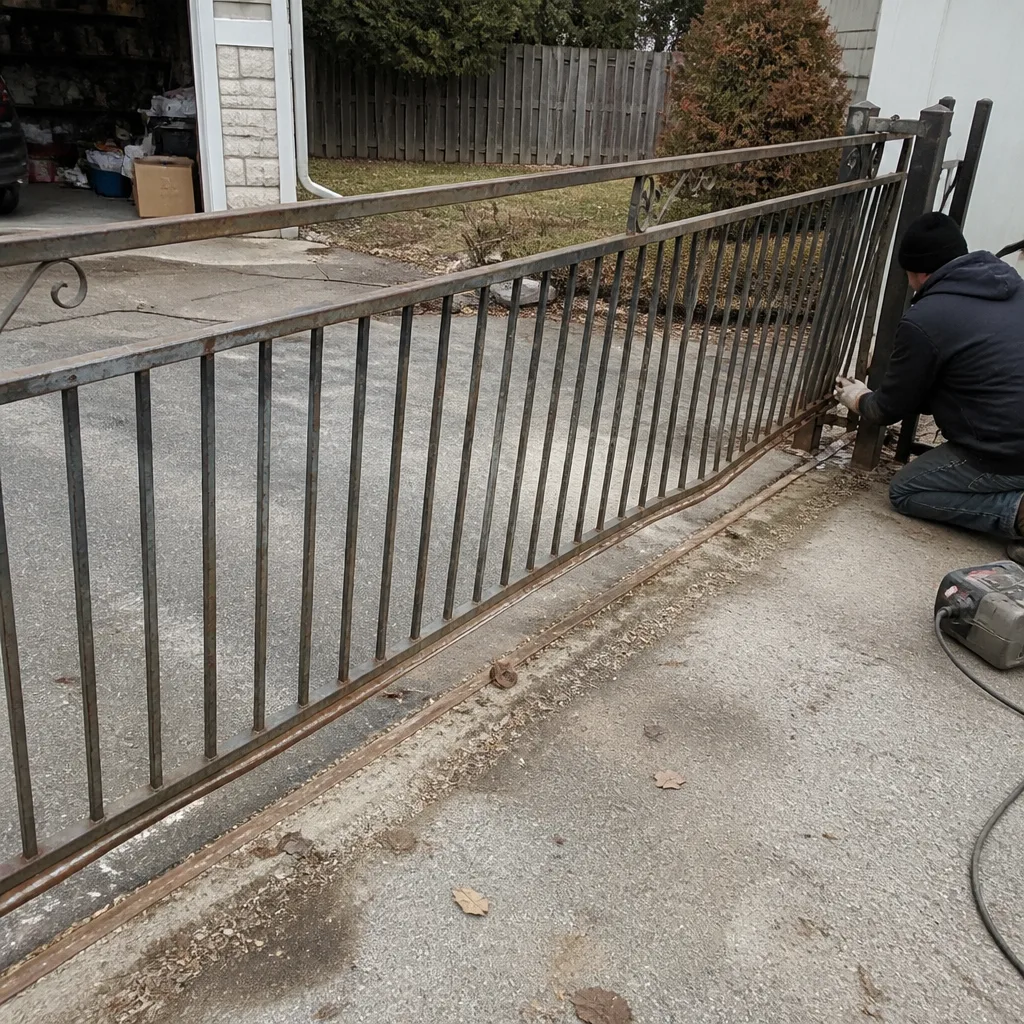 Before
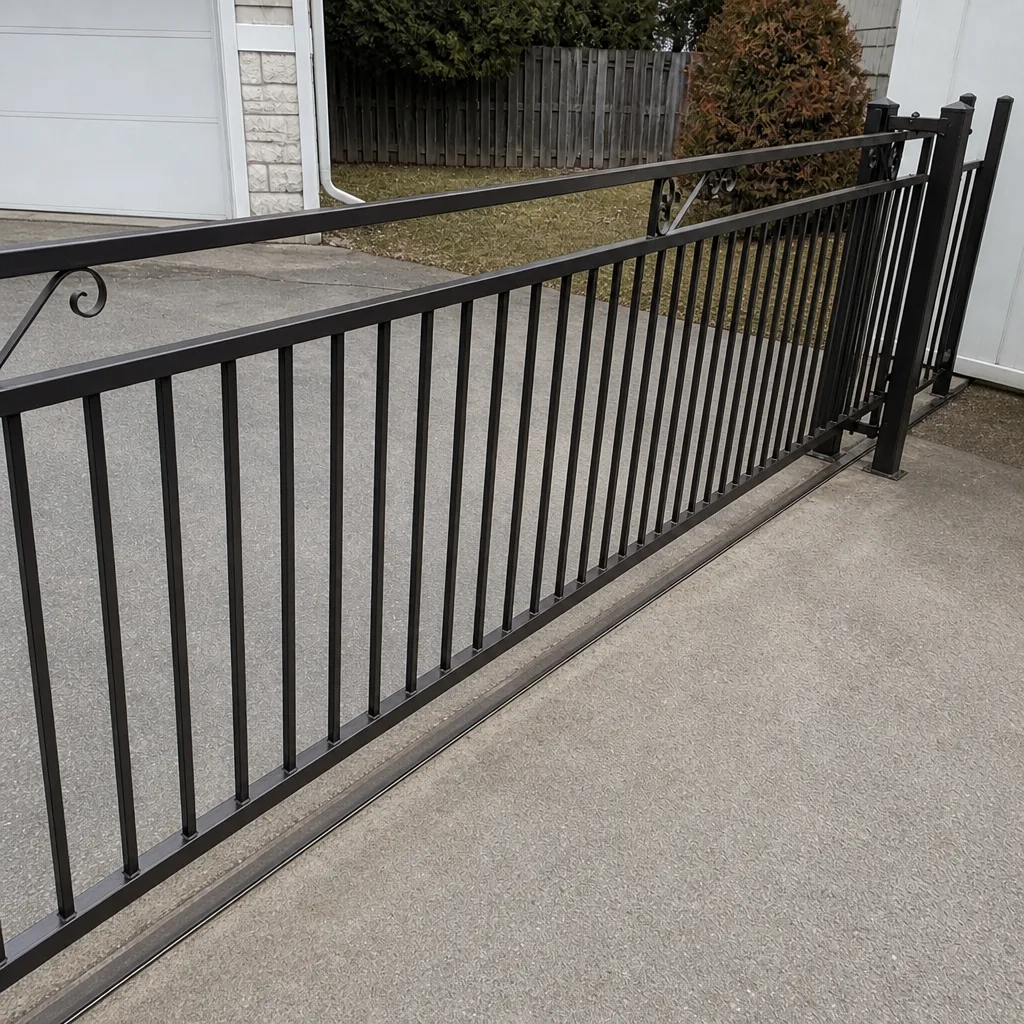 After
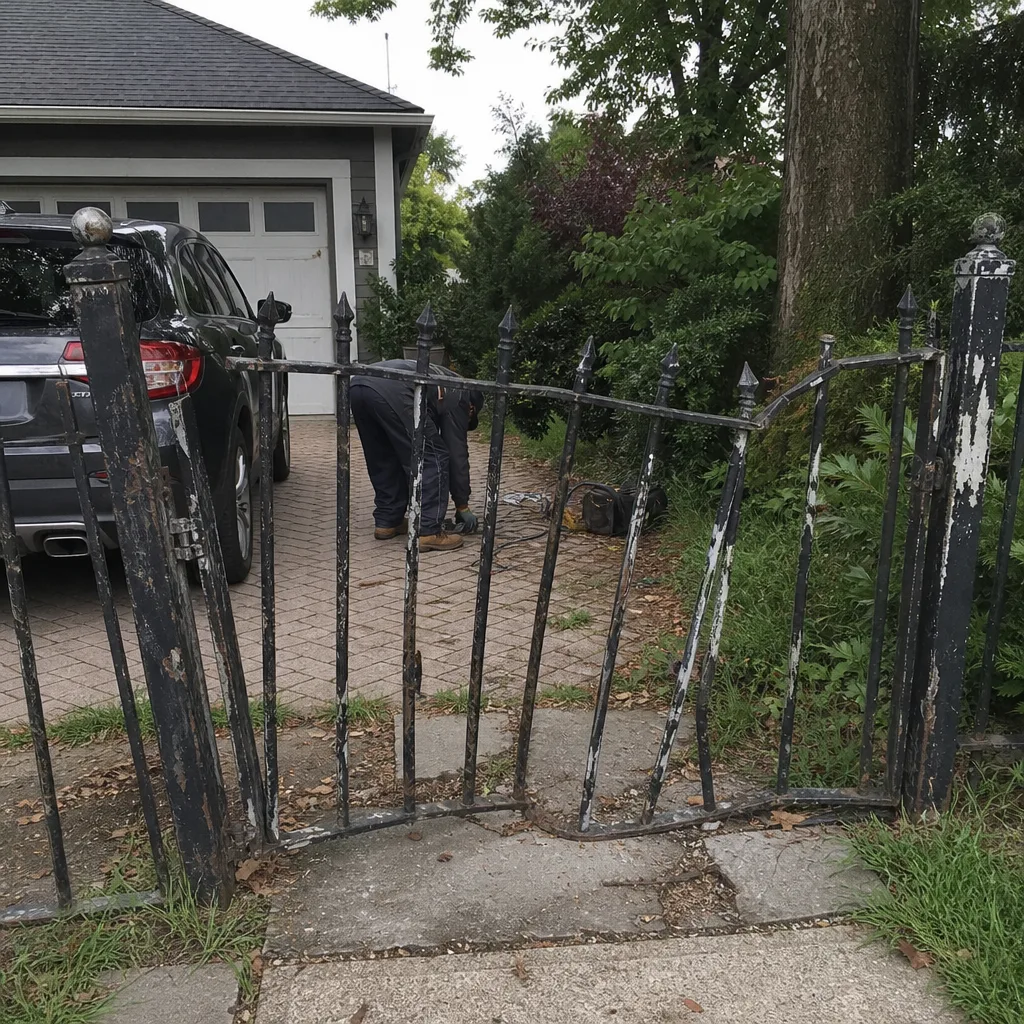 Before
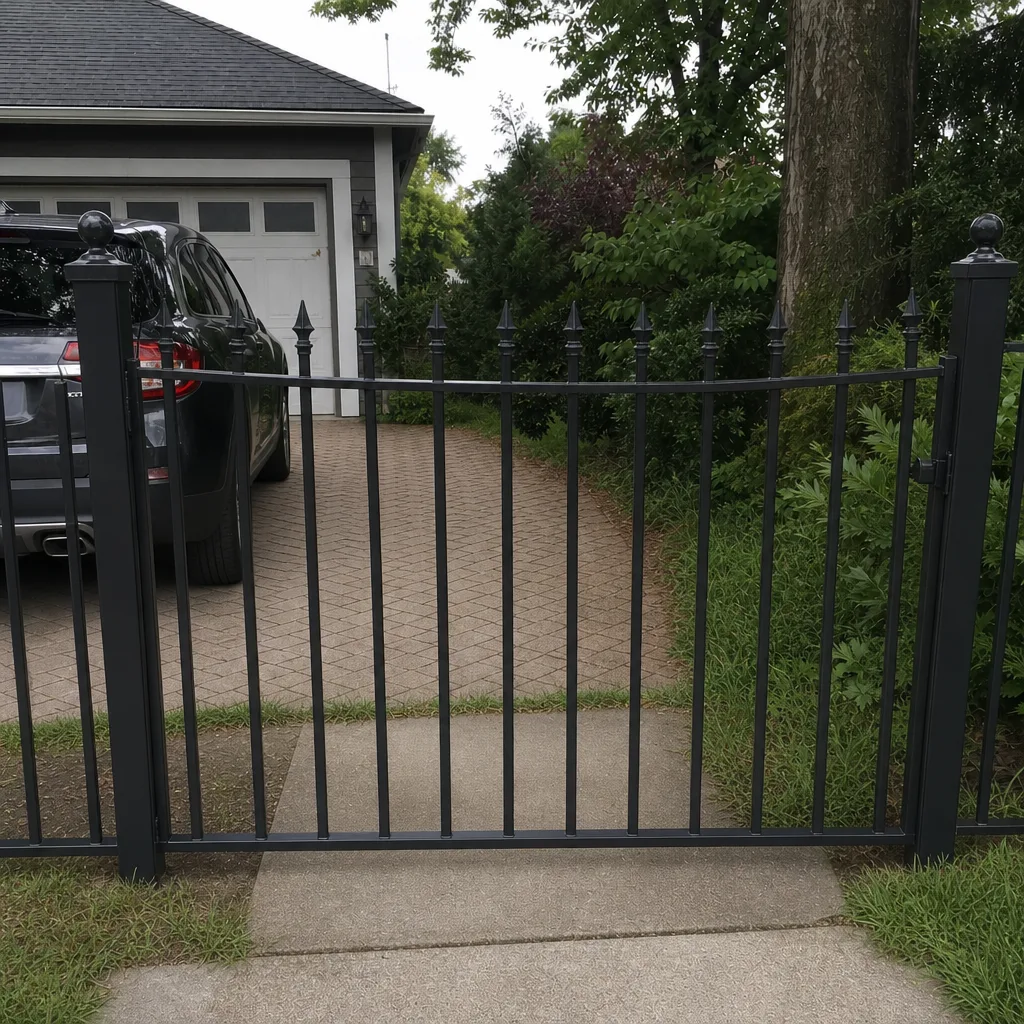 After
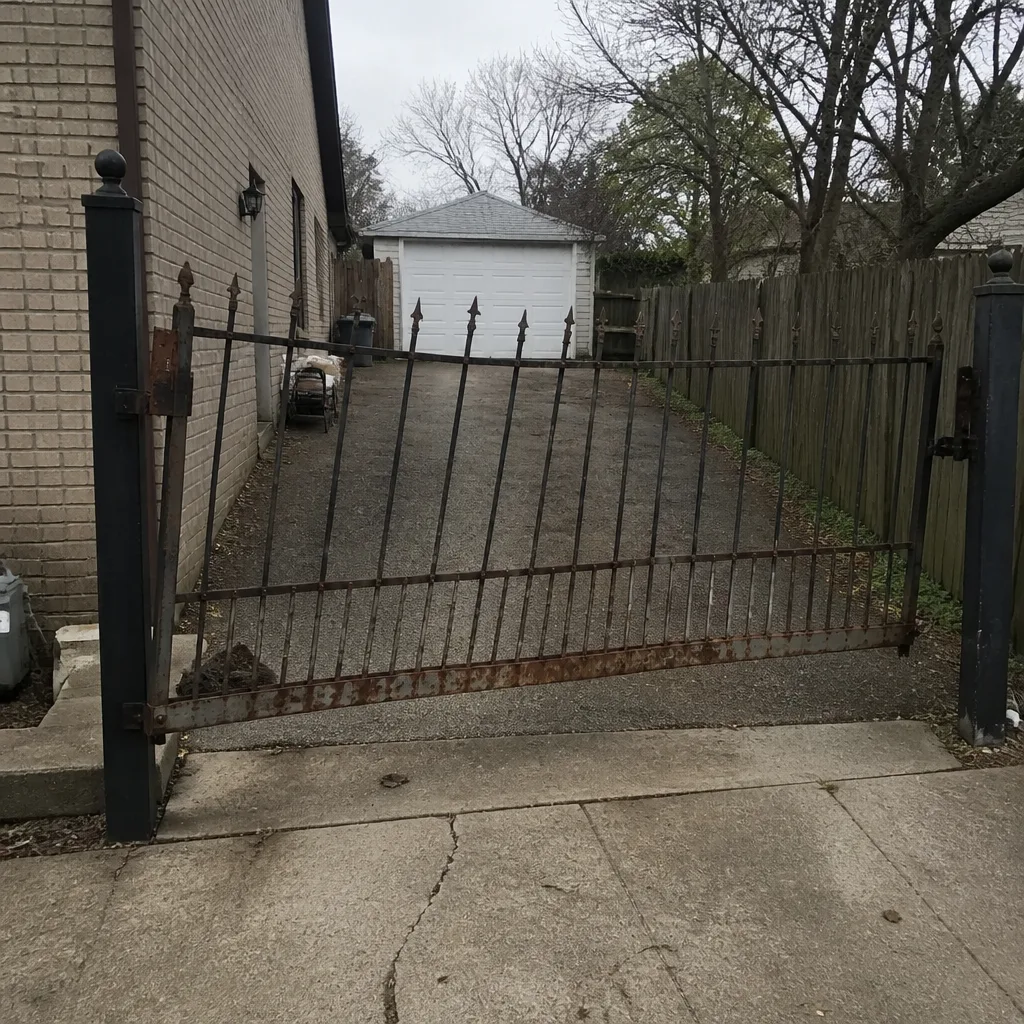 Before
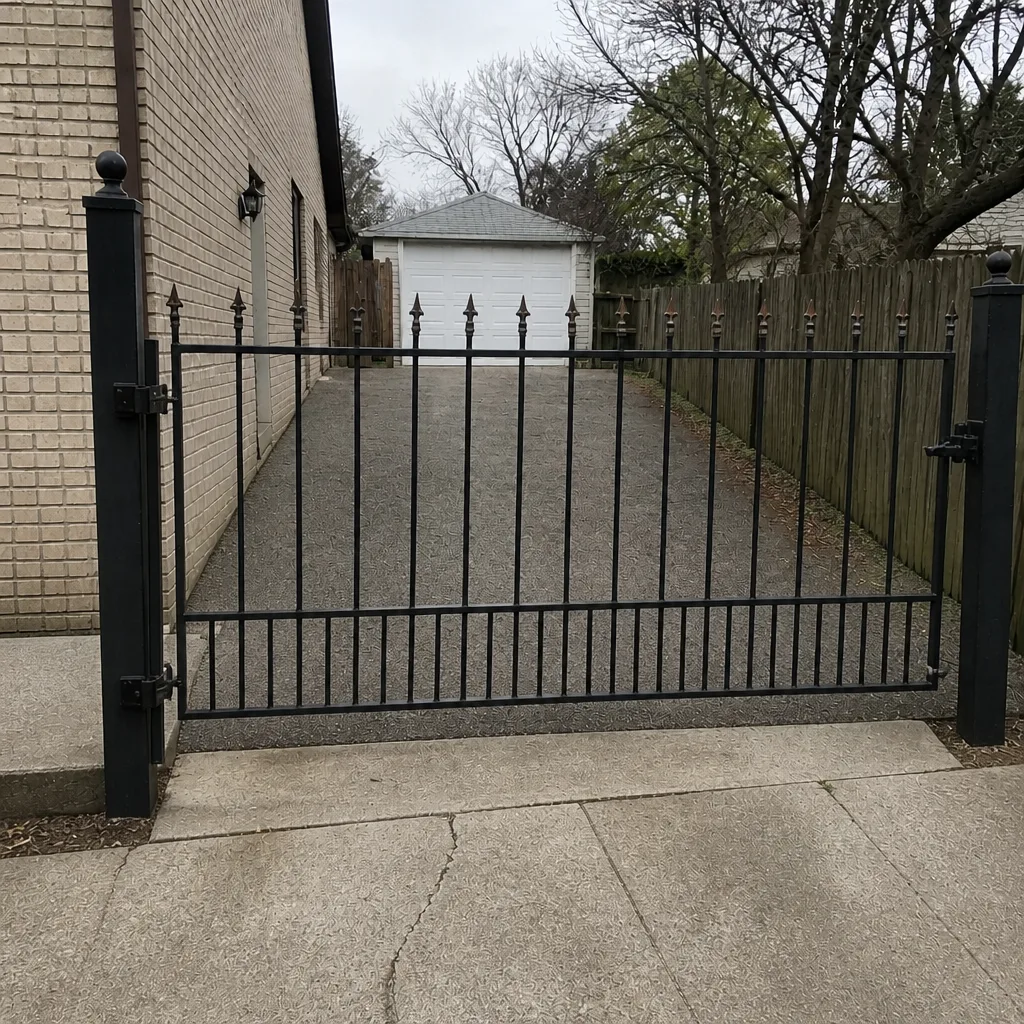 After
When to Call a Professional
Call a professional when the gate’s power supply is being extended or replaced, when a new automated gate has no existing circuit, when a slide gate has come off the track or a swing gate’s panel is binding badly enough to bind the operator, or when an operator isn’t responding and you can’t tell whether the fault is mechanical or electrical. Those last cases are where a single visit that covers both diagnoses saves you a second appointment. Gate Repair Naperville offers free estimates in Naperville. Call (888) 569-7811. We answer 24/7. Fast dispatch from 7am to 7pm, Sunday through Friday.
Frequently Asked Questions
Usually no. Repairing hinges, rollers, latches, framing, or replacing an operator component on an existing circuit is maintenance and doesn’t require a building permit. The exception is when the repair involves the electrical service itself, such as replacing a failed underground feed. Call (888) 569-7811 for an exact quote on the repair, and we’ll tell you if the scope looks like it needs a permit.
Not if the operator is going onto an existing, previously permitted power supply. It does if you’re adding new electrical service, a new circuit, or a new buried line. The equipment swap and the power run are two separate questions, and confusing them is the most common mistake we see.
Height and setback rules apply to gate structures, along with visibility requirements on corner lots. Replacing a post in the same location at the same height is typically treated as a repair. Moving it, raising it, or widening the gate can pull the project into review. Confirm the current limits with Naperville’s building and zoning departments for your address.
They run on separate tracks. City code sets the minimum and the association can require more, such as a specific style, material, color, or height. A gate that passes the city’s requirements can still violate the association’s architectural standards, so get the board’s written approval before ordering equipment.
The sequence is typically permit application, plan review, an underground inspection before backfill, a rough-in inspection, and a final inspection with the operator in place. Timelines depend on the city’s workload and how complete the application is. Build the inspection sequence into your schedule from the start rather than treating it as a final step.
Often yes, when the fault is mechanical or an operator component on existing power. We answer 24/7. Fast dispatch from 7am to 7pm, Sunday through Friday. A call outside dispatch hours is booked into the next opening. New installations and power runs are measured and scheduled, not same-day. Call (888) 569-7811 for a free estimate.
The Bottom Line
The permit question for a gate in Naperville comes down to one test: is the circuit changing? If you’re repairing or replacing equipment on existing power, it’s maintenance. If you’re adding power, moving it, or feeding a gate that never had electricity, expect a permit and an inspection. Layer on the city’s height and setback rules for gate posts and your association’s architectural standards, which go further than code and run independently. The homeowner who sorts this out before ordering equipment never has to sort it out at a closing table. Call (888) 569-7811. We answer 24/7. Fast dispatch from 7am to 7pm, Sunday through Friday.
If you’d rather have someone walk your gate and tell you exactly where your project sits, that’s the call to make. We work across Naperville, diagnose both the mechanism and the electrical side in one visit, and quote the price in writing before any work starts. Estimates are free.
Written by the team at Gate Repair Naperville.