
Last updated November 15, 2026
 Wrought iron
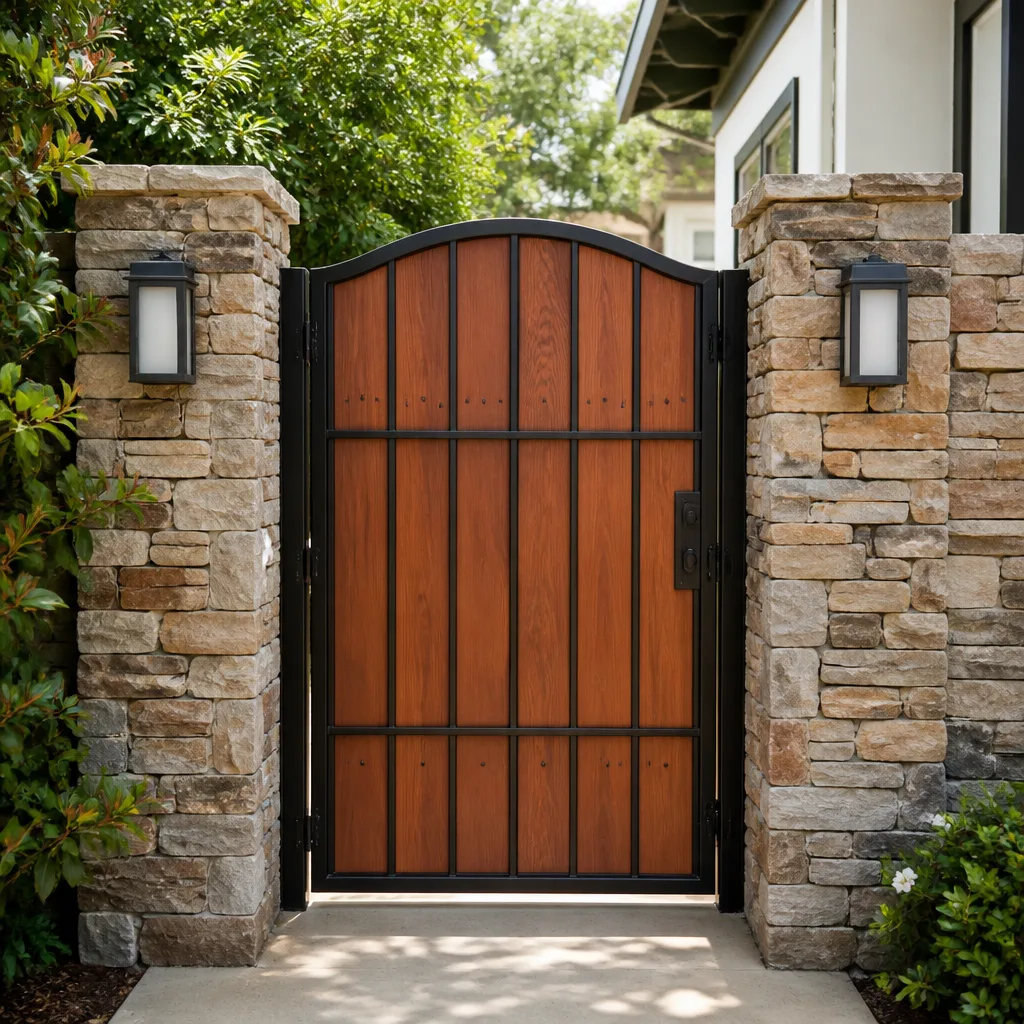 Wood & steel frame
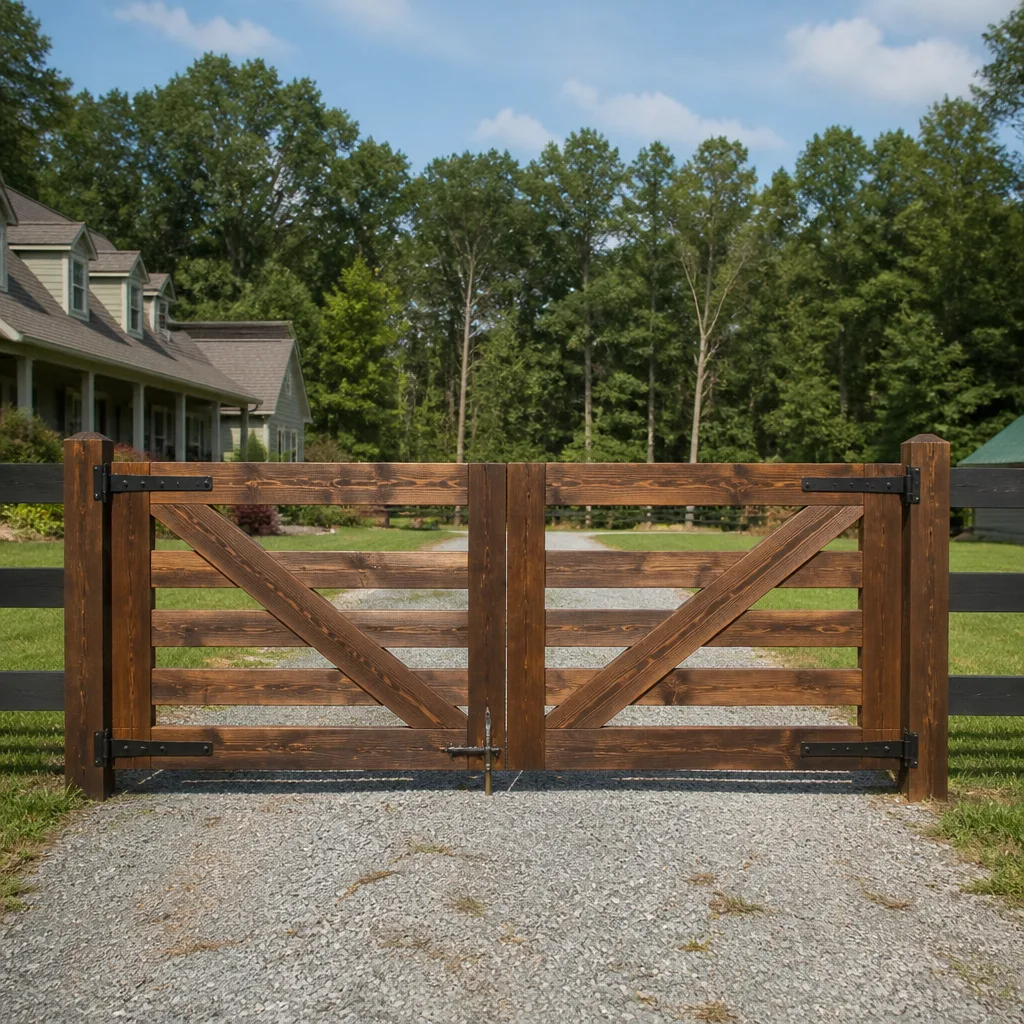 Farm & ranch
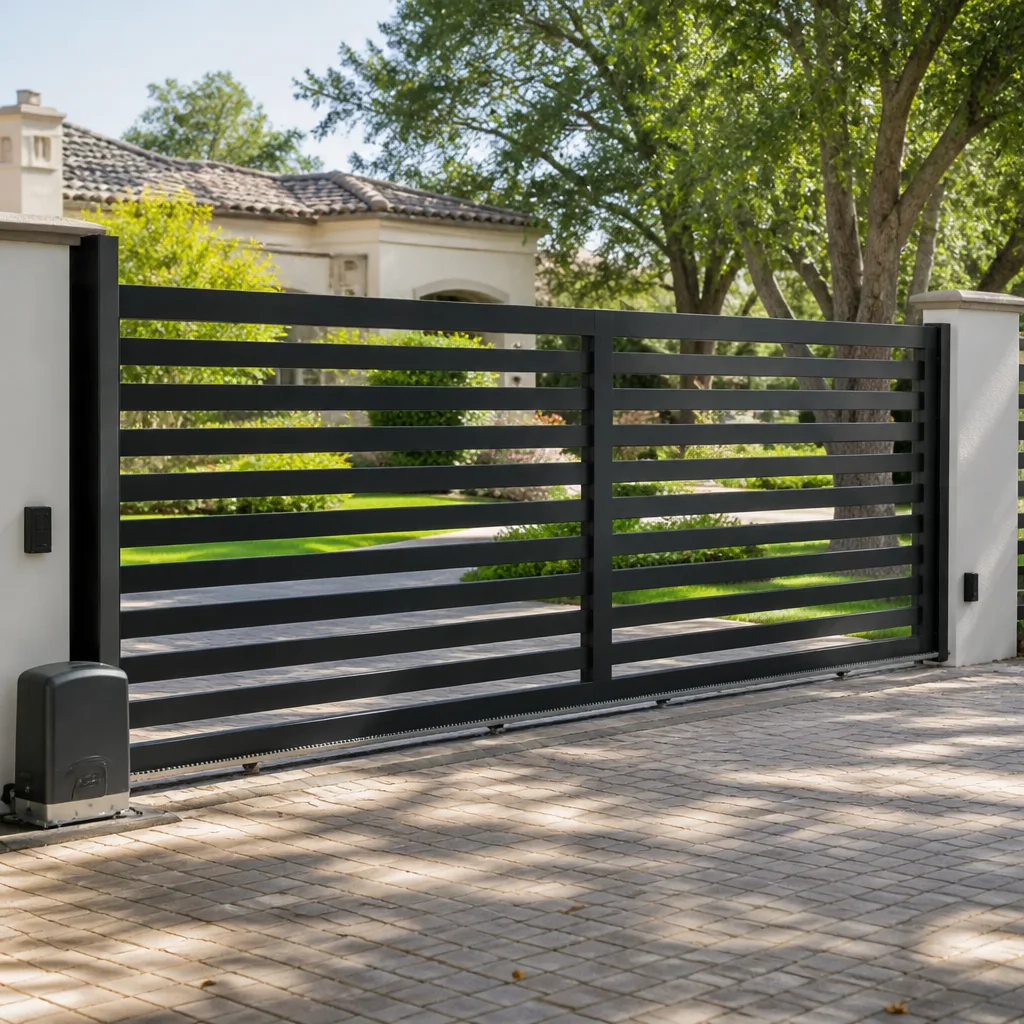 Sliding driveway gates
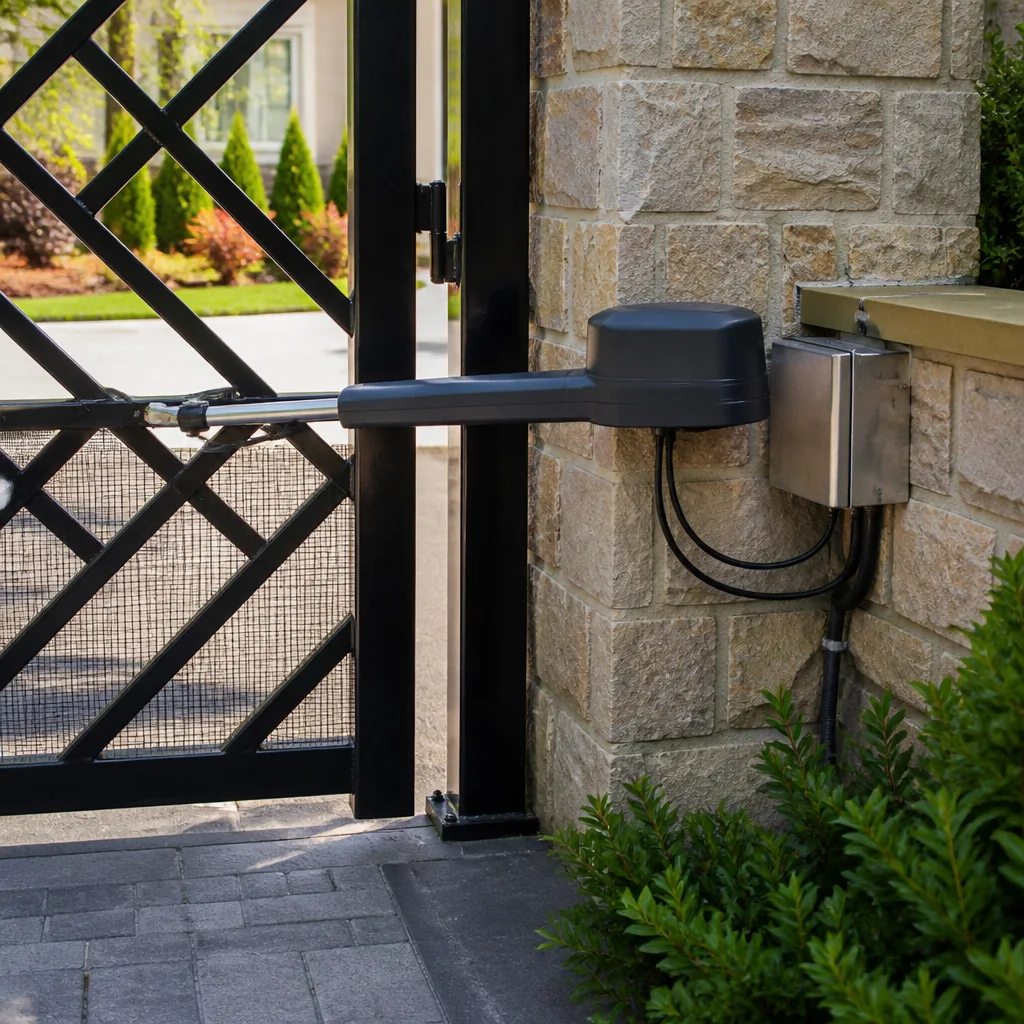 LiftMaster operators
Free on-site gate assessment - hinges, posts, and your LiftMaster or Nice gate operator checked before anything is quoted
The assessment is free and the quote is the invoice.
Get your free estimateSeasonal Gate Repair Care for Naperville: Year-Round Homeowner’s Guide
Most gate failures we see in Naperville don’t come from old equipment. They come from two predictable weeks on the calendar: the first cold snap of November and the first thaw of March. The gate that ran all summer stalls in the fall because thermal contraction tightens a slide gate’s track gap just enough to overwork a motor that was already near its limit. It’s not bad luck. It’s a skipped October adjustment. This guide gives you a month-by-month plan for spring, summer, fall, and winter, from post-frost geometry checks and road-salt corrosion assessment to cold-weather lubrication and battery tests. Read it once, then use it as a checklist.
Quick Answer
Seasonal gate care in Naperville means four short service windows a year: a spring geometry and limit-switch reset after ground heave, a summer check on control-board heat and vegetation at the safety sensors, a fall lubrication and battery swap before the first freeze, and a winter routine that verifies the manual release before heavy snow. Handled that way, an automated gate is far more likely to start every morning without a service call. Skip those windows and you’re asking a motor to fix a mechanical problem it can’t.
Styles & brands we work with
- Wrought iron
- Wood & steel frame
- Farm & ranch
- Sliding driveway gates
- LiftMaster operators
Table of Contents
- Why Naperville Gates Fail on a Seasonal Clock
- Spring Protocol: Post-Frost Geometry and Salt Corrosion
- Summer Protocol: Heat, Sensors, and Vegetation
- Fall Protocol: Low-Temp Grease, Battery Testing, Track Gap
- Winter Protocol: De-Icing and Manual Release
- Brand-Specific Cold-Weather Vulnerabilities
- The 12-Month Action Plan at a Glance
- Common Mistakes to Avoid
Why Naperville Gates Fail on a Seasonal Clock
Gate repair calls in Naperville don’t arrive evenly across the year. They cluster in March and November, and the reason is mechanical, not mysterious. The ground under a gate post expands and contracts with the freeze-thaw cycle, and every automated gate has a narrow tolerance for how much its posts and track can move before the operator starts fighting the gate instead of moving it.
A typical fall failure works like this. A slide gate’s track gap tightens as metal contracts in the cold. A gap that measured comfortably in July might close by a few millimeters by the first week of November. If the motor was already running near its capacity in warm weather, that small change is enough to stall it. The motor didn’t break. It was pushed past its limit by a gate that had quietly drifted out of adjustment over the summer.
Naperville’s climate makes this sharper than in many places. Our winters bring repeated freeze-thaw cycles rather than one deep cold stretch, and the ground moves each time. Road salt from neighborhood streets and driveways adds a second stressor: salt exposure on lower gate hardware, hinges, rollers, and track, accelerates corrosion if it isn’t assessed each spring.
Summer’s own version of the problem is the opposite. Heat builds inside control enclosures, and vegetation near loop detectors and safety edges interferes with the sensing that tells the gate it’s safe to close. That’s not a gate that wore out. It’s a gate that needs the sensing checked before the season peaks.
We work on gate systems specifically, and that focus shapes how we troubleshoot: we start with mechanical geometry and seasonal drift, then move to the operator and controls. Here’s the protocol for each season.
Spring Protocol: Post-Frost Geometry and Salt Corrosion
Spring is the most important service window of the year. The ground has heaved and settled all winter, and your gate’s posts, track, and hinges have moved with it. Before you touch the controls, check the structure. A gate that’s out of geometry will fight the operator no matter how well the motor runs.
Here’s the spring sequence we recommend:
- Check post geometry first. Look for lean on the hinge post and gate post. A post that shifted over winter changes the swing arc or slide path, and the gate can drag even when the motor is healthy.
- Inspect the track or swing path for tight spots. On a slide gate, run the gate by hand with the operator disengaged. It should roll smoothly with no catching, grinding, or binding. Any tight spot gets addressed before the motor is reconnected.
- Reset the limit switches. Ground heave and track movement can shift where the gate thinks “fully open” and “fully closed” are. If the limits are off, the gate can strain at the end of travel or stop short.
- Assess salt corrosion. Look at rollers, hinges, latches, and the bottom rail. Road salt exposure shows as pitting, chalky buildup, or seized moving parts. Clean and lubricate the exposed surfaces, and replace rollers or hinges that no longer move freely.
- Test the safety edges and sensors. After a winter of ice and debris, the safety devices need to be checked for alignment and function before the gate is trusted to close automatically.
Spring is also when we see operators that were fine in fall but now trip a fault. That’s frequently a limit-switch position that moved with the gate, not a dead control board. Diagnosing both the mechanical drift and the electrical fault on the same visit is the difference between a one-call fix and a second trip. If your gate won’t respond at all after winter, that’s electric gate repair territory, and it starts with checking whether the gate moved out of tolerance before the electronics are blamed.
Summer Protocol: Heat, Sensors, and Vegetation
Summer heat is hardest on the control board, not the motor. Control enclosures sit in direct sun, and internal temperatures climb well above ambient. On a unit that’s already cycling many times a day, that heat load is a real failure risk. A board that’s overheated may reset itself intermittently or trip fault codes that look like a control failure when the real problem is airflow and shading.
- Check enclosure ventilation and shade. Confirm the control box isn’t baking in full sun with blocked vents. Clear any debris at the vents, and check that the mounting keeps the enclosure out of direct, all-day exposure where possible.
- Clear vegetation from safety sensors and loop detectors. Summer growth reaches into the sensing path. A limb across a photo-eye or weeds against a loop detector can cause a gate that closes and then reverses for no apparent reason. Trim back the growth and confirm the sensor alignment.
- Look for heat-related intermittent faults. If the gate misbehaves only in the hottest part of the afternoon and works fine in the morning, the board’s heat management is worth checking before anything is replaced.
- Test the safety reverse. Summer is the season of high use. Confirm the gate reverses when it should and that all safety edges report correctly.
Naperville summers are long and humid, and a residential entry gate in a neighborhood with a lot of mature trees will see vegetation encroach faster than a gate in an open commercial lot. That’s one reason the sensor check belongs in the summer window rather than waiting for fall. One call covers both the electrical diagnostics and the mechanical adjustment, so a sensor fault and a limit drift don’t become two separate contractor visits.
Fall Protocol: Low-Temp Grease, Battery Testing, Track Gap
Fall is the setup for winter, and it’s where most November repair calls are prevented. The two things that fail first in cold weather are lubrication and batteries. Grease that’s fine in July thickens in the cold and drags on the gate. Backup batteries that held a charge all summer lose capacity as temperatures drop, just when winter power outages are most likely.
Our fall checklist:
- Swap to low-temperature grease. Warm-weather grease gets stiff in the cold. A low-temperature-rated grease keeps the hinges, rollers, and slide track moving freely at low temperatures.
- Test the battery backup before outage season. Load-test the backup battery the way it would perform during a power loss. A battery that reads a surface charge can still fail under load when the grid goes down.
- Adjust the track gap for thermal contraction. This is the adjustment that so many owners skip. Check the slide gate’s track gap and set it for cold-weather clearance before the first freeze. Metal contracts, and a gap that’s correct in September can close enough in November to stall a perfectly healthy motor.
- Service and verify the manual release. With the gate in a safe position, confirm the manual release works smoothly. In a snowstorm is not the time to find out it’s seized.
- Check the safety edges for cold-weather function. Cold rubber and plastic can stiffen. Confirm the safety edges still respond before the first hard freeze.
If your gate has been slow, noisy, or intermittent all fall, don’t wait for it to stop. The gate repair conversation is easier in October than in a January cold snap. We work on the operators that handle the cold well and know which ones need extra attention, which is the subject of the brand section below.
Winter Protocol: De-Icing and Manual Release
Winter care is about not creating a corrosion problem while you keep the gate working. De-icing is where homeowners do the most damage, and the fix is simple: use a de-icer that doesn’t attack the gate hardware. Rock salt and many standard icers accelerate corrosion on lower hardware, rollers, and the bottom rail. A gentler de-icer, used sparingly and cleaned up, keeps the track passable without eating the finish.
What to check in winter:
- Verify the manual release before heavy snow is forecast. Confirm you can disengage the operator and move the gate by hand. That’s your fallback if power fails or the gate stalls in a storm.
- Keep the track clear without forcing it. Clear snow and ice from the slide track or swing path. Don’t pull or hammer on a frozen gate; a stuck gate forced by hand or by the motor can bend the panel or damage the operator.
- Watch for the freeze-thaw stall. A gate that stalls on the coldest mornings and frees up by afternoon is telling you the track gap or lubrication is wrong for the season. That’s an adjustment, not a new motor.
- Leave the battery backup charged. Winter storms are when the backup battery earns its keep. An untested battery is an untested backup.
Heavy gate panels can crush, and a slide gate that comes off its track is a serious hazard. Don’t stand under or in the path of a gate you’re testing. If the manual release won’t engage or the gate won’t disengage cleanly, that’s a job for a technician before the next storm. If you’re in Naperville and your gate has been fighting the cold, we can look at both the mechanical binding and the operator fault on one visit.
Brand-Specific Cold-Weather Vulnerabilities
Not every operator handles a Naperville winter the same way, and knowing your brand tells you what to watch. We work on systems from Viking, Ghost Controls, DoorKing, Elite, and others across the residential-to-commercial range, and the cold-weather behavior varies in predictable ways.
Viking operators are common on mid-tier residential and light-commercial gates, and the things that degrade in cold are the battery and the control electronics. A load test in fall prevents the dead-battery surprise in January.
Ghost Controls is popular for residential swing and slide gates, and the operator’s settings sometimes drift as the gate’s geometry changes over winter. A limit and speed setting that was perfect in fall can be marginal by spring, so the spring reset matters here.
DoorKing systems are frequently found on access-controlled and commercial applications, where the electronics and access loop detectors need hot and cold temperature checks. Control board heat management on hot days and reliable low-temperature performance on cold days both belong on the list.
Elite operators show up on residential gates where the mechanical binding, not the electronics, is often the real problem in cold weather. That’s a geometry and lubrication job, and it’s why we start with the gate itself.
A pattern runs through all of it: the mechanical system and the electronics fail together more often than owners expect. A sluggish motor can be a thermal contraction problem in the track, and a fault code can be a limit switch that moved with the gate. One visit that checks both is how this gets resolved efficiently.
The 12-Month Action Plan at a Glance
Here’s the year compressed into a single reference. Use it as a monthly reminder, and don’t skip the two big windows: March and November.
January through February: clear snow and ice from the track without forcing the gate; use a gentler de-icer; confirm the manual release works before each storm forecast.
March: post-frost geometry check; reset limit switches; assess road-salt corrosion on rollers, hinges, and the bottom rail; test safety edges.
April through May: finish any corrosion treatment; confirm slide-track or swing-path clearance; recheck the battery.
June through August: check control-board heat and ventilation; clear vegetation at the safety sensors and loop detectors; test the safety reverse at high use.
September through October: swap to low-temperature grease; load-test the backup battery; adjust the track gap for thermal contraction; service the manual release.
November: the first cold-snap check. Confirm the gate runs freely, the battery holds, and nothing is binding. This is the month that decides whether you have a winter repair or a smooth season.
December: monitor for the freeze-thaw stall and keep the track clear.
If you want one visit to cover the whole seasonal handoff, that’s what we do. Whether your gate is a Ghost Controls residential operator or a DoorKing access system, we know the brand and the failure points it tends toward in each season.
Common Mistakes to Avoid
- Skipping the October track-gap adjustment. This is the single biggest cause of November stalls in Naperville. The gap looks fine in September and closes with the first hard freeze.
- Waiting until the gate stops to call. A slow, noisy, or intermittent gate is the warning. Repairing it on your schedule is easier than fixing it during a cold snap.
- Using rock salt on the track. It speeds corrosion on rollers, hinges, and the bottom rail. Use a gentler de-icer and clean up the residue.
- Forcing a frozen gate by hand or with the motor. A stuck gate that gets pushed can bend a panel or damage the operator. Disengage and clear the obstruction first.
- Testing the battery by surface charge only. A battery that reads charged can fail under load during an outage. Load-test it in fall.
- Blaming the control board for a mechanical problem. Limit drift and track binding often present as electrical faults. Check the gate’s geometry before replacing electronics.
- Ignoring vegetation at the safety sensors. Summer growth at a photo-eye makes a gate reverse for reasons that look like a control failure. Trim and realign before assuming a fault.
If you’ve avoided all of these and the gate still misbehaves, the next step is a diagnostic visit that covers both the mechanical and electrical sides.
See the difference
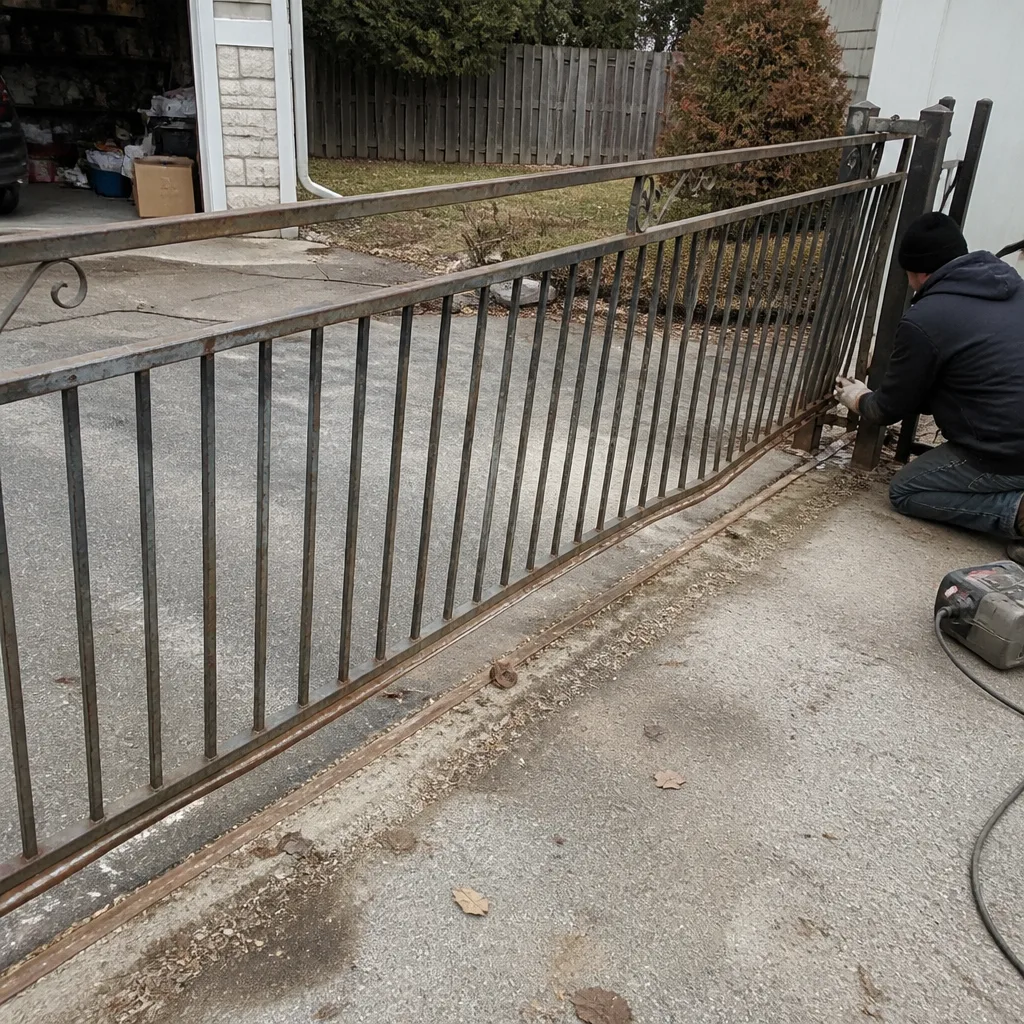 Before
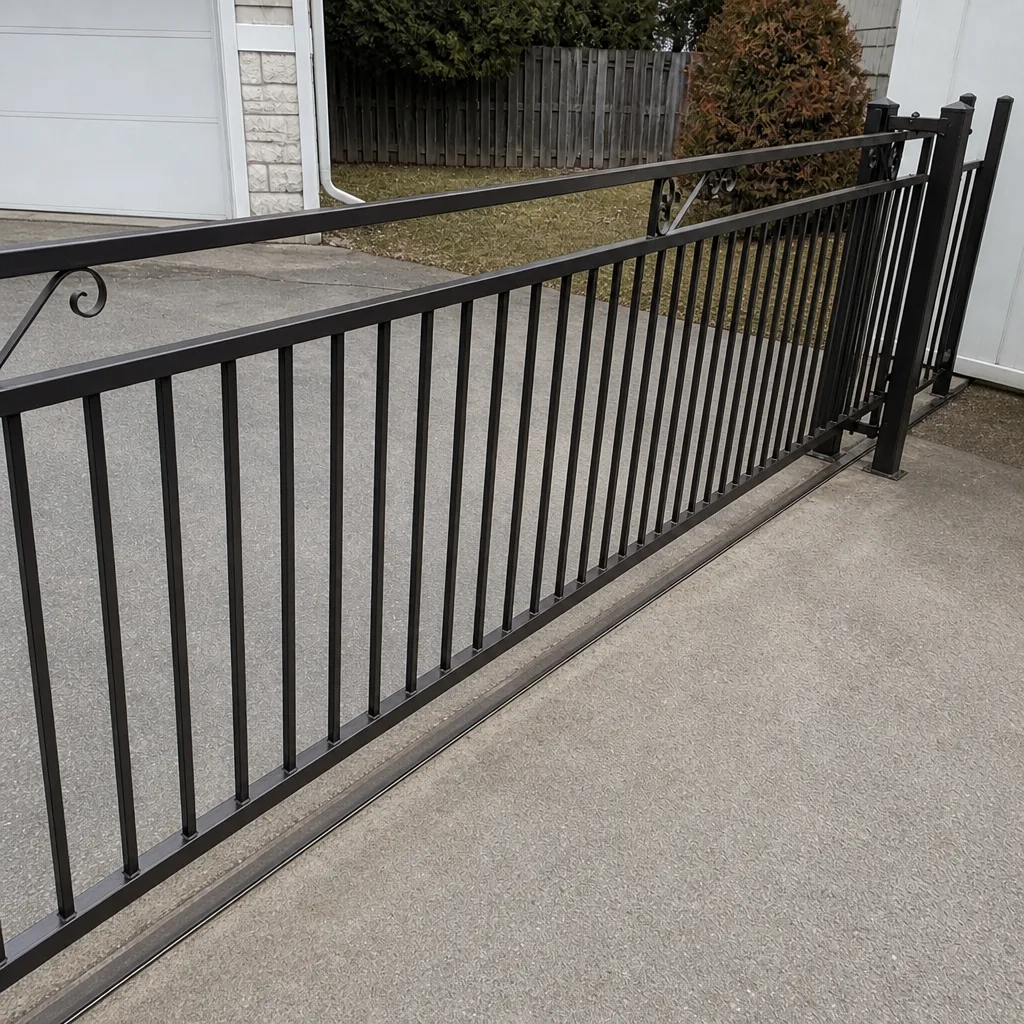 After
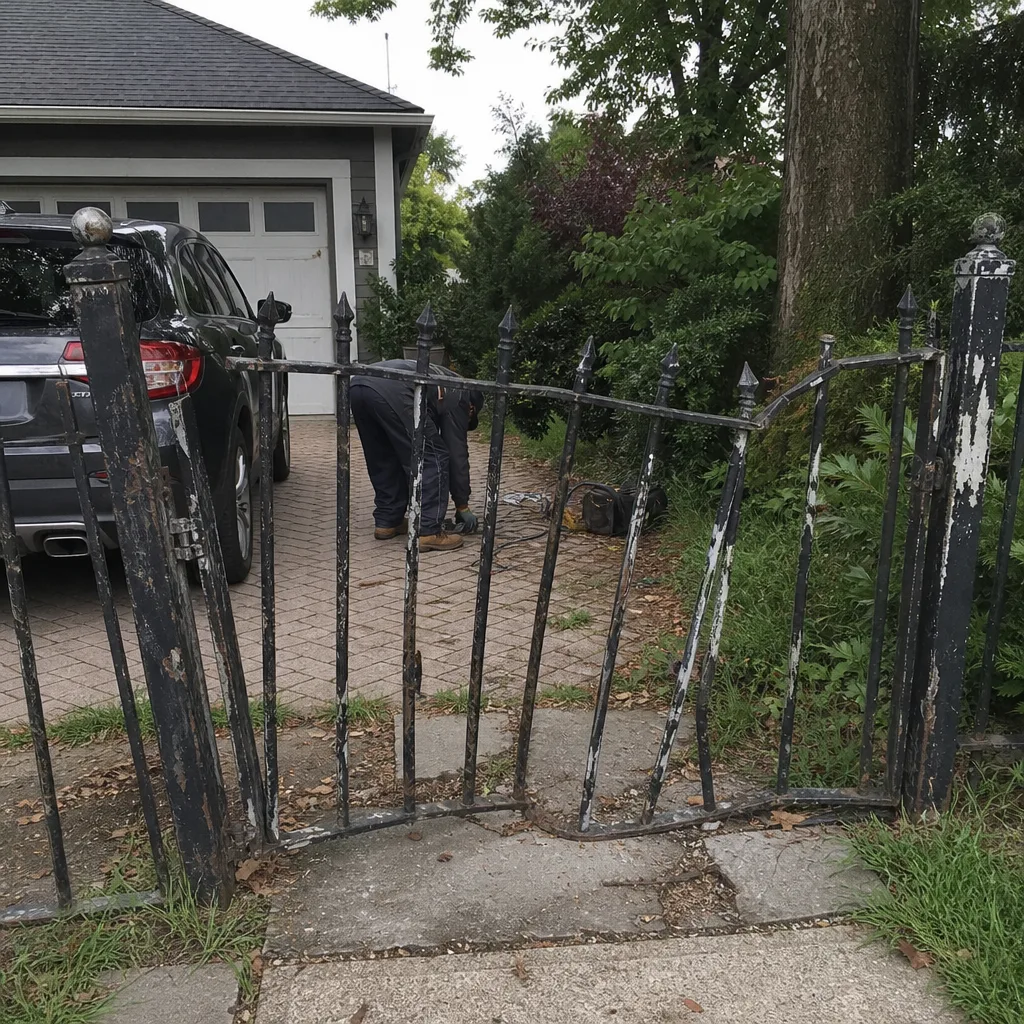 Before
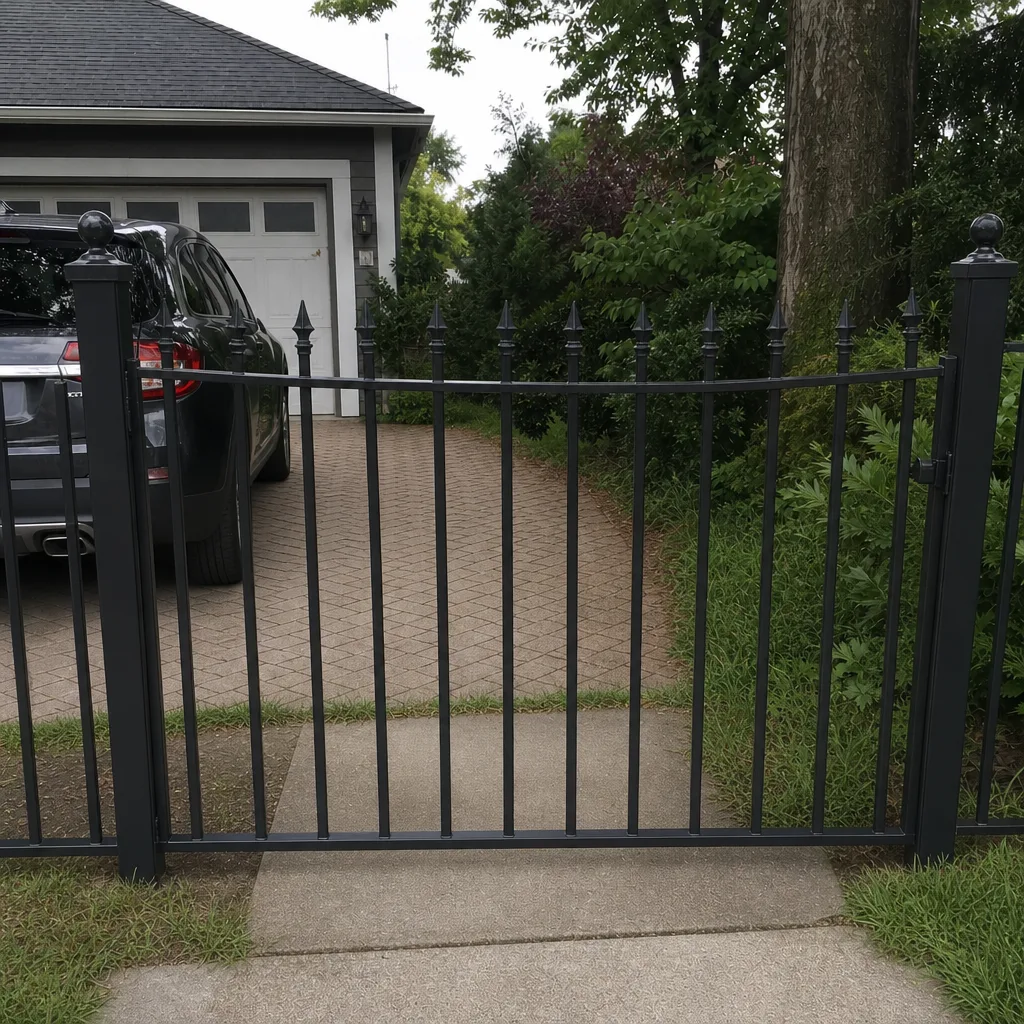 After
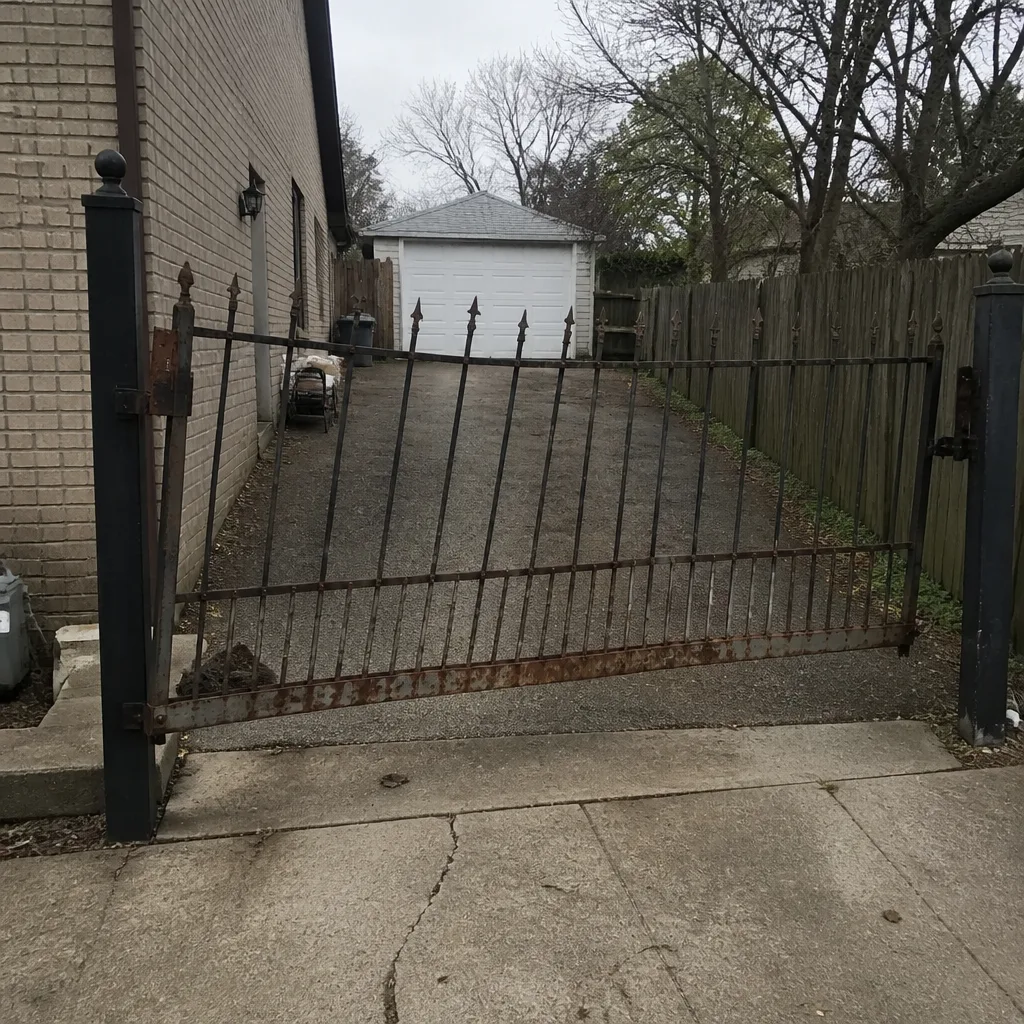 Before
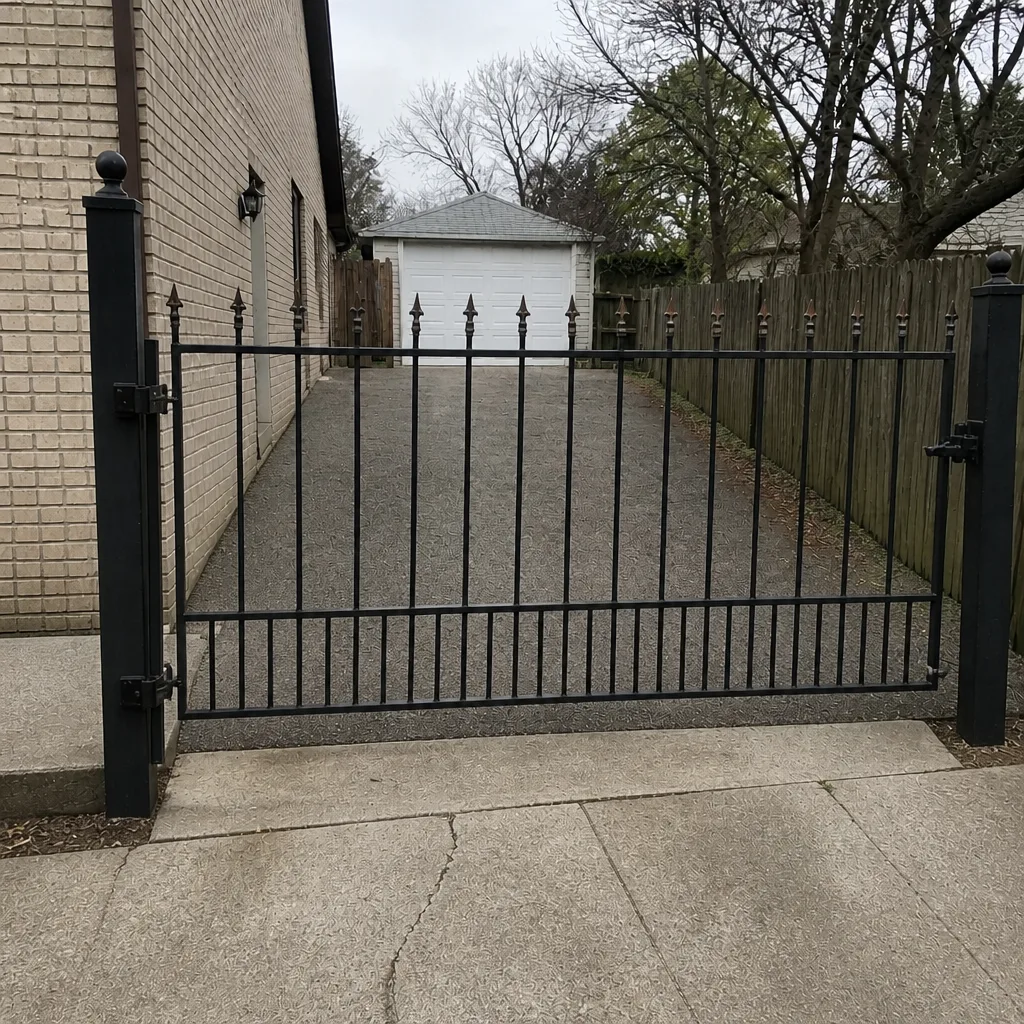 After
When to Call a Professional
Call a gate specialist when the gate stalls, reverses on its own, trips faults, or you can’t disengage the manual release. Call when the gate has been slow or noisy through a season change, or after any impact to a panel or post. Call before winter if you haven’t done the October adjustments, and call if the battery backup failed its load test.
High-tension hardware and control wiring aren’t a do-it-yourself job, and heavy gate panels can crush. The operator’s power run and safety devices should be handled by a trained technician. Gate Repair Naperville offers free estimates in Naperville. Call (888) 569-7811. We answer 24/7. Fast dispatch from 7am to 7pm, Sunday through Friday. Our technicians have up to 8 years of experience, and the written estimate sets the final price before any work begins. If your gate is a Viking, a DoorKing, or another brand, we work on it specifically.
Frequently Asked Questions
The fall track-gap adjustment and lubrication swap are the most important, because they prevent the November cold-snap stall. Follow it with the spring geometry check and limit reset after the ground settles.
Cold metal contracts, which tightens the slide track gap and thickens lubricant, so a motor already near its limit stalls at dawn and frees once it warms up. Getting the track gap and low-temperature grease right fixes this, and a technician can confirm it’s not the operator.
No, rock salt accelerates corrosion on rollers, hinges, and the bottom rail. Use a gentler de-icer, apply it sparingly, and clear the residue. Clean the track rather than letting salt sit on the hardware.
Load-test it in fall rather than checking for a surface charge, because a battery that reads charged can fail under load during an outage. If it doesn’t hold under load, replace it before winter.
Summer growth at the safety sensors and loop detectors is the usual cause; weeds and limbs cross the sensing path and the gate reverses. Trim the vegetation, realign the sensors, and test the safety edges. If it still reverses, it needs a diagnostic visit.
Yes, we repair and install gates throughout Naperville and the surrounding area, and we work on systems from Viking, Ghost Controls, DoorKing, Elite, and others. Call (888) 569-7811 for a free estimate.
The Bottom Line
Gate repair in Naperville follows the calendar, and the two months that decide your year are March and November. Spring is for geometry, limit resets, and salt corrosion. Summer is for heat, sensing, and vegetation. Fall is for low-temp grease, battery testing, and the track-gap adjustment that prevents most cold-weather stalls. Winter is for gentle de-icing and a working manual release. Handle those windows and you break the repair cycle. Skip them and the first freeze finds the weak spot. If you’d rather have one specialist cover the repair, the electrical diagnostics, and the seasonal adjustments, that’s what we do.
Call (888) 569-7811 for a free estimate. We answer 24/7. Fast dispatch from 7am to 7pm, Sunday through Friday. The price is set per job by the written estimate and agreed before any work starts. For gate repair, electric gate troubleshooting, or a new installation, one call covers it: Gate Repair Naperville.
Written by the team at Gate Repair Naperville.