
Last updated November 15, 2026
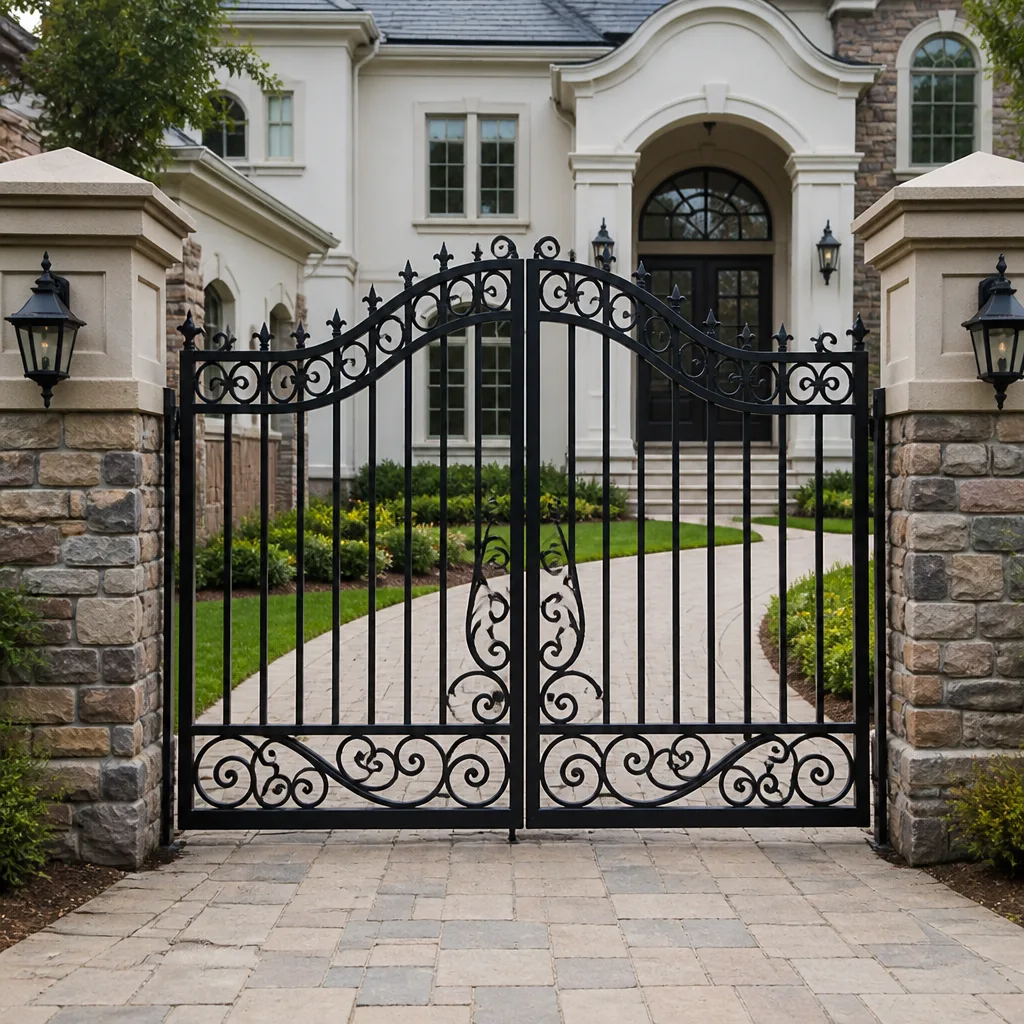 Wrought iron
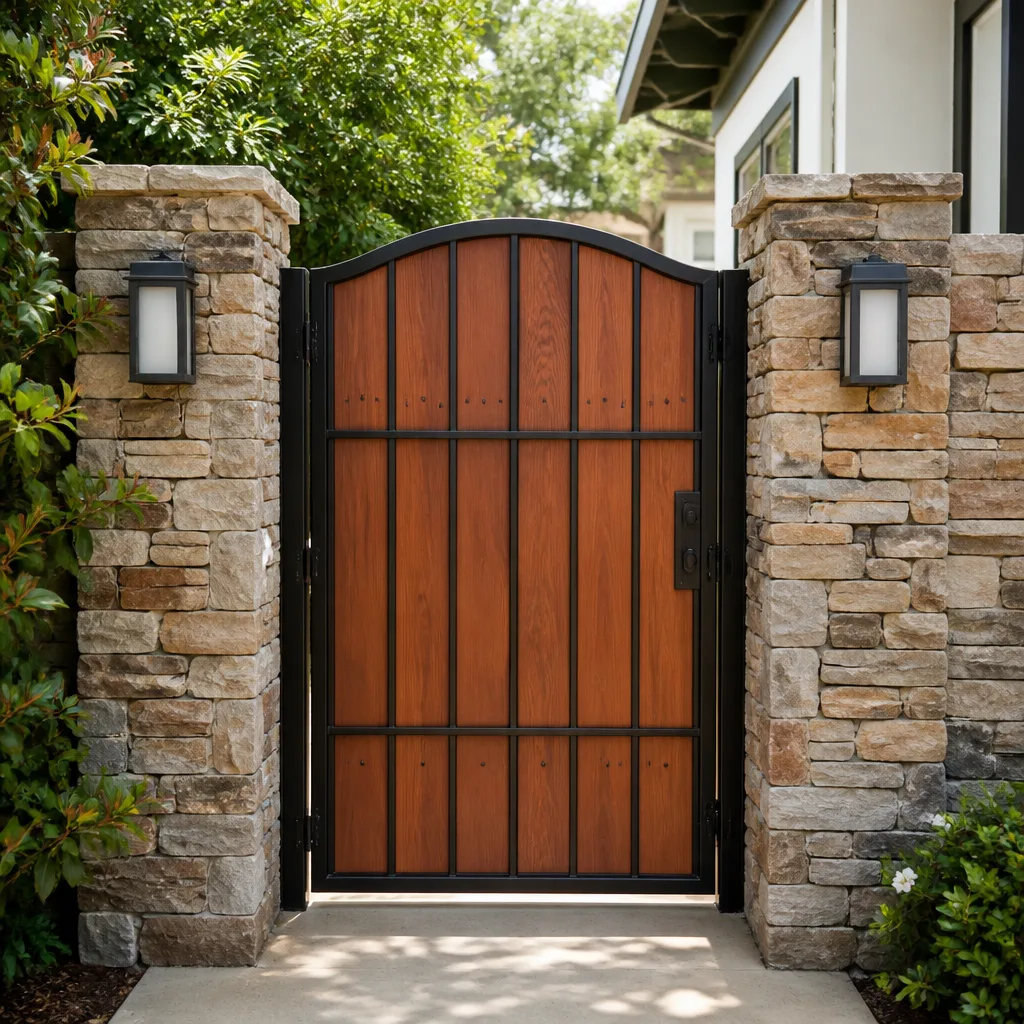 Wood & steel frame
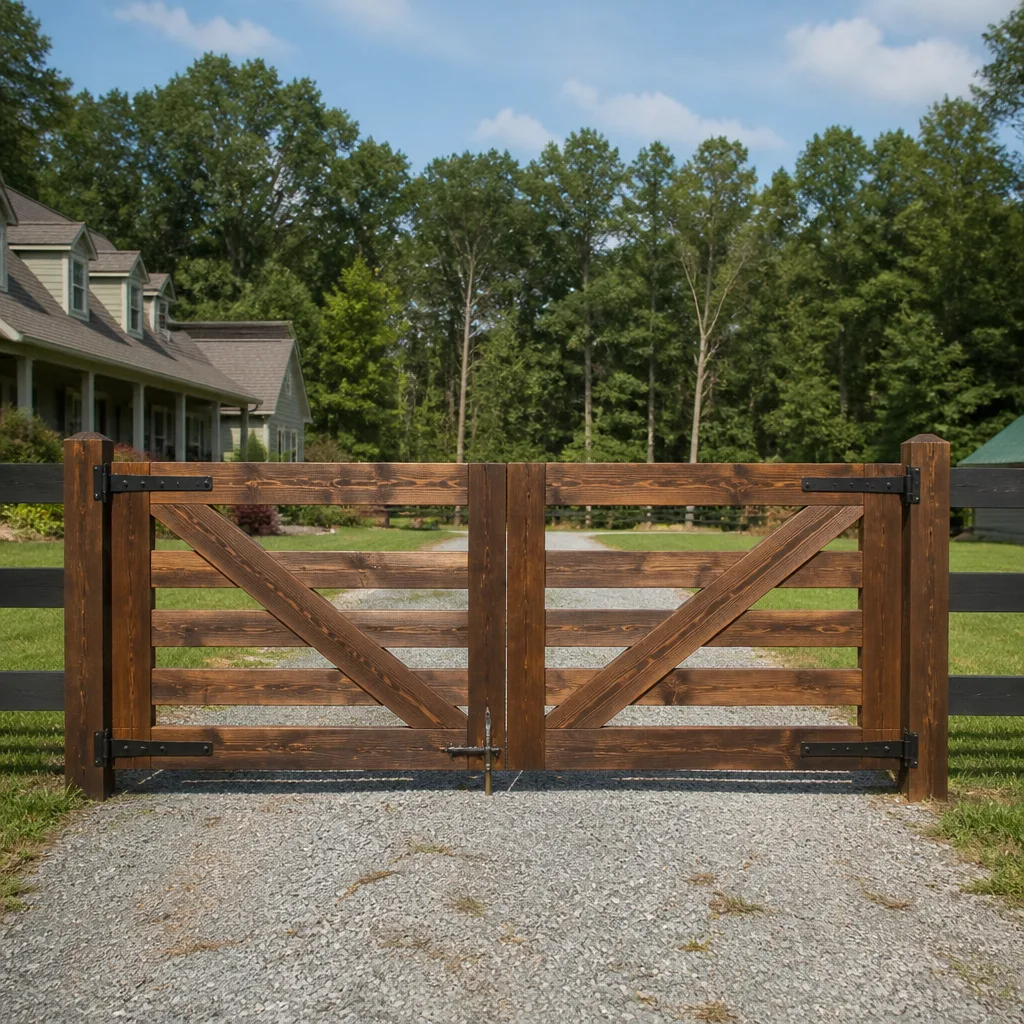 Farm & ranch
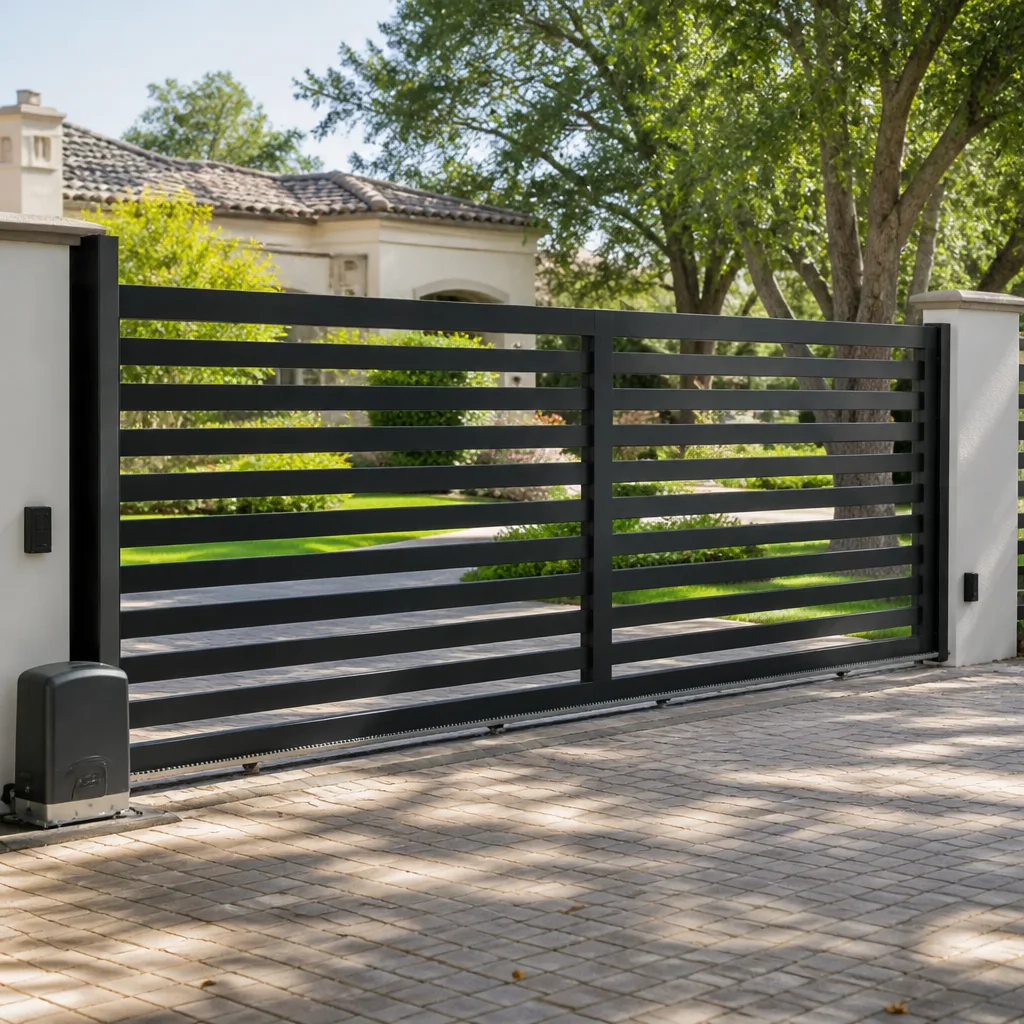 Sliding driveway gates
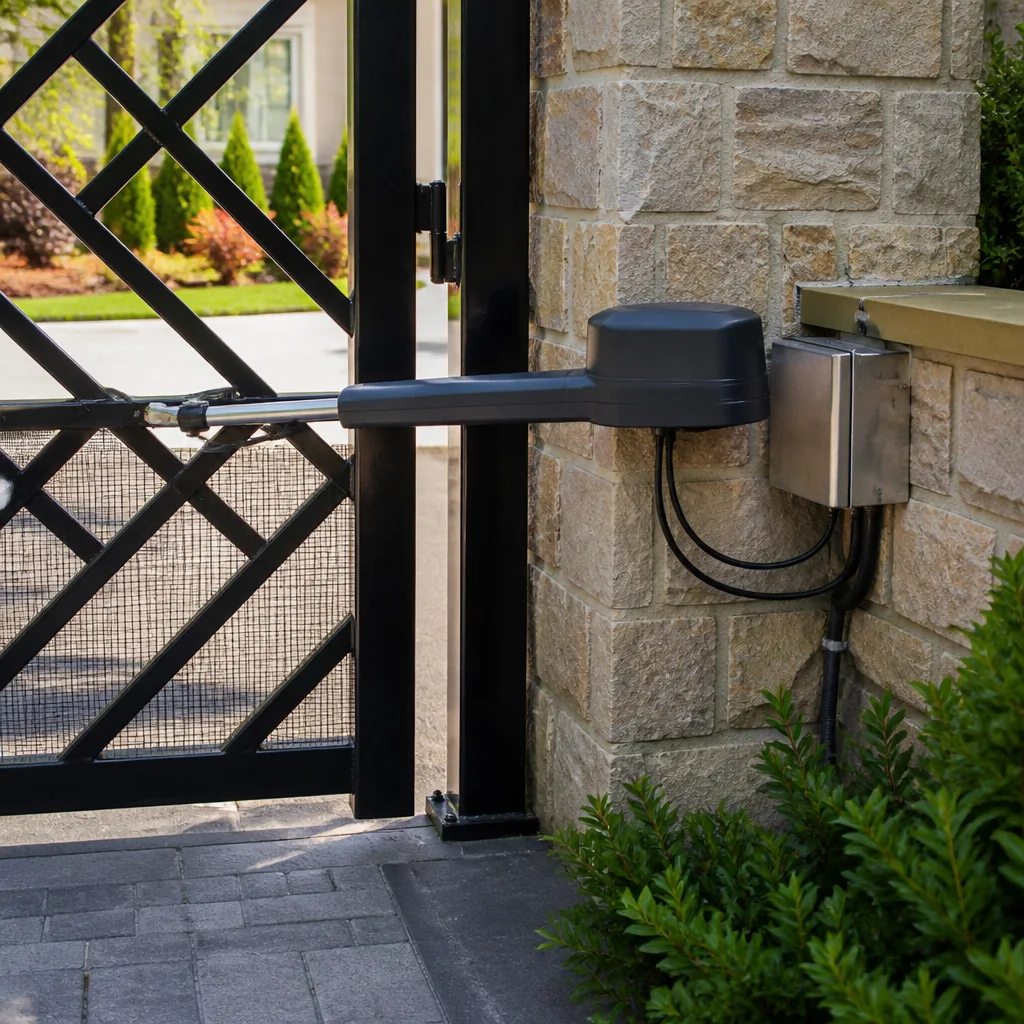 LiftMaster operators
Free on-site gate assessment - hinges, posts, and your LiftMaster or Nice gate operator checked before anything is quoted
The assessment is free and the quote is the invoice.
Get your free estimateGate Repair Warning Signs: A Naperville Homeowner’s Reference Guide
A gate that hesitates for two seconds before it opens isn’t “warming up.” That pause is the motor pulling extra amperage to push past a friction problem, and every cycle like it shortens the operator’s life by weeks. Most gate failures we diagnose in Naperville gave the homeowner a clear signal first: a new rattle, a remote that only works from close range, a gate that drifted a half inch at the latch. This guide teaches you to read those signals, tell normal sounds from pre-failure sounds, and know which warnings give you time to book an appointment and which ones mean calling this week.
Quick Answer
The most common gate repair warning signs are a gate that hesitates or reverses mid-travel, grinding or popping sounds during operation, a remote that works only from close range, a keypad that flickers, a gate that drifts off its resting position, and visible sag or widening hinge gaps. Sluggish movement and odd noises usually mean friction, a tired motor, or a worn hinge; electrical inconsistencies usually point to a control board, loop detector, or wiring fault. Any sign that combines an electrical symptom with a gate that won’t stop is a same-week call. Everything else can usually wait for a scheduled appointment.
Styles & brands we work with
- Wrought iron
- Wood & steel frame
- Farm & ranch
- Sliding driveway gates
- LiftMaster operators
Table of Contents
- Symptom-to-Diagnosis: What Each Warning Sign Usually Means
- Normal Sounds vs. Pre-Failure Sounds by Gate Type
- Electrical Warning Signs Most Homeowners Miss
- Structural Warning Signs in Wood and Iron Gates
- Scheduled vs. Same-Week: Which Warnings Give You Time
- How We Diagnose a Gate in Naperville
- Seasonal Gate Behavior in Naperville
- Habits That Stretch Gate Life
Symptom-to-Diagnosis: What Each Warning Sign Usually Means
Most gate problems follow a predictable path from symptom to component. The table below maps what you see, hear, and feel to the part that usually owns the fault. Treat it as a diagnostic starting point, not a verdict: a single symptom can have more than one cause, especially on older automation.
Visible Warning Signs
- Gate sags at the free end – post lean, hinge wear, or frame fatigue
- Hinge gaps widen – loose or worn hinge pins and plate screws
- Gate drags on the ground or the track – footing movement, roller wear, or off-level track
- Fresh rust streaks under the operator – moisture entering the housing or a leak path
- Head of the slide gate rides off center – worn rollers or a bent track section
Audible Warning Signs
- Grinding during travel – gear wear, roller friction, or a dry drive chain
- A single sharp pop at start or stop – loose mounting hardware or a failing limit switch
- Clicking in the control box before movement – relay or board-level fault
- Low hum with no movement – motor trying to start against a mechanical bind
Behavioral Warning Signs
- Gate reverses before it closes fully – a safety edge, loop, or alignment fault
- Remote range shrinks gradually – receiver, antenna, or battery issue
- Operator starts, stops, then restarts – overheating protection or amperage draw climbing
- Delayed response from the keypad – power supply or control board weakness
In Naperville, we see the behavioral signs caught last because they’re the easiest to dismiss as a quirk. The mix of mature trees dropping debris onto slide tracks and wet spring cycles stressing older outdoor control enclosures means our local gates tend to show friction and moisture symptoms earlier than the hardware itself wears out.
Normal Sounds vs. Pre-Failure Sounds by Gate Type
Every operator has a normal sound profile. Learn yours, and changes jump out immediately. Broadly:
Swing Operators
A healthy swing operator produces a steady, even hum from start to finish, with a soft mechanical click at the fully open and fully closed positions. What’s not normal: rhythmic grinding, a labored mid-travel tone, a groan when the gate lifts off the ground, or a sharp clunk at the end of travel. That clunk often means a limit switch or a mechanical stop absorbing energy that should have been absorbed by the arm.
Slide Operators
A working slide operator sounds like a chain or belt rolling cleanly across the track, with minimal vibration in the gate frame. Pre-failure sounds include a rising pitch, metal-on-metal scrape at one specific section of track, or a rattle that changes with gate speed. On LiftMaster and Linear slide systems specifically, a grind that starts at the same point every cycle usually points to a local track or roller issue rather than the operator itself, and it’s one reason a visual inspection and a sound check belong in the same visit.
Hinged Gates
Manual hinged gates have no motor to mask sounds. A quiet gate that develops a squeak at a specific hinge, or a scrape at the bottom edge, is telling you the load has shifted. That matters because a hinge carrying excess load eventually transfers stress into the post or the latch, and the correction is much cheaper while the gate still swings free.
If you can’t tell whether a sound is friction from the gate or the operator working harder than it should, that’s the point to call rather than guess. A technician can measure current draw and separate the two in minutes.
Electrical Warning Signs Most Homeowners Miss
Electric gates fail electrically more often than homeowners expect. The symptoms below are the ones that get ignored longest, and the ones most likely to be misread as “it’s always been a bit fussy.”
- Flickering keypad or intercom display. A keypad that dims or flickers when the gate is running suggests a weak power supply or a loose low-voltage connection. It’s also the earliest sign that a control board is unhappy.
- Remote range that slowly shrinks. Your remote should work from the same distance every day. If you’re pressing it from a foot closer each month, the receiver, antenna, or battery is degrading. On FAAC and BFT systems, weakened receiver performance often shows up as intermittent operation from inside the car before it fails outright.
- Loop detector response that’s inconsistent. A loop that triggers sometimes and not others is either mis-set, moisture-affected, or failing. This is the most dangerous electrical warning sign because it can cause a gate to close on a car still in the driveway.
- Random stops mid-travel. Operators have thermal protection that trips when they draw too much current. If your gate stops after a few cycles and works again later, it’s overheating due to friction or motor wear – not “just needing a break.”
- Photosensor flakiness at dawn or dusk. Directional light and dew can both cause a marginal sensor to misread. If the gate fails only at certain times of day, that sensor is the first place to look.
- Breaker or GFCI trips when the gate runs. This is a stop-now warning. Turn the gate off and get it checked. Wiring and operator electrical faults belong in trained hands, not a homeowner’s toolbox.
Electrical gate symptoms don’t always live only in the gate itself. If a car or a pedestrian sensor is part of the same circuit, a fault on either side can make the gate misbehave, which is why a single visit covering the operator and the access system together saves guesswork.
Structural Warning Signs in Wood and Iron Gates
Operator damage is the most expensive thing an overlooked structural problem can cause. A gate that sags a half inch is a woodworking fix. A gate that sags a half inch and keeps getting dragged by a motor trying to compensate is an operator rebuild. Check these three measurements every few months.
Sag Measurement
Close the gate and look at the gap between the gate’s bottom edge and the ground. Compare it to the same gap when the gate was new. A consistent drop of a quarter inch or more across the full width is a sag. If the drop is uneven – low at one corner, high at the other – the frame or hinge is letting torque twist the gate.
Hinge Gap Tolerance
Inspect every hinge gap. A hinge that’s gained visible daylight in its gap, or one that lets the gate rock when you push it by hand, needs attention. Loose hinge fasteners on iron gates also let water into the post, which is why a tiny wobble in the fall becomes a bigger problem after a Naperville winter.
Post Lean Threshold
Stand back and sight the gate post against a vertical line. A post that’s visibly leaning – even slightly – changes the geometry of every swing and every slide. It also changes the load on the operator’s arm or chain. Significant lean on a gate with automation should be assessed quickly, because correcting a post is routine and correcting a bent operator arm isn’t.
For wood gates, also check for cracks radiating from hinge plate screws and for rot at the bottom rail. For iron gates, look for rust blooming from the inside of the frame. Both indicate the gate is losing stiffness and will start overloading whatever is moving it.
Scheduled vs. Same-Week: Which Warnings Give You Time
Not every warning sign is urgent. Knowing which ones allow a scheduled appointment and which ones need same-week service is the difference between a repair and a replacement. Use this list as a triage guide:
- Scheduled – no urgency. A slow-developing noise, a remote that works from slightly closer, minor hinge squeak, or a gate that has drifted a small amount. These allow weeks of scheduling slack and stay stable if the gate isn’t forced.
- Same-week – book now. A hesitation at start, a gate that reverses before closing fully, a narrowing remote range over weeks, or a sag that’s changeable by hand. These are actively stressing components and will get worse.
- Stop the gate – call first. Grinding during travel, a gate that won’t stop at either end of travel, an inconsistent loop detector, a tripping breaker, or a gate that opens on its own. These can damage the operator, injure someone, or both. Turn the gate off at its dedicated switch or breaker and call.
We can’t say exactly when a specific gate will fail, but the pattern is consistent: most warnings we see in Naperville, once they reach the hesitation or the grinding stage, move from a component repair into a full operator or hinge replacement within two to eight weeks of consistent use. That’s the window this guide is about.
Automated gates sit in a category of equipment where the cost of being wrong about a warning sign is high. If a gate is used daily by a household with kids or pets, treat every triage call above as the same-week tier.
How We Diagnose a Gate in Naperville
A good diagnosis reads the gate the way a mechanic reads an engine – symptom first, then measurement, then conclusion. That’s how we work on every call.
- Listen and watch on arrival. We cycle the gate once before touching it. The sound profile, the response time, and the stopping position tell us which system in the gate is stressed.
- Separate mechanical from electrical. A gate that’s sluggish can be caused by a dry hinge or a tired motor, and the two look similar from the driveway. We isolate by hand-cycling the gate and comparing it to operator current draw.
- Inspect the brand-specific failure points. We work on LiftMaster, FAAC, BFT, Linear, Viking, Ghost Controls, DoorKing, Elite, and Mighty Mule systems specifically, so we know which components on each are the usual suspects on an aging unit.
- Check the access system together with the gate. Keypad, intercom, loops, and remotes get tested in the same visit. A gate that “randomly opens” is often a loop or receiver issue, not the operator.
- Deliver the diagnosis and pricing before work starts. You get a written estimate with the repair options, and the price is set per job by that estimate. We won’t start work without a clear agreement.
Our technicians have up to 8 years of experience on gates, which is why a routine diagnostic visit tends to answer the ‘is this the operator or the gate’ question on the spot. If you’d like that diagnostic on your own gate, gate repair in Naperville starts with a free estimate.
Seasonal Gate Behavior in Naperville
Gates in Naperville live in a climate that swings from humid summer heat to hard winter freezes. Each season puts a different stress on the equipment, and each season produces its own warning signs.
Spring and Early Summer
The ground is saturated and still moving. Posts that looked fine in January start to shift, and gates begin to rub where they used to swing free. Storm debris drops onto slide tracks, and the resulting low hum or grinding is often mistaken for an operator fault. Check the track before assuming the operator is failing.
Summer
Heat affects the operator more than the gate. Thermal protection kicks in faster on a hot afternoon, which is why a gate that stops mid-cycle in July sometimes works fine in October. If a gate is stopping in the heat and not in the cool, that’s a climbing current draw – a friction or motor issue that’s already happening, just exposed by the heat.
Fall and Winter
Falling temperatures shrink and stiffen joints, and a hinge that was loose in the summer can become genuinely dangerous when ice packs into the gap. Snow piled against a slide track, or a frozen limit switch, produces “stuck” gates that aren’t broken – they’re binding. Never force a frozen gate. If a gate fails on a Saturday, we’re closed, but call and we’ll book you for Sunday.
Common Mistakes to Avoid
- Treating a hesitation as normal. The two-second pause before movement is the most reliable early warning sign there is, and ignoring it is the single most common reason a $150 repair becomes an operator replacement. Get it looked at while it’s still small.
- Greasing everything. Not all gate joints want lubricant. Over-greasing a chain or a track attracts grit, which turns into grinding. Ask what your brand and mechanism actually need.
- Adjusting limit switches to hide symptoms. Retuning where a gate stops doesn’t fix a sagging frame or a worn hinge. It just moves the failure somewhere else.
- Assuming the worst from a single sound. On automated slide gates in Naperville, a scrape at one spot in the cycle is often a leaf or grit on the track, not a failed operator. It’s worth checking the obvious before calling.
- Ignoring electrical symptoms because “the gate still works.” A flickering keypad or fading remote range is an early board or receiver issue. Waiting for complete failure turns a diagnosis into a replacement.
- Working on the operator wiring yourself. Gate operators run on mains power and carry stored energy in their controls. Electrical gate work belongs to a trained technician, full stop.
- Forcing a gate that’s binding. If the gate won’t move, turning the power off and calling is the safe move. A heavy gate panel, a powered operator, and stored mechanical energy are all real injury risks.
See the difference
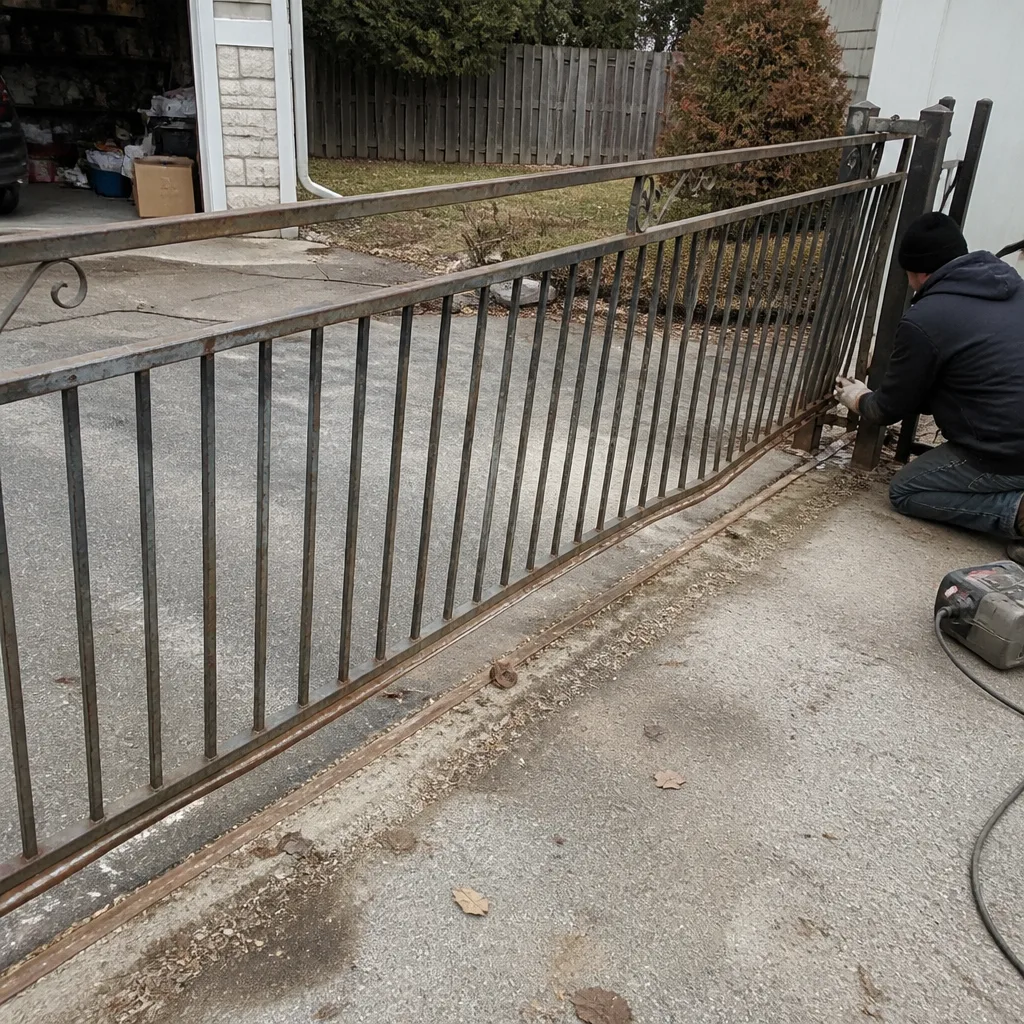 Before
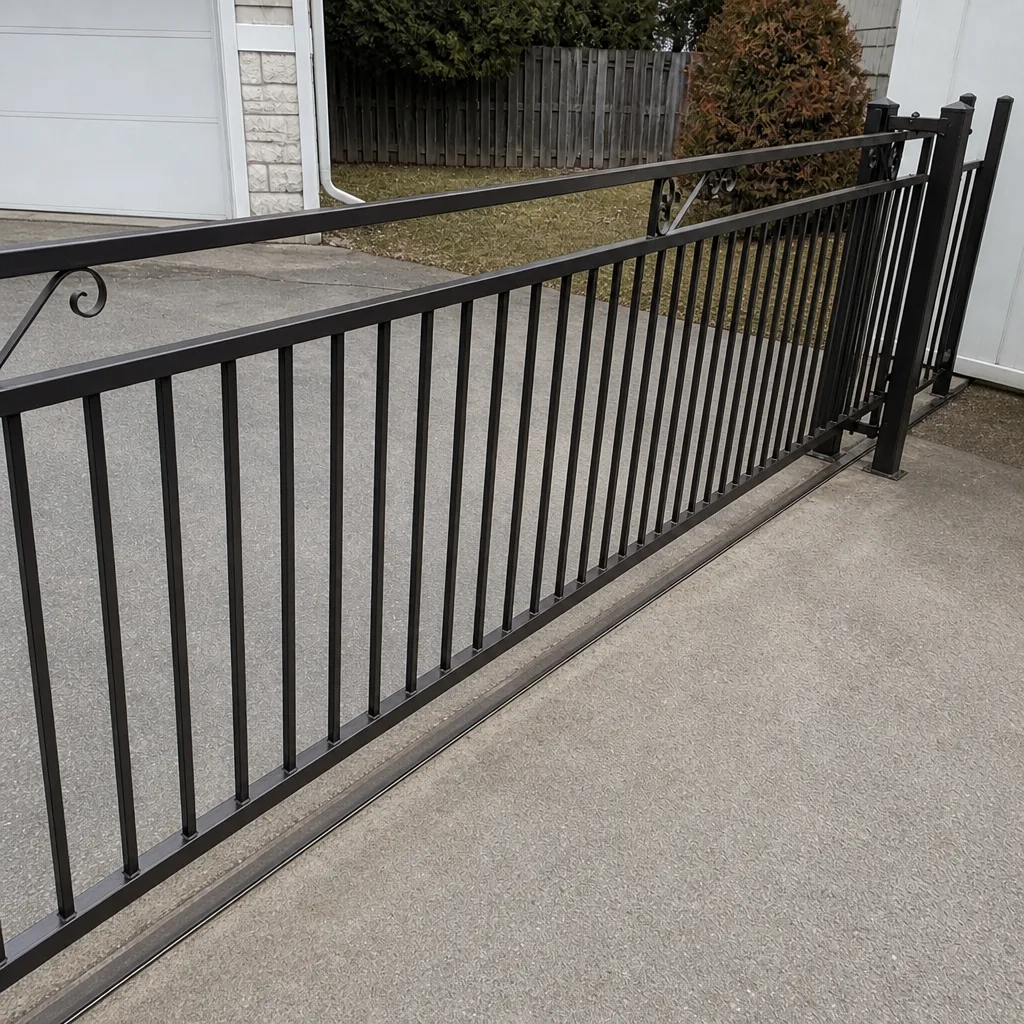 After
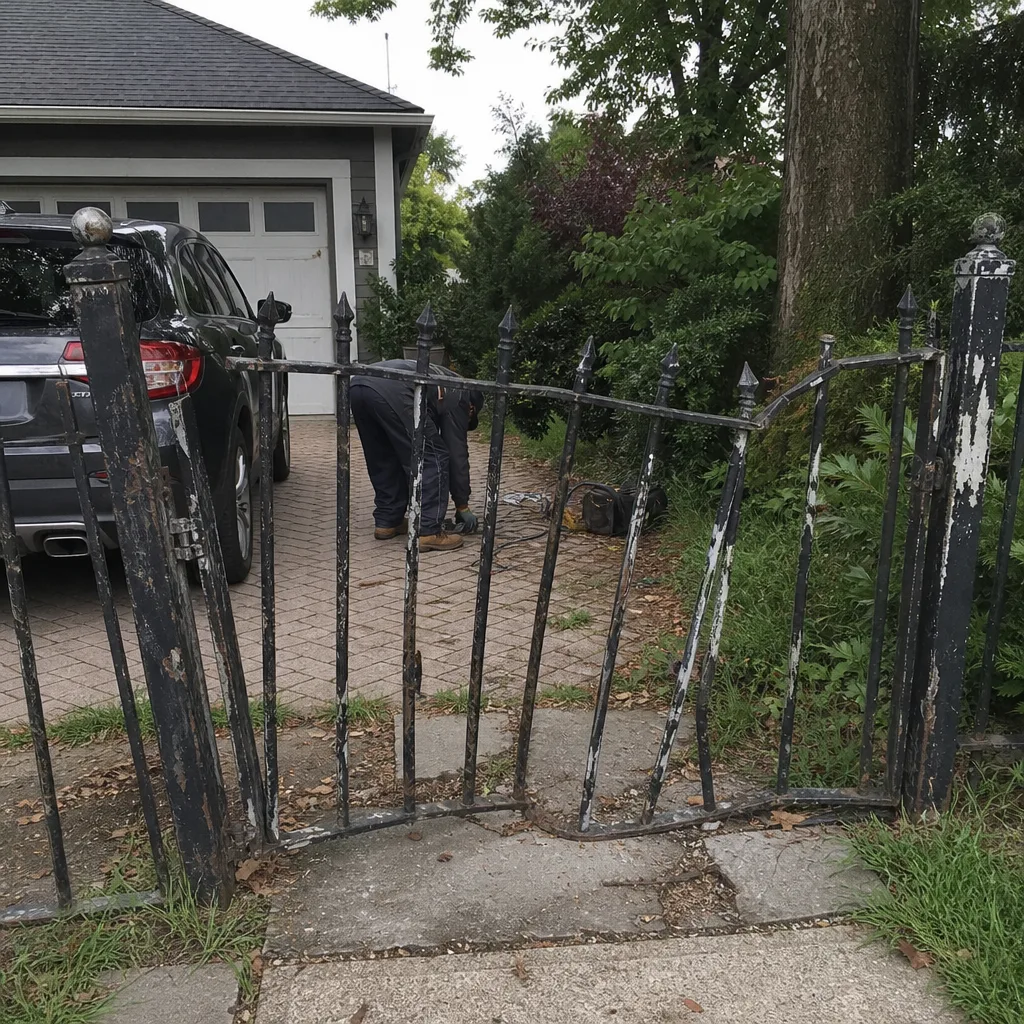 Before
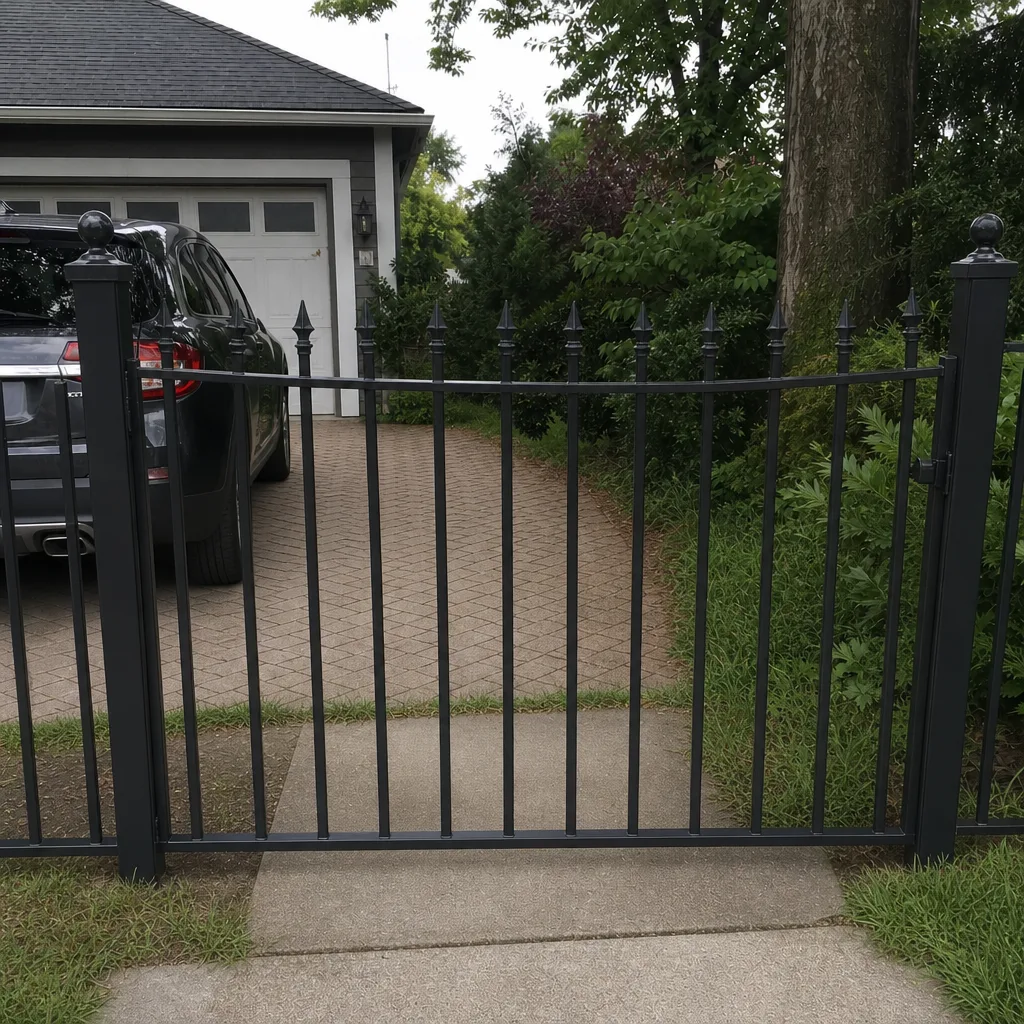 After
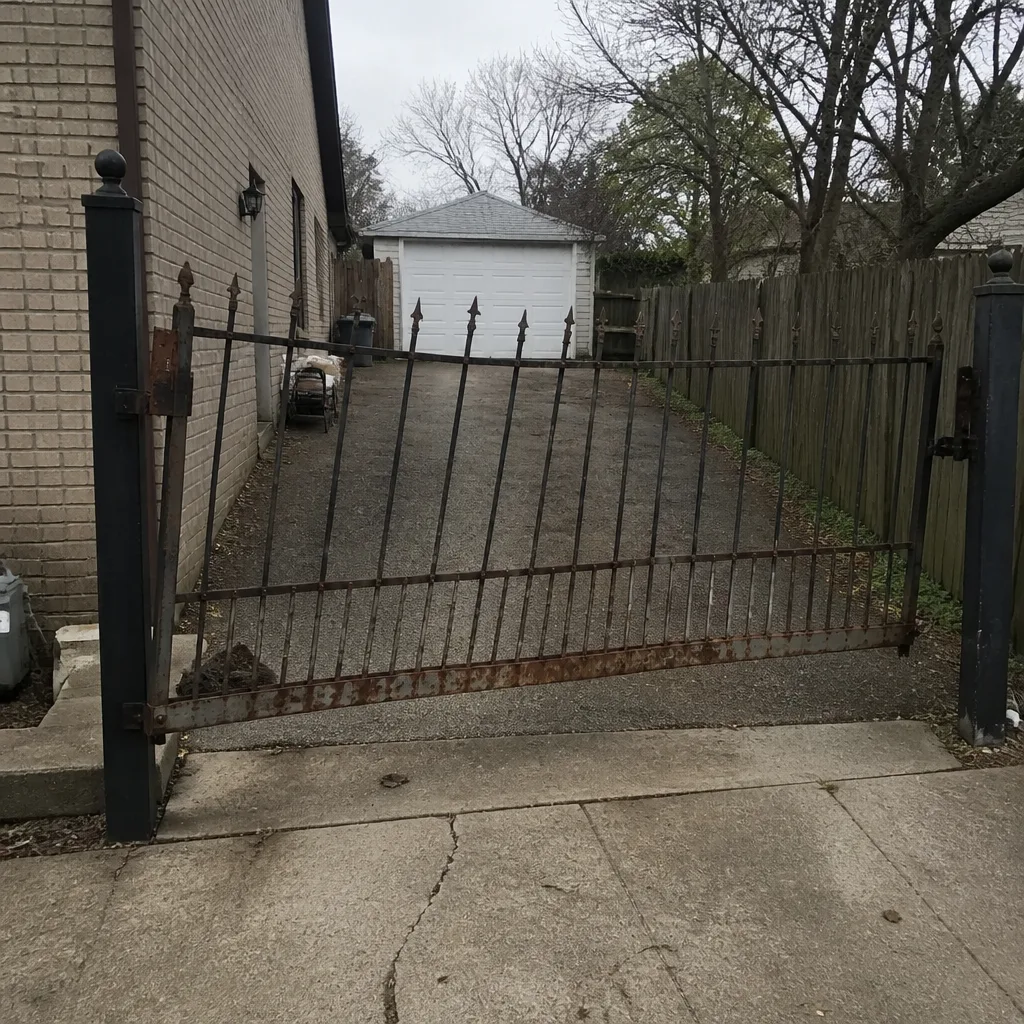 Before
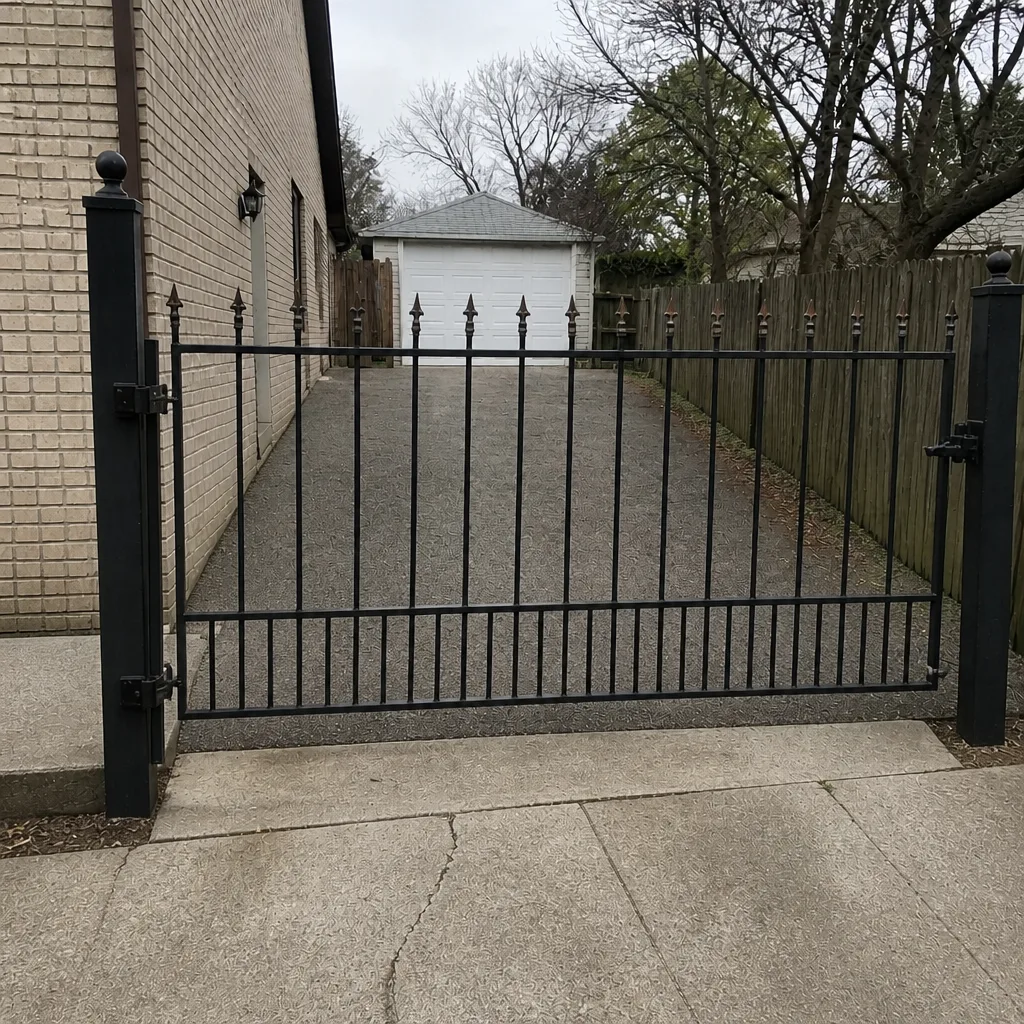 After
When to Call a Professional
Call a professional for any warning sign that involves electricity, repeated stopping, a gate that won’t stop, or a structural change you can see. Call same-week if you can’t reliably predict the gate’s behavior, and book a scheduled visit for slow-developing noise or a drifting remote. If a gate is binding, sagging, grinding, or misbehaving electrically, and you’re not certain which side of the mechanical/electrical line the fault is on, that’s exactly the call we handle. Gate Repair Naperville offers free estimates in Naperville. Call (888) 569-7811. We answer 24/7. Fast dispatch from 7am to 7pm, Sunday through Friday.
Frequently Asked Questions
A gate that hesitates before it opens or closes is the most common early warning sign. That pause means the motor is drawing more current than it should to move the gate, which usually points to a friction problem, a worn hinge, or a weakening motor. Call (888) 569-7811 for an exact quote on a diagnostic – estimates are free.
Normal gate sounds are steady and repeatable: a consistent hum, a soft click at the ends of travel. Pre-failure sounds change. Grinding, popping, a rising pitch in mid-travel, and a scrape at the same point each cycle all signal something is wrong. If you can’t tell the difference, that’s the point to have a technician listen. Call us at (888) 569-7811.
No. Electric gate repairs involve mains voltage, high mechanical energy, and safety systems, and they can cause serious injury. Leave board-level diagnostics, wiring, and safety-edge work to a trained technician. Call (888) 569-7811 for a free estimate on your repair.
Never ignore a flickering keypad, a gate that opens on its own, a loop detector that triggers inconsistently, or a tripping breaker. These point to control board or wiring issues that can cause the gate to close on a person or a vehicle. Turn the gate off and call (888) 569-7811. The estimate is free.
Fast dispatch runs from 7am to 7pm, Sunday through Friday, and same-day service is often possible. If you call outside those hours we answer 24/7, and the visit is booked into the next opening. Call (888) 569-7811. The estimate is free.
Yes. We handle the gate itself and the automation inside it, including motors, control boards, and access systems, in a single visit. We work on LiftMaster, FAAC, BFT, Linear, Viking, Ghost Controls, DoorKing, Elite, and Mighty Mule systems specifically. Call (888) 569-7811 for a free estimate.
The Bottom Line
The takeaway from this guide is simple. Gate failures rarely happen without warning. A hesitation before opening, a change in sound, a flickering keypad, or a sag that wasn’t there last month is genuinely useful information. Read those signs, triage them into “scheduled” or “call first,” and treat any electrical symptom or binding gate as urgent. If you’re unsure, call a technician and let the diagnostic settle it. We work on electric gate repair across Naperville with free estimates, and we’ll tell you plainly whether your gate needs a repair now or an appointment later.
If you’d like to talk through what your gate is telling you, or to book a free estimate in Naperville today, call (888) 569-7811. We answer 24/7. Fast dispatch from 7am to 7pm, Sunday through Friday.
Written by the team at Gate Repair Naperville.