
Last updated November 15, 2026
 Wrought iron
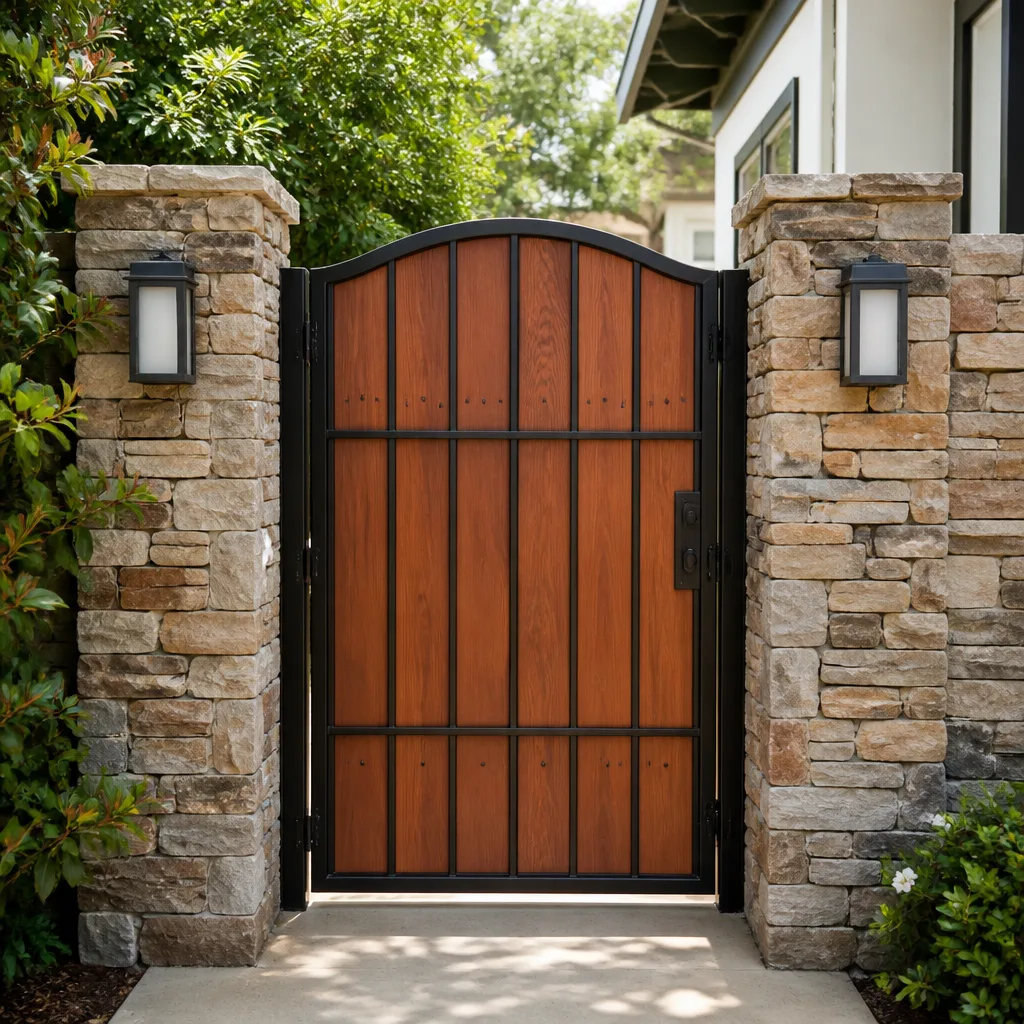 Wood & steel frame
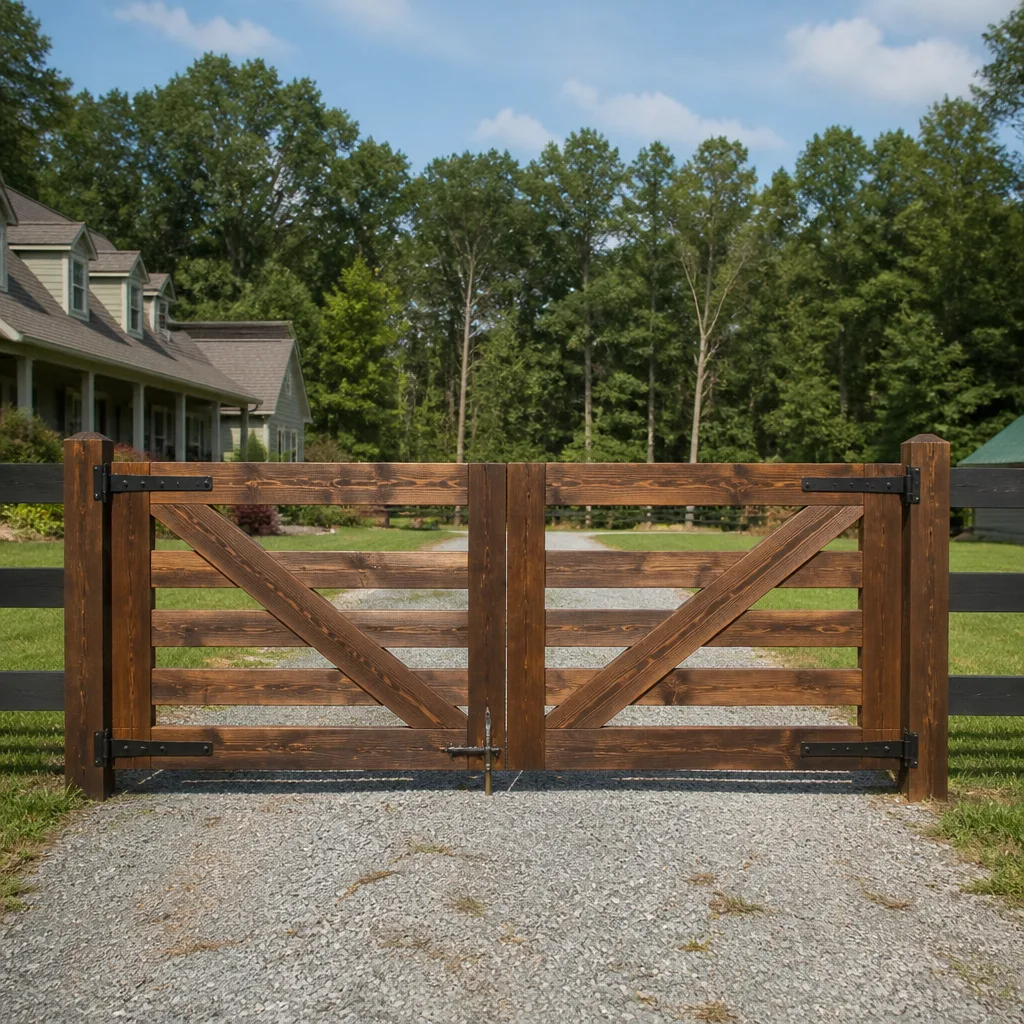 Farm & ranch
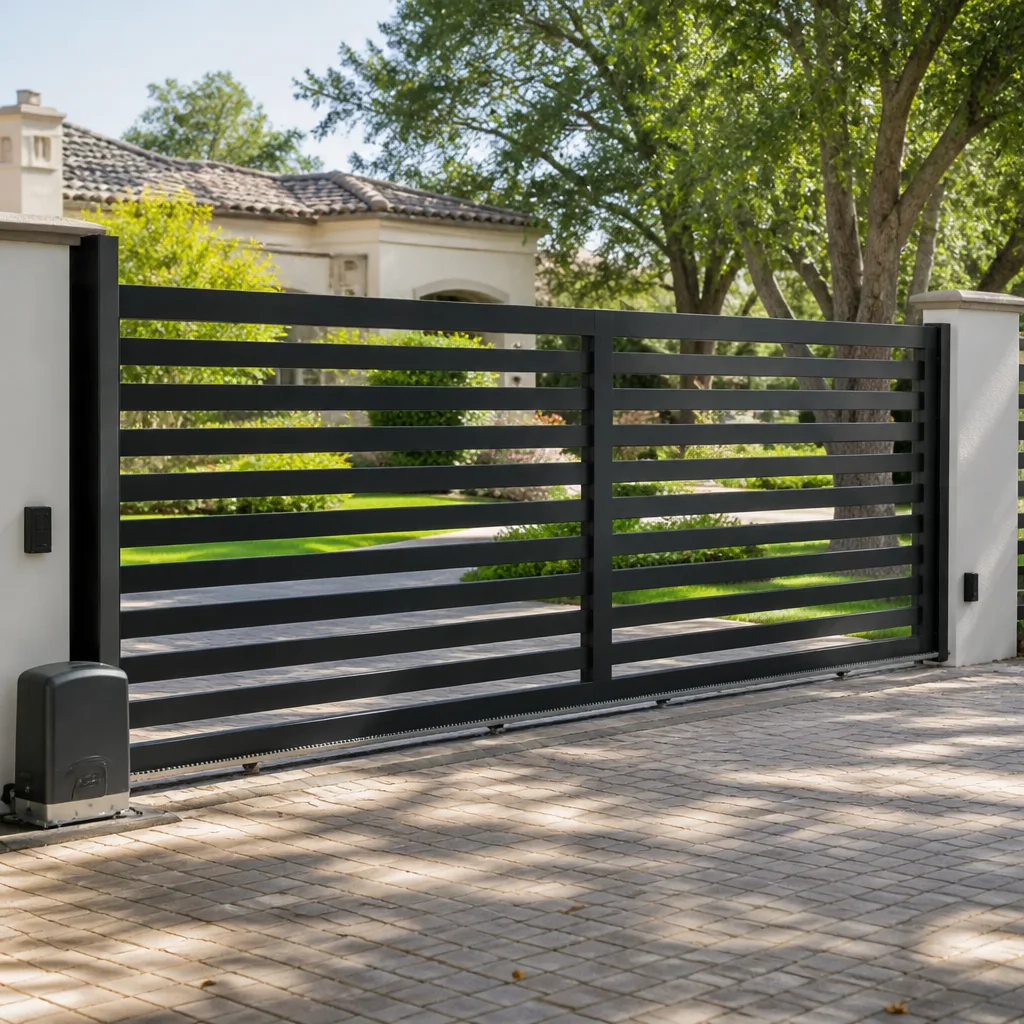 Sliding driveway gates
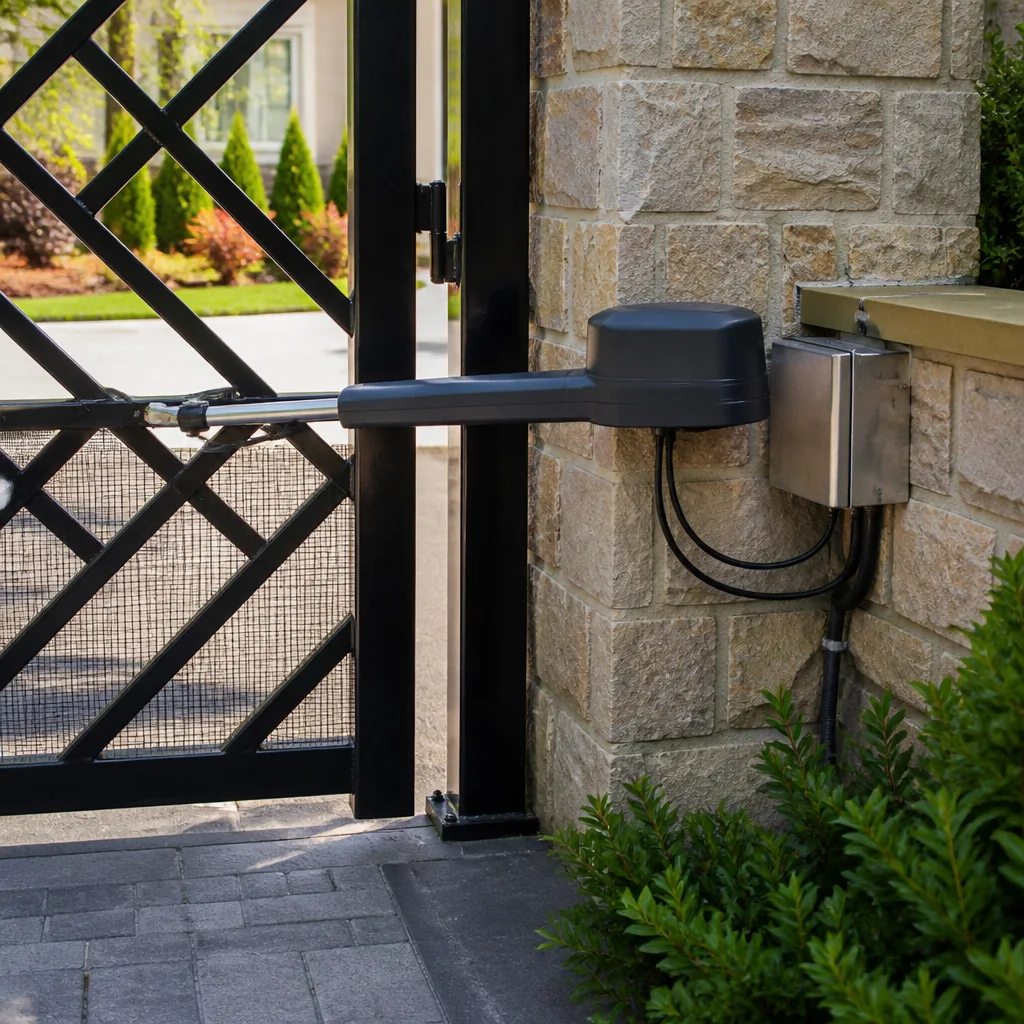 LiftMaster operators
Free on-site gate assessment - hinges, posts, and your LiftMaster or Nice gate operator checked before anything is quoted
The assessment is free and the quote is the invoice.
Get your free estimateGate Repair Maintenance Schedule: What to Do and When
Most gate maintenance advice floats around the internet without a calendar attached, which is why so many Naperville gates fail in the same predictable weeks every year. Here’s the part that surprises homeowners: March is the heaviest month we see for hinge, post, and operator damage, and storms have little to do with it. What happens is underground. After a hard winter, the soil under a gate post heaves and settles as temperatures swing above and below freezing, and a gate that sat perfectly aligned in November is binding on one side by the first warm week. If you’ve been searching for a gate maintenance schedule that actually matches how a gate ages in Naperville, this guide gives you a month-by-month plan tied to real failure patterns, with the specific tasks that belong in each season.
Quick Answer
The right gate maintenance schedule in Naperville is seasonal, not quarterly: pre-winter prep in October, a post-thaw inspection in March after the ground settles, a peak-use check in June, and a general tune-up on your drive system’s own interval (annual for most residential operators). Match lubrication to your drive type, reset travel limits after any ground movement, and test battery backup twice a year. Most of the work is visual and takes 20 minutes; a licensed gate technician should handle anything involving the operator’s wiring, springs on the operator arm, or safety sensors.
Styles & brands we work with
- Wrought iron
- Wood & steel frame
- Farm & ranch
- Sliding driveway gates
- LiftMaster operators
Table of Contents
- Why a Gate Maintenance Schedule Beats Reactive Repair
- The Naperville Seasonal Gate Calendar
- Lubrication by Drive Type: Chain, Screw, and Hydraulic
- How to Check and Reset Gate Travel Limits After Ground Movement
- Battery Backup Health Checks
- Which Tasks Preserve Your Manufacturer Warranty
- The 15-Minute Monthly Inspection Checklist
Why a Gate Maintenance Schedule Beats Reactive Repair
A gate is one of the few pieces of equipment on a property that takes daily mechanical load and almost no routine attention. It opens and closes dozens of times on a busy day at a residential property, and every one of those cycles works the same handful of moving parts: hinge pins, operator arm pivots, the drive chain or screw, and the safety sensors. Without a schedule, those parts wear unevenly and fail at the worst moment (usually a Friday when the whole family is trying to leave).
The economics are simple. Gate repair is priced per job by a written estimate, and small maintenance tasks cost less than replacing a burned-out operator motor or a bent operator arm. A gate that’s binding slightly stresses the operator every cycle; over a few months, that extra resistance shortens motor life. A gate that’s correctly aligned runs easier, and the operator runs cooler. We’ve seen this pattern over and over in our work on automated gates across Naperville.
The other reason to schedule maintenance is that gate failures aren’t usually dramatic. They’re gradual. A chain stretches a quarter inch. A hinge pin wears a groove. A safety sensor drifts out of alignment and gets ignored because the gate “still works.” The gate that fails suddenly was usually telling you something quietly for months.
If your gate is already unreliable, our Gate Repair Naperville page explains the three service types we handle: repair, electric diagnostics, and new installation. The schedule below is what keeps you out of that cycle in the first place.
The Naperville Seasonal Gate Calendar
Naperville has a specific gate-stress profile that separates it from warmer climates. The freeze-thaw cycle from November through March moves the ground under gate posts, and the summer’s humidity works on metal and lubricants. That means three anchor dates on the calendar: October, March, and June. Each one has a clearly defined job.
October: Pre-Winter Prep
October is your best opportunity to catch problems before the ground freezes and locks them in place for five months. A gate that’s out of alignment in October will almost certainly be worse by April, because the freeze-thaw cycle magnifies whatever gap exists. The October checklist:
- Clean the drive chain or screw with a degreaser, then re-lubricate with the correct grade for your operator.
- Inspect the gate frame, hinge plates, and post bases for rust spots. Address surface rust before winter.
- Check that all hinge pins are lubricated and move freely. A stiff hinge pin in November is a seized one by February.
- Test the manual release. If you need to open the gate by hand in a power outage, you should know it works before the snow flies.
- Verify battery backup charge and replace cells if they test weak.
- Clear the gate’s path of leaves and debris that will freeze solid and jam the gate later.
March: Post-Thaw Inspection
March is the most important inspection month in Naperville, and it’s the one most homeowners skip. As the ground thaws, gate posts shift, and gates that opened smoothly in October can now be binding against the latch or dragging on the strike plate. The symptoms are subtle at first: the operator sounds slightly more labored, the gate swings a little harder, the closing limit feels off. Left alone, that binding stresses the operator motor, wears the arm bushings, and eventually burns out the drive.
The March inspection covers:
- Open and close the gate by hand (if your operator allows it) and listen for binding or scraping.
- Check the gap between the gate and the post at the latch point. If the gap has closed, the ground has moved.
- Reset travel limits (see the dedicated section below).
- Inspect the operator’s mount and lag bolts for movement.
- Test the safety sensors at both open and closed positions.
- Walk the whole fence line, since post movement in one area often signals movement in adjacent posts.
June: Peak-Use Summer Check
Summer is when most gates do the most cycles, since driveways, yard work, and evening guests push the gate into heavy daily use. June is the right month to do the mid-year check while the gate is under real load, so you catch seasonal wear patterns early. This is also the month to look for heat-related issues on operators (control board ventilation, drive motor temperature) and to re-verify that all safety edges and photo-eye sensors function correctly.
If you run a Linear or Viking system at a residential property, June is a good time to run a full diagnostic cycle to confirm the operator’s internal log shows no fault codes. Both of those brands display codes on their control boards that most homeowners never check unless the gate stops.
Need a technician to walk your gate through any of these seasonal checks? Our local gate repair service covers repair, electric diagnostics, and scheduled maintenance visits.
Lubrication by Drive Type: Chain, Screw, and Hydraulic
This is where most maintenance schedules go wrong. There is no single “gate lubricant,” and the wrong product can do real damage. Chain drives, screw drives, and hydraulic operators each need different treatment, on different intervals, with different grease grades. Here’s how to tell them apart and what to use.
Chain Drive Operators
Chain drives are the most common residential setup (Linear, Ghost Controls, Elite, and most of the Mighty Mule lineup use them). The chain needs cleaning and re-lubrication roughly every six months, and more often in a high-cycle environment. Use a chain-specific lubricant, typically a spray-on or drip-on formula designed for roller chains. Avoid heavy wheel-bearing grease, which traps grit and accelerates wear on the rollers. After lubricating, run the gate through a full open and close cycle to distribute the lubricant, then wipe the excess so it doesn’t attract dust.
Screw Drive Operators
Screw drives (common in Linear and some commercial-grade systems) need a lighter application and a different product. Use a lithium-based or manufacturer-specified screw-drive grease, and apply it to the threads with a brush or a spray designed for the purpose. Screw drives tend to accumulate debris in the threaded track, so cleaning before re-lubricating matters more than the grease itself. Interval: every six to twelve months depending on use.
Hydraulic Operators
Hydraulic swing operators (typical in FAAC and BFT systems) are different again. The moving parts are sealed, so lubrication is mostly about the operator arm joints and pivots. Use a multi-purpose grease on the pivots and check the hydraulic fluid level per the manufacturer’s interval. Never open the hydraulic cylinder housing; fluid changes belong to a qualified technician. If you notice fluid weeping around the cylinder seals, stop operation and call for service, since that’s a hydraulic fault rather than a maintenance item.
Quick Reference Table
- Chain drive: clean and lubricate every 6 months with chain-specific lubricant
- Screw drive: clean and grease every 6-12 months with lithium-based grease
- Hydraulic: grease the pivots every 6 months, check fluid annually per manufacturer
- Hinges and pivot pins: lubricate every 3 months with a lithium or white grease
- Rollers (on slide gates): inspect every 6 months, grease per manufacturer spec
If you’re not sure which system you have, the model number and the operator’s brand label will tell you. We work on Linear, Viking, Ghost Controls, DoorKing, and five other major brands and can identify your system in a single visit. If you’d rather see that work in person, our electric gate repair service covers diagnostics on all nine.
How to Check and Reset Gate Travel Limits After Ground Movement
Travel limits are the operator’s internal record of exactly where the gate should stop when it opens and closes. When the ground shifts, the gate’s physical position relative to the operator changes, and the limits go stale. The gate then stops a fraction of an inch too soon or too late, which stresses the gate every cycle. Resetting limits is one of the highest-value maintenance tasks a homeowner can do, and most never touch it.
Here’s the safe way to check and reset limits on most residential operators:
- Check first. Open and close the gate using the operator and watch the stop points at both ends. If either stop is binding, dragging, or too early, the limits need attention.
- Release the operator. Use the manual release to disengage the operator from the gate, then swing or slide the gate by hand through its full travel. It should move smoothly with no binding at either end.
- Find the limit controls. On most residential operators (Linear, Ghost Controls, Mighty Mule), the limits are set by adjusting cams, screws, or digital settings on the control board. On newer systems, you may have to enter a programming mode.
- Set the open limit first. Follow your operator’s manual to move the gate to the desired open position, then record the open limit.
- Set the close limit second. Do the same for the closed position, ensuring the gate meets the post or strike without binding.
- Test the safety reversal. After setting limits, place a physical object in the gate’s path and confirm the operator reverses on contact or on photo-eye trigger.
Safety note: If your operator stores limit positions digitally (common on DoorKing commercial systems and some newer residential units), a mistake in programming can leave the gate closing on the safety edge, which is a crushing hazard. If the programming sequence in the manual is unclear, have a qualified gate technician set the limits rather than guessing. It’s the one maintenance task that’s safer handled by a trained hand.
Battery Backup Health Checks
Battery backup prevents the single most frustrating failure mode on an automated gate: the operator’s control system loses power, and the gate defaults to whatever state it was in, which is usually closed. If the backup battery is dead, you’re locked out of your own driveway until the power comes back or you run the manual release (in the rain, in the dark, in a hurry).
Battery health is not a one-time check. Lead-acid backup batteries degrade gradually and typically need replacement every two to three years, sometimes less in a cold climate. The check is simple:
- Locate the backup battery in the operator housing (usually a small sealed cell).
- Test the voltage with a multimeter. Most residential backup systems run on 12V or 24V; a battery reading more than 10% below its rated voltage is on its way out.
- Disconnect power to the operator (via its breaker) and confirm the gate still cycles on battery.
- Inspect the battery terminals for corrosion, which is common in a cold, humid environment and can block the charge.
- Replace the battery if it fails the cycle test or shows corrosion on the terminals.
- Test the manual release as well, since a dead battery and a stuck release is a two-problem failure.
Do this check twice a year, when you change the clocks is a convenient reminder. It’s a small task that prevents the phone call nobody wants: standing at a closed gate at 6am with a dead battery and no release working. Need a hand? Call us and we’ll test the system and confirm the battery is healthy in a single visit.
Which Tasks Preserve Your Manufacturer Warranty
A common misconception is that maintenance tasks either keep or void a manufacturer warranty wholesale. In reality, the warranty is split. Some tasks are homeowner-permitted and support the warranty; others require documentation and a technician’s signature to keep the warranty intact.
Tasks Homeowners Can Do Without Affecting Warranty
- Cleaning the chain or screw drive
- Lubricating hinges, pivots, and rollers with the manufacturer-specified product
- Testing safety sensors and the manual release
- Visual inspection of the gate frame, posts, and mount bolts
- Battery health checks and routine battery replacement
Tasks That Should Be Documentation-Required for Warranty
- Replacing the operator motor or control board
- Fault-code diagnosis and clearing (some manufacturers require an authorized record)
- Hydraulic cylinder service or fluid work
- Adjusting travel limits on digitally programmed systems
- Wiring or electrical repairs inside the operator or control box
Keep your receipts and note the dates of any technician-performed work. Most manufacturers accept a service record showing maintenance was performed on schedule as evidence the equipment was cared for, and this makes a warranty claim far smoother. If you’re not sure whether a task is homeowner-safe on your specific model, ask before you touch the operator, since a voided warranty is far more expensive than a maintenance visit. We can tell you what your DoorKing, FAAC, or BFT warranty requires on a per-machine basis.
The 15-Minute Monthly Inspection Checklist
Between the seasonal anchor dates, a quick monthly walk-through catches most developing issues before they become repairs. Fifteen minutes, once a month, and you’ll have early warning on almost every category of gate failure. This checklist works for both manual gates and automated gates, though a few items are operator-specific.
- Visual scan of the whole gate. Look for rust, bent hinges, sagging arms, or anything that’s moved.
- Open and close the gate by hand. It should move without noise, catch, or drag.
- Listen to the operator. Any new grinding, clicking, or straining sound is worth writing down.
- Test the photo-eye sensors. Break the beam with your hand and confirm the gate reverses.
- Test the safety edge (if equipped). Press it and confirm the gate stops or reverses.
- Check the battery backup indicator light on the control panel (if your operator has one).
- Look at the gate’s low point. In winter, ensure no ice or snow is jamming the path.
- Check the latch alignment. The gate should latch with light contact, not forced closure.
- Walk the fence line adjacent to the gate for any leaning or settled posts.
- Note any daylight in a gate that should be flush, which signals movement.
Log anything you find. A short note (“left hinge binding, close limit early”) is enough for a technician to prioritize the visit. It also makes warranty claims and any insurance questions far easier to sort out.
Common Mistakes to Avoid
- Skipping the March inspection. Naperville’s freeze-thaw cycle is the single biggest cause of gate misalignment, and a March check catches it before it stresses the operator through summer. Wait until June and you may be looking at a burned-out motor instead of a binding hinge.
- Using the wrong lubricant. WD-40 on a chain drive traps grit and accelerates wear; heavy grease on a screw drive attracts debris. Match the lubricant to the drive type or skip the task until a technician confirms.
- Ignoring travel limits after any change. If the gate’s stopped hitting the same spot for two weeks, the limits are stale, and every cycle is stressing the operator. Reset limits after ground movement, post settling, or a new mount install.
- Letting a battery backup go dead unnoticed. A dead backup battery is invisible until the first power outage, and then the gate locks closed. Test it twice a year, and replace cells on a three-year rotation as a rule of thumb.
- Greasing the operator arm wrong. On swing gates, the operator arm pivots need grease but the joints around the actuator should stay dry. Over-greasing can collect dust and grime that wear the joints faster.
- Adjusting the operator’s wiring. Any task inside the control box is a licensed technician’s job, both for safety and to preserve the warranty. DIY wiring is the leading cause of warranty-void claims on residential operators.
- Treating maintenance as one-size-fits-all. A Mighty Mule residential swing gate and a DoorKing commercial slide gate have completely different schedules. Calibrate to your actual system instead of following a generic checklist, which is why we diagnose each system specifically.
See the difference
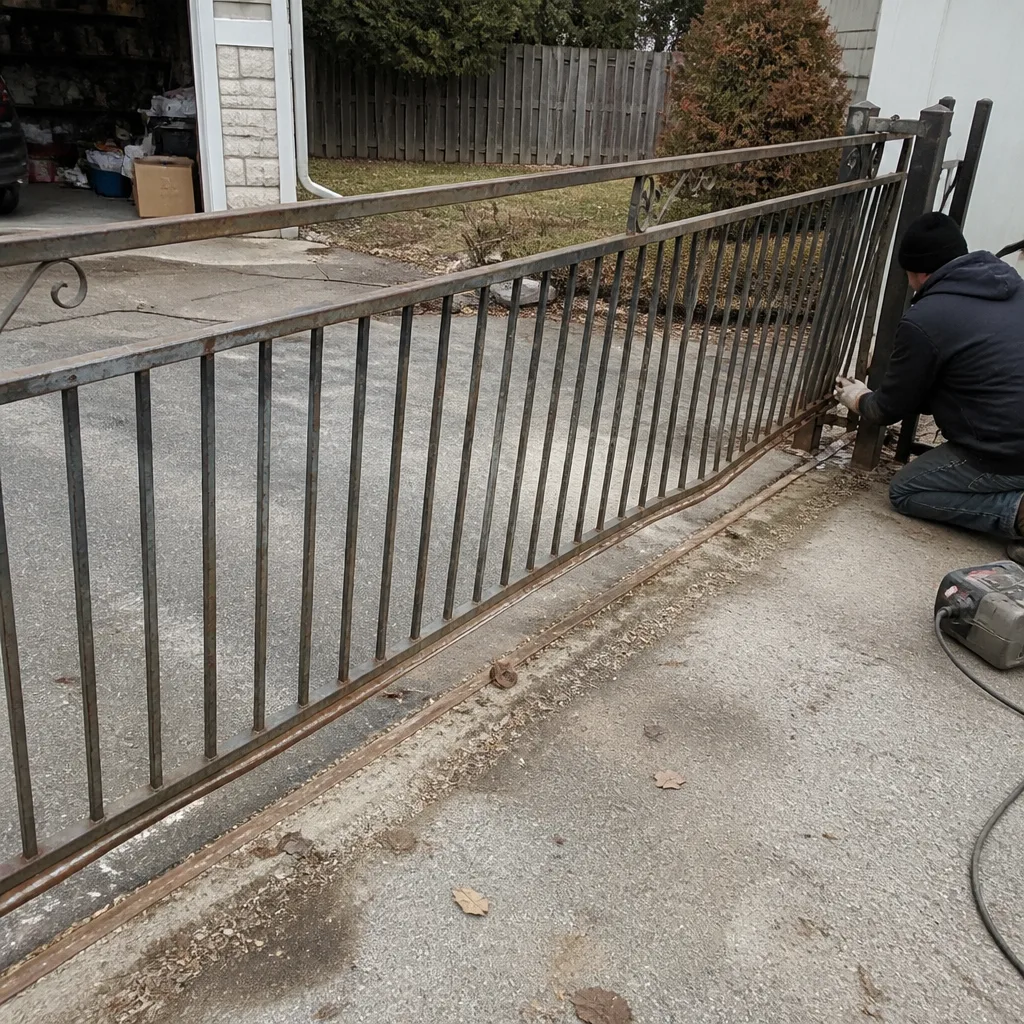 Before
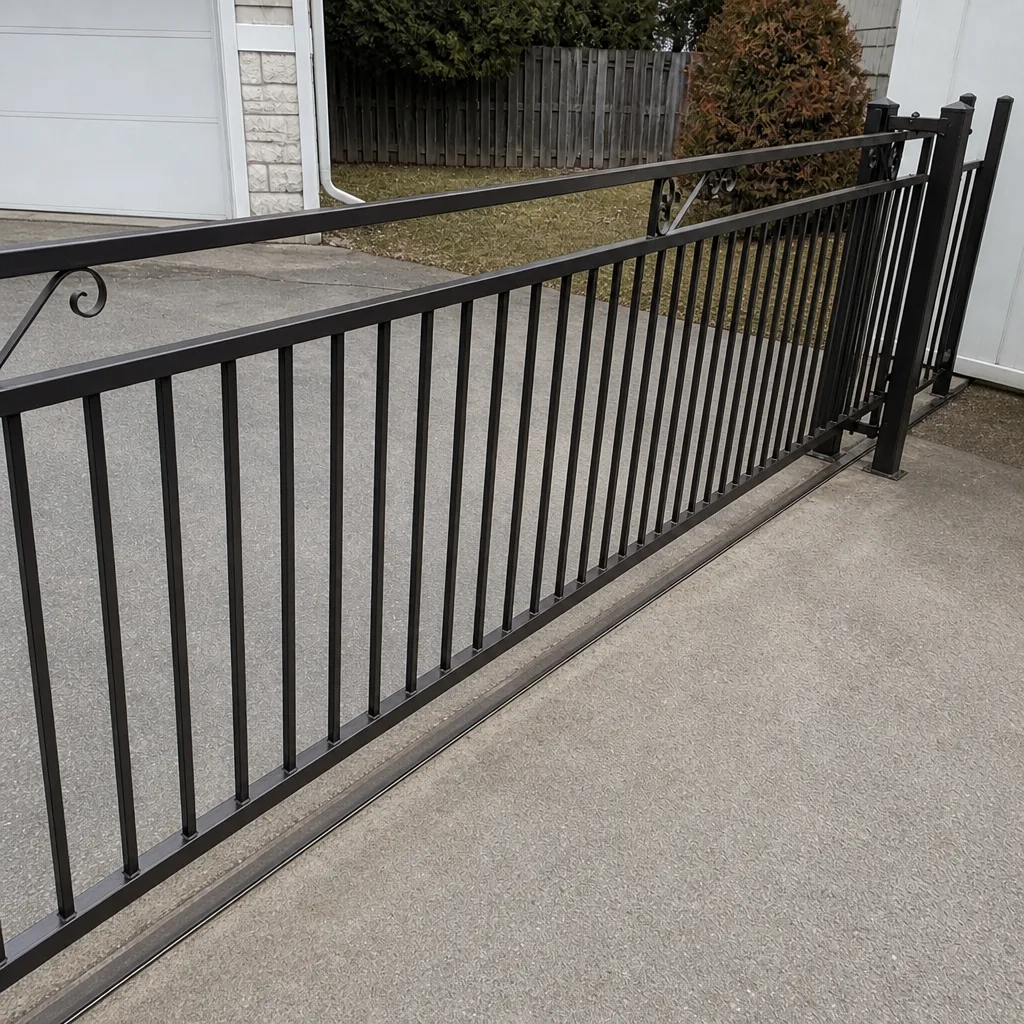 After
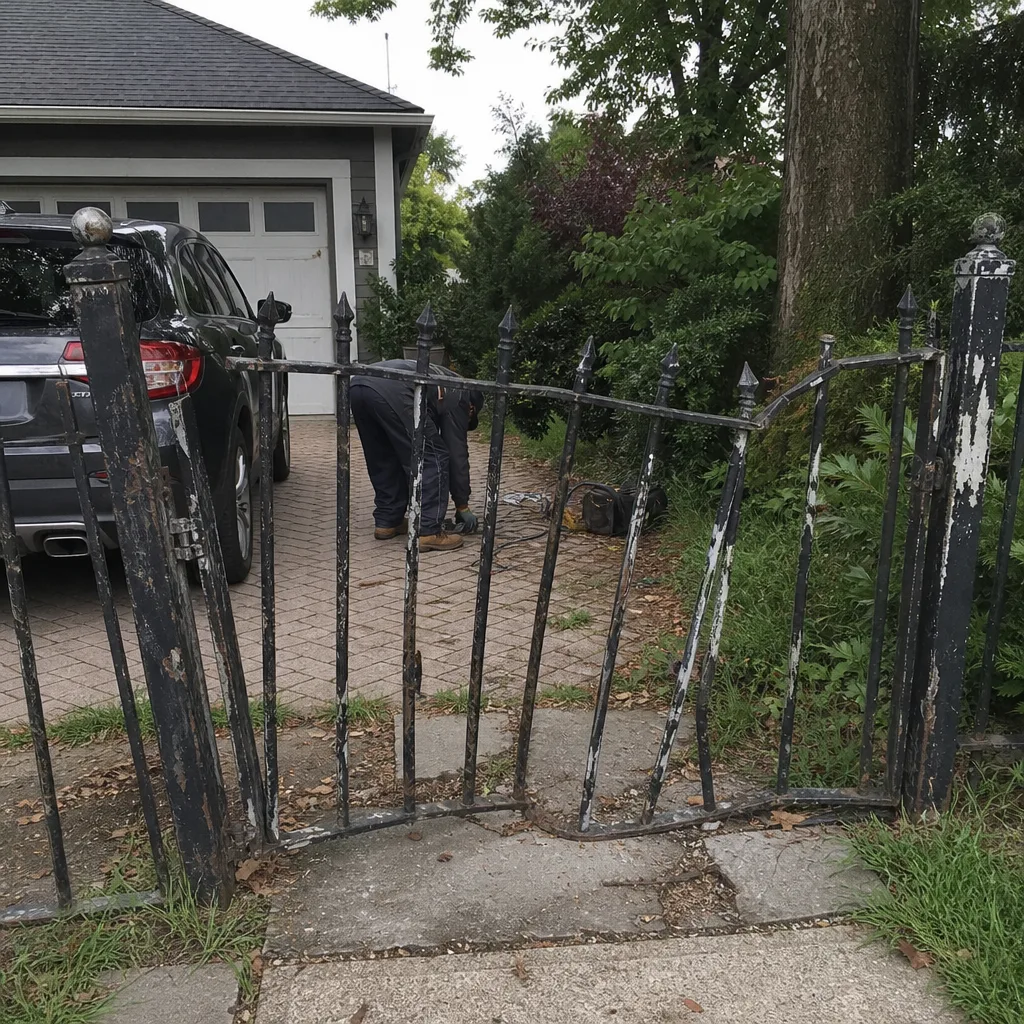 Before
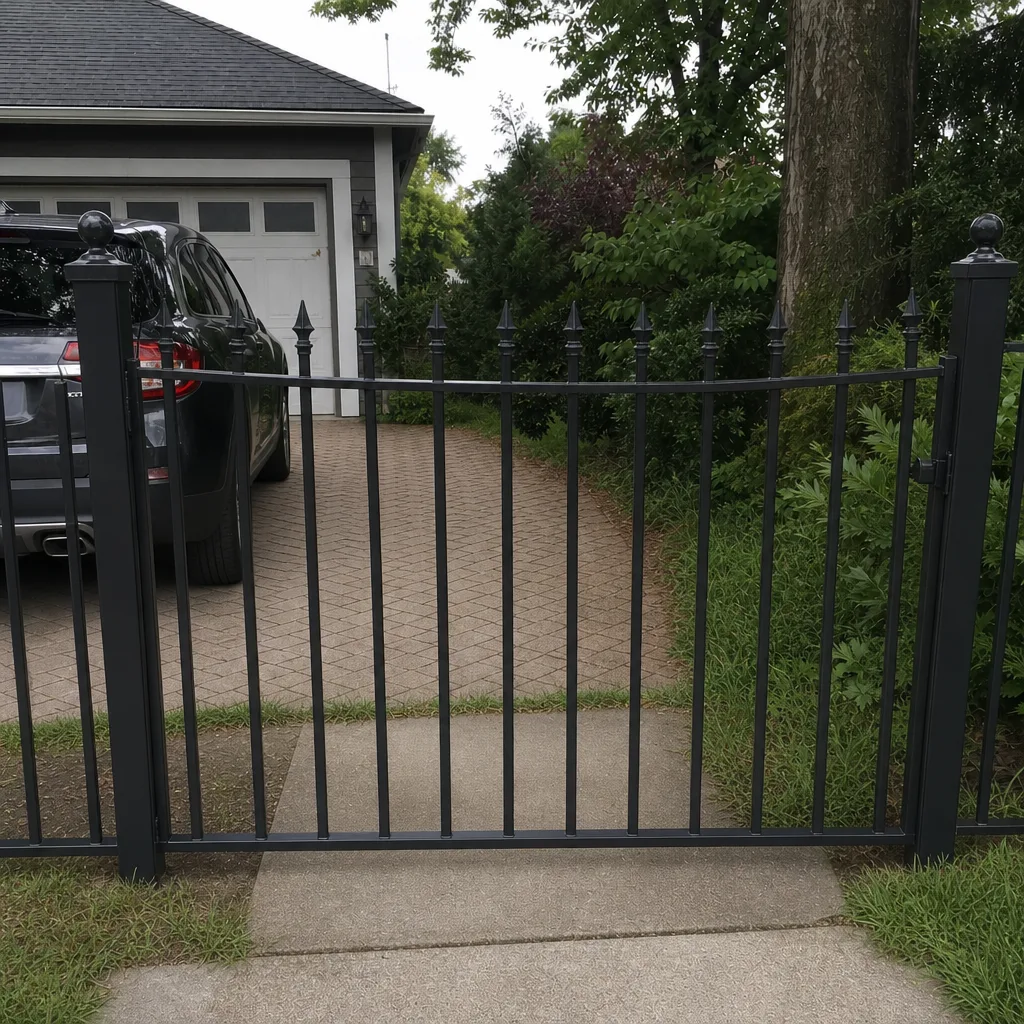 After
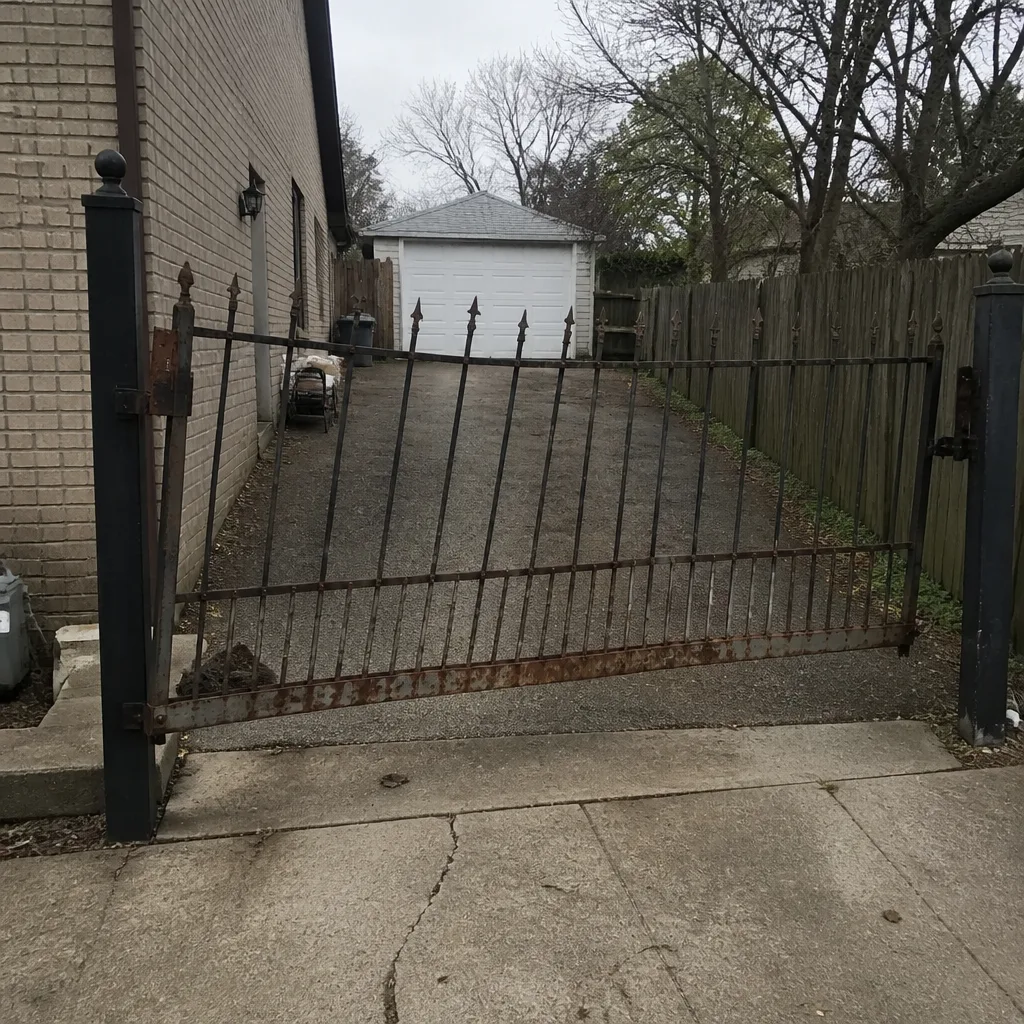 Before
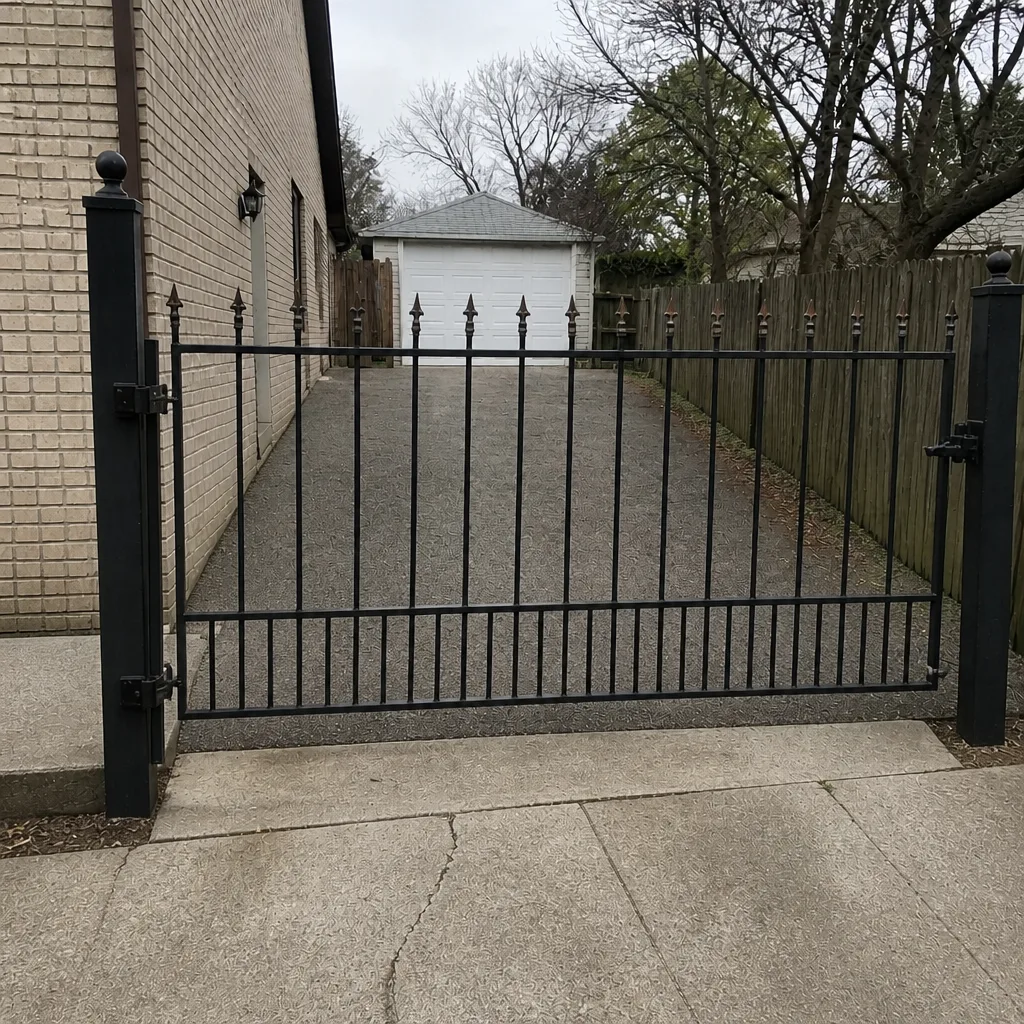 After
When to Call a Professional
There are maintenance tasks a homeowner can safely do, and there are tasks that belong to a licensed technician. Call a professional when the gate binds after ground movement (potential alignment reset on digital limits), when the operator’s control board shows a fault code, when safety sensors or edges fail a test, on any wiring or motor work, and on anything involving an automated gate with commercial-grade controls. If the gate has failed and won’t open at all, it’s worth having a technician diagnose the whole system rather than guessing at the part, since a brand-specific failure pattern usually points to a specific cause that a specialist recognizes faster than a generalist. Gate Repair Naperville offers free estimates across Naperville and the surrounding area. Call (888) 569-7811. We answer 24/7. Fast dispatch from 7am to 7pm, Sunday through Friday.
Frequently Asked Questions
In Naperville, a seasonal schedule works best: a full service in October before winter, an inspection in March after the ground thaws, a mid-year check in June, and monthly visual walk-throughs in between. If your gate is automated, add a drive-system inspection on the manufacturer’s recommended interval (typically annual for residential systems) and be sure to perform the chain or screw lubrication every six months. Call (888) 569-7811 for a tailored schedule matched to your operator.
Because the ground under your gate posts has been through a full freeze-thaw cycle and settled back into a different position than it held in November. The gate itself is fine, but the posts have moved, which shifts the gate’s alignment and stresses the operator. A hinge that fit its pin in October now binds, and the operator works harder to close. A March inspection catches this before summer wear adds up. Our team assesses Naperville gates after most winters; call (888) 569-7811 to schedule a walk-through.
On some residential operators, yes, especially the mechanical-cam style on older Linear or Ghost Controls systems. On digitally programmed operators, or any DoorKing system, it’s safer to have a technician do it because a programming mistake can leave the gate closing on the safety edge, which is a crushing hazard. If the manual’s sequence isn’t crystal clear, call us. Estimates are free.
Two to three years is typical for the lead-acid backup cells used in most residential gate operators, and the colder Naperville climate tends to shorten that rather than extend it. Test the battery every six months by disconnecting power and cycling the gate, and replace it as soon as it fails. A dead backup battery is the most common cause of a gate locking closed during a power outage. Call (888) 569-7811 if you’re unsure how to test yours.
It depends on the drive type. Chain drive operators need chain-specific lubricant applied every six months. Screw drive operators need a lithium-based grease applied every six to twelve months. Hydraulic systems (FAAC, BFT and similar) mainly need grease on the pivot points and the manufacturer’s specified hydraulic fluid check. Hinges and pivot pins across all types need a light grease every three months. Using the wrong product (like heavy bearing grease on a chain) does more harm than good. We’ll identify the right product for your specific system.
No, but some tasks do if done wrong. Cleaning, lubricating, and testing safety components are homeowner-permitted and support the warranty. Any work inside the operator’s control panel, motor, or hydraulic cylinder, or any adjustment of digital travel limits, should be done by a technician with a documented service record. Keep receipts and note the dates so warranty claims go smoothly. If you’re uncertain, call us before you touch the operator.
The Bottom Line
A gate maintenance schedule isn’t a generic quarterly checklist, and it isn’t the same for every gate. The right schedule is tuned to your drive system, your climate, and your actual usage. In Naperville, that means October, March, and June anchor dates, drive-specific lubrication, and a March travel-limit reset after the ground settles. Month-to-month, a 15-minute walk-through catches most developing issues. If you stick to that calendar, you’ll spend far less on repair than you would reactive, and your operator will last years longer than it would under the “open it and forget it” approach. That’s the whole maintenance plan, and it works.
For gate repair, electric diagnostics, or a scheduled maintenance visit in Naperville, call (888) 569-7811. Estimates are free and the price is quoted before any work begins. We answer 24/7. Fast dispatch from 7am to 7pm, Sunday through Friday. If a gate fails tonight, a call is booked into the next opening, and we’ll have a technician on it.
Written by the team at Gate Repair Naperville.