
Last updated November 15, 2026
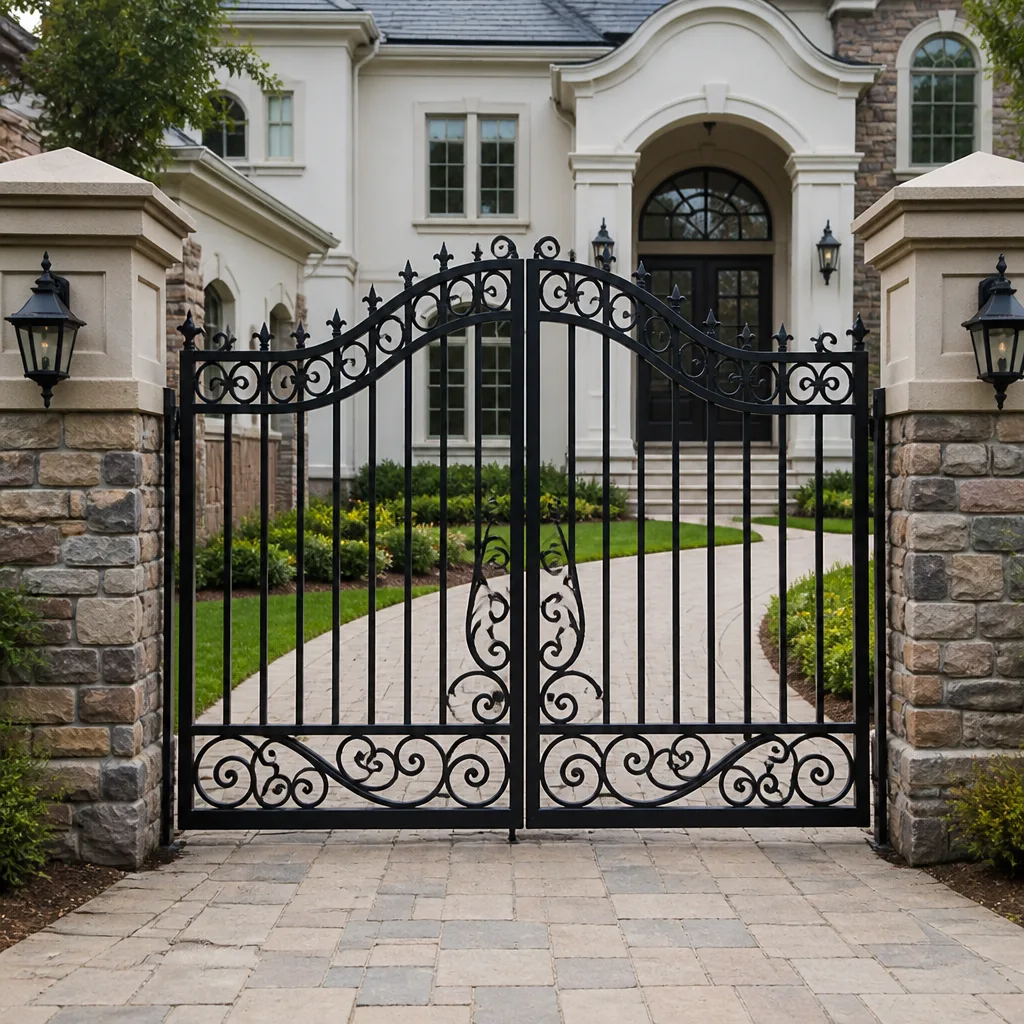 Wrought iron
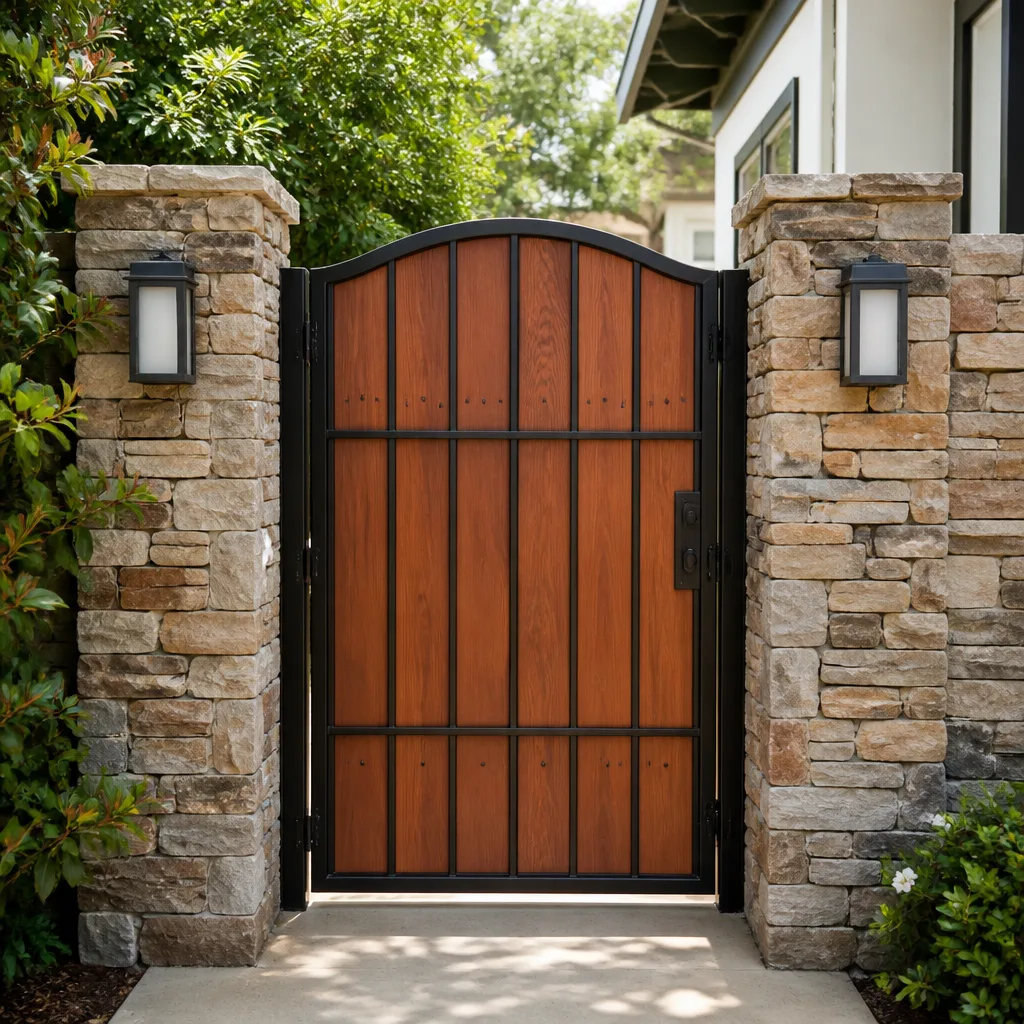 Wood & steel frame
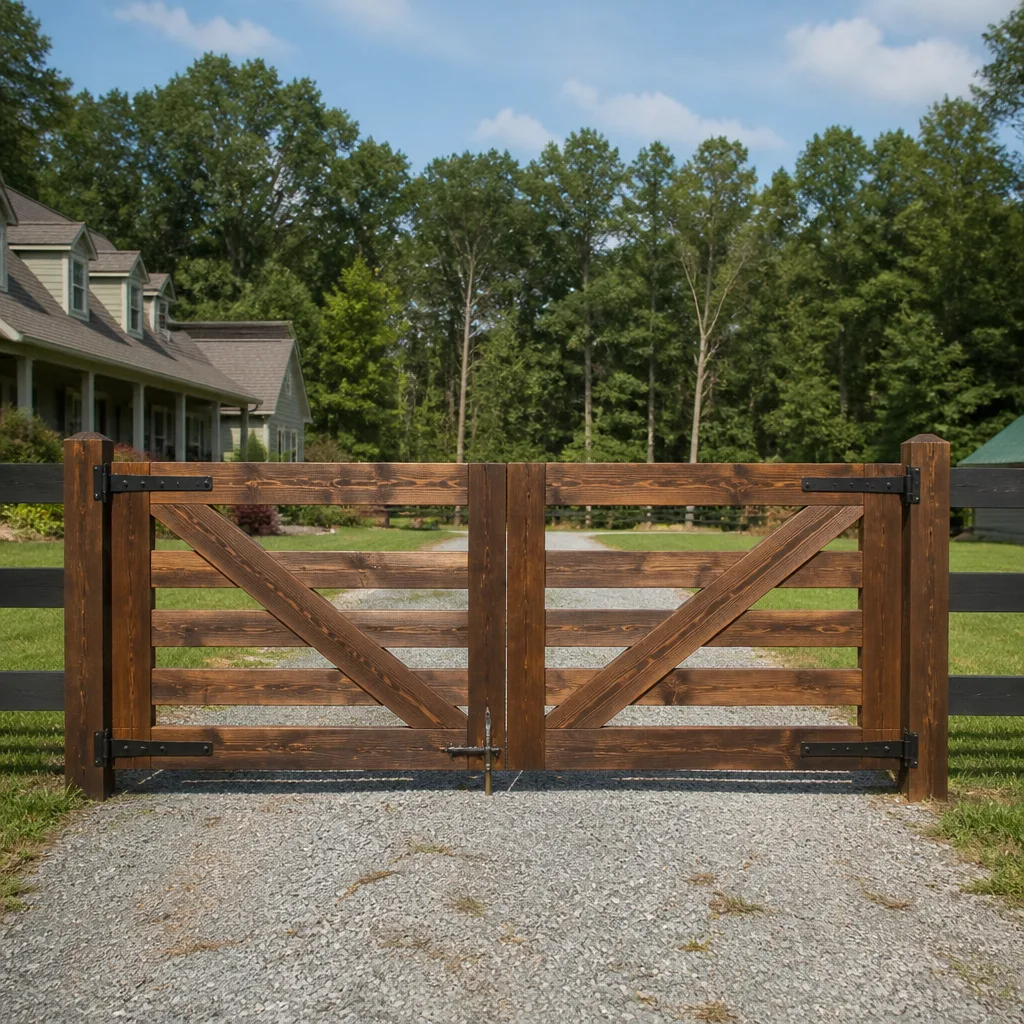 Farm & ranch
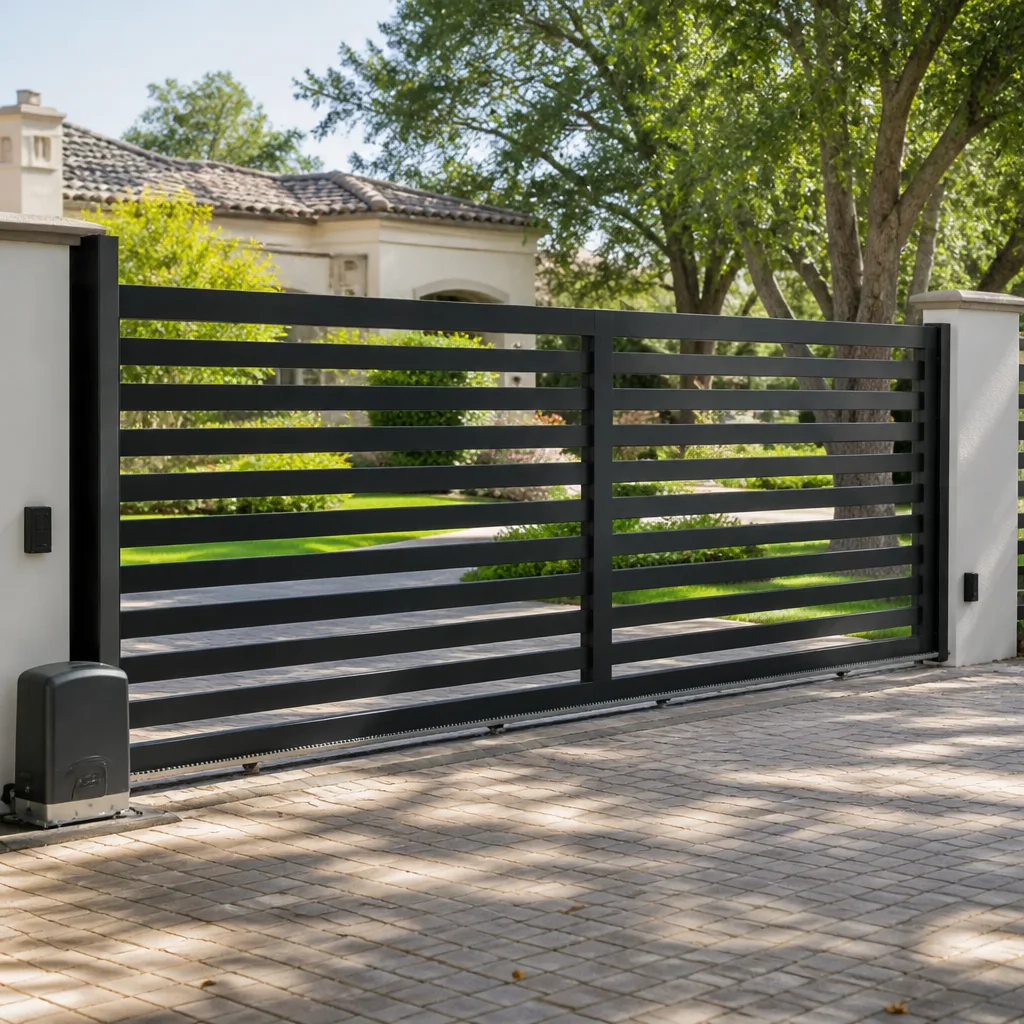 Sliding driveway gates
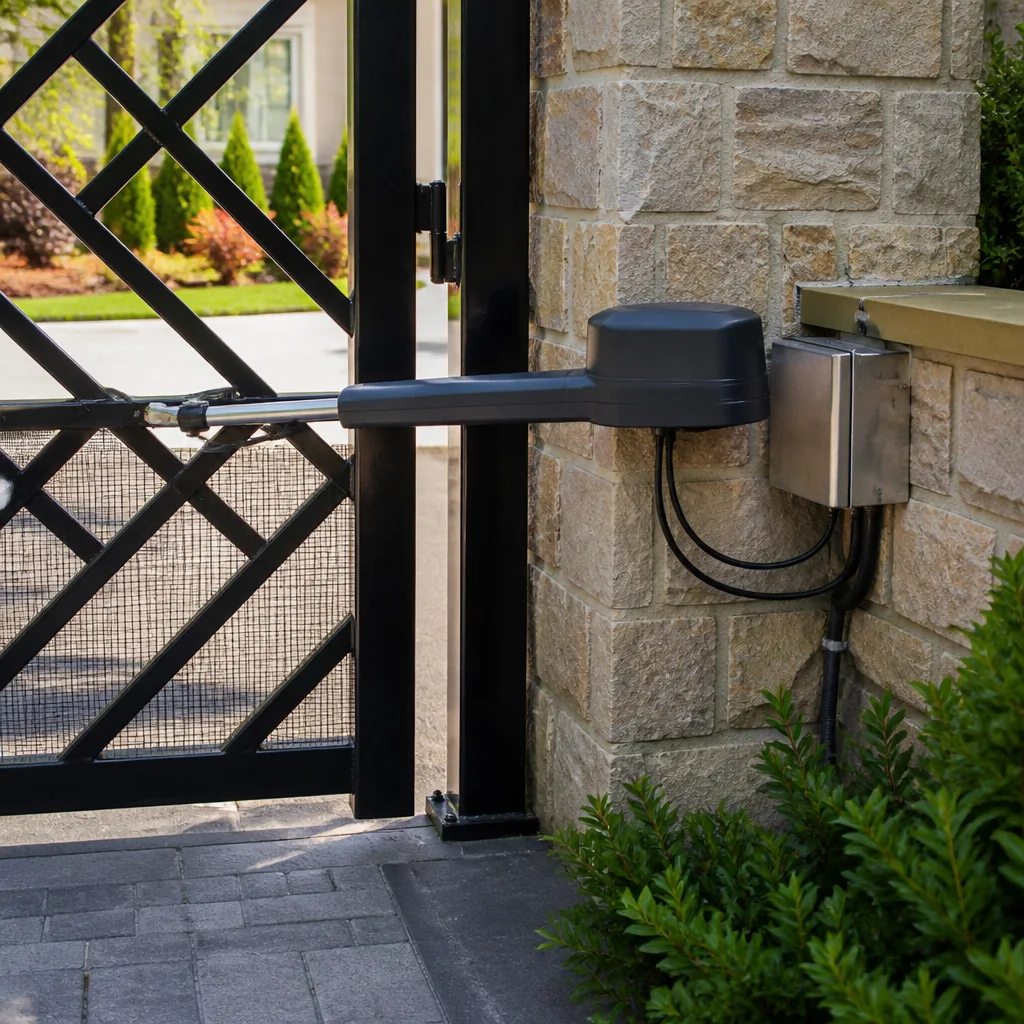 LiftMaster operators
Free on-site gate assessment - hinges, posts, and your LiftMaster or Nice gate operator checked before anything is quoted
The assessment is free and the quote is the invoice.
Get your free estimateGate Repair Cost Breakdown: The Naperville Homeowner’s Reference for 2026
Most gate repair quotes in Naperville aren’t wrong. They’re just answering a different question than the one you asked. You called about a gate that won’t open. The quote you got back is for a package: new operator, new wiring, new safety edges, sometimes a whole new gate. Some of that work may be necessary. Much of it usually isn’t. The spread between a $200 fix and an $800 quote for the same failed limit switch isn’t random pricing – it reflects whether the company diagnosed the actual broken part or priced a replacement. This guide gives you component-level reference ranges for 2026, the fee traps to watch for on a quote, and a repair-versus-replace formula you can run yourself before you sign anything in Naperville.
Quick Answer
Gate repair in Naperville typically runs $150 to $350 for common mechanical fixes like hinges, rollers, and limit switches, $250 to $550 for control board or sensor replacement, and $480 to $720 for a residential operator swap on parts and labor combined. Emergency calls add an after-hours fee set by each company. The final price is always set by the written estimate before any work starts.
Styles & brands we work with
- Wrought iron
- Wood & steel frame
- Farm & ranch
- Sliding driveway gates
- LiftMaster operators
Table of Contents
- What actually drives gate repair cost in Naperville?
- Component-by-component pricing for 2026
- Why labor rates differ between gate specialists and generalists
- How emergency and after-hours calls are priced
- Five cost traps to identify on a quote
- Repair or replace? How to run the math yourself
- How to read a gate repair quote line by line
- Common mistakes to avoid
What actually drives gate repair cost in Naperville?
Four variables set the price of any gate repair: the failed component, the brand, the gate type, and access. A hinge on a pedestrian swing gate is a small part with a short labor window. A control board on a FAAC slide operator that’s buried behind landscaping takes longer to reach, diagnose, and test. Both are “gate repairs” – the ranges are nowhere near each other.
Brand matters because parts availability and diagnostic complexity differ. A residential Mighty Mule operator has simpler electronics than a commercial BFT system with loop detection and intercom integration. We work on LiftMaster, FAAC, BFT, and Mighty Mule systems specifically, and the failure points are genuinely different across those four, not just the price tags. On a LiftMaster residential operator, most failures trace to the control board or the safety reverse sensor. On a FAAC swing operator, hinge-side mechanical wear and limit positioning cause more of the calls we see.
Gate type is the third variable. Swing gates have hinge and arm assemblies that wear at predictable points. Slide gates have track and roller assemblies and a different failure profile entirely – a gate that jumps track isn’t a motor problem, it’s a mechanical indexing problem, and the fix is different. Getting the gate type wrong on the initial diagnosis is one of the main reasons quotes come back with work you don’t need.
Access is the quiet cost driver nobody mentions on a quote. A gate operator set back in landscaping or mounted behind a masonry pillar adds handling time to every repair. If your property is in a neighborhood like Ashbury or White Eagle where decorative columns and paver aprons frame the gate, that extra access time is real labor and it’s fair for a company to reflect it. What isn’t fair is being charged a “specialty access” fee without a line item explaining what was accessed.
For a baseline understanding of what each failure mode looks like, see our gate repair service overview.
Component-by-component pricing for 2026
Here are the typical estimated ranges for common repairs on residential and light-commercial gates in Naperville for 2026. These are ranges, not fixed prices. Your written estimate is the final number, and it should reflect what your specific gate needs, not a package.
- Hinge replacement (swing gate): $150 – $280 per hinge, parts and labor combined. Multiple hinges on one gate bring per-unit cost down.
- Roller and track repair (slide gate): $180 – $400, depending on how many rollers are replaced and whether the track needs realignment.
- Limit switch replacement: $180 – $320. This is the most frequently misdiagnosed repair – “the gate won’t fully open” is often a limit switch, not a motor.
- Control board replacement: $250 – $550, with the upper end on commercial-grade boards like BFT or DoorKing.
- Safety reverse sensor or photo-eye replacement: $120 – $240 per unit.
- Loop detector repair or replacement: $300 – $650, since access to the loop, saw-cut, and re-seal work are included.
- Intercom module or access pedestal repair: $200 – $500 depending on whether wiring is reused or pulled new.
- Full operator replacement (residential): $480 – $720 installed on a LiftMaster-class residential operator, parts and labor combined.
- Full operator replacement (light commercial): $850 – $1,400 for a FAAC or BFT-class operator with standard access controls.
- Battery backup or solar panel: $180 – $450 depending on system size.
- Manual gate alignment and hardware service: $150 – $350 for a full alignment on a stuck or dragging manual gate.
If you’re looking at an electric gate repair bill specifically, the diagnostic approach is different from mechanical repair: we test the operator, the control board, the sensors, and the wiring in a single visit rather than assuming the motor is at fault. That’s one of the reasons we classify electric work separately from mechanical gate repair.
Why labor rates differ between gate specialists and generalists
A general handyman quoting $75 an hour sounds like a bargain against a gate specialist quoting $110 an hour. For a gate repair, the “bargain” often costs more by the time the invoice lands. The gap isn’t always justified, and knowing why it exists helps you judge a quote.
Three practical factors separate the rates:
- Diagnostic accuracy. A gate specialist identifies the failed component faster. A generalist may replace a motor when the board is the problem, then return for the actual fix on a second visit.
- Parts sourcing. Brand-specific failure knowledge reduces wrong-part orders and second visits. We stock nothing on trucks (we connect you with independent technicians who bring what’s needed), but familiarity with a spec trade matters.
- Commissioning and testing. Every repair on an automated gate should end with full open-close cycles, sensor verification, and force adjustment. A generalist may skip this step; a real grief of a comeback call lies in an untested safety reverse.
Where the specialist rate isn’t justified is where the “specialist” quotes above the market for the same repair without explanation. That’s why a reference price matters. A control board replacement should land in the $250 – $550 band, not $900, no matter how the quote is dressed. If your gate is a Mighty Mule residential operator and the quote is for a full operator swap to fix a sensor issue, that’s a generalist pattern disguised as a specialist quote. If it’s a BFT commercial board with a loop detector, $900 may be entirely correct. Same word on the quote, different repair.
Our technicians have up to 8 years of experience with automated gate systems, and that’s the kind of tenure that matters on a diagnosis: familiarity with brand-specific failure points saves time and often saves you a second visit. For the broader picture of Naperville gate systems, see our Naperville page.
How emergency and after-hours calls are priced
A legitimate after-hours surcharge covers the fact that a technician is working outside the normal dispatch window. That’s real. What isn’t legitimate is a surcharge that compounds with a “specialty access” fee, a “diagnostic” fee, and a “trip” fee – each labeling the same cost-of-doing-business item. One fee should cover one thing.
Here’s how to read the surcharge line:
- One surcharge, clearly labeled. A single “after-hours service fee” or a single stated rate is clean. Two or three overlapping fees with different names is padding.
- The surcharge should apply to the call, not per component. If the after-hours fee is quoted as a percentage of the repair rather than a flat call premium, ask why.
- No surcharge on a scheduled repair. Same-day service during normal dispatch hours is not an emergency call. If you booked a repair for the next morning, no after-hours premium should appear.
- Written estimate before work starts. Even on an emergency call, you should see the itemized price before the technician touches the gate. If you’re told the estimate comes after the work, that’s a red flag.
For clarification on our dispatch and phone availability, call (888) 569-7811. We answer 24/7. Fast dispatch from 7am to 7pm, Sunday through Friday.
What counts as legitimate urgency? A gate that won’t open for a delivery, a gate stuck half-open blocking a driveway, a commercial gate preventing access for a scheduled vehicle. A sensor that flickers but works, a hinge that squeaks but moves, or a gate that opens slowly – those are same-day repairs, not emergencies. Any company quoting an emergency premium for a squeak is charging you for their schedule, not your problem.
Five cost traps to identify on a quote
The pricing variability we described at the top of this guide most often comes from five identifiable patterns. Recognizing them on a quote is the single highest-value thing you can do before signing.
- The “operator included” quote for a sensor fix. A faulty photo-eye or limit switch is a repair. If the quote includes a full operator replacement alongside the sensor, ask which one is actually failing and demand a line item for each repair separately.
- The bundled full-gate replacement on a component repair. If the gate frame is sound, hinges and rollers are repairable at a fraction of a new gate. A quote that jumps straight to “new gate” without a mechanical inspection is a sales quote, not a repair quote.
- The “full electrical rewiring” on a control board swap. Most board replacements reuse the existing low-voltage wiring. New wiring should be justified on its own line if it’s actually needed.
- The mystery fee. A “diagnostic fee” that isn’t itemized or a “materials handling” charge with no detail is padding. Ask what it covers and get it in writing.
- The “commercial rate” on a residential gate. A LiftMaster residential operator isn’t quoted at a commercial rate. If your gate is a residential swing or slide, the pricing should reflect residential complexity regardless of system age.
Ask for the quote itemized by repair. A good quote lists each component separately with its own price and a short description of the failure. A poorly-diagnosed quote bundles everything into one number because the company hasn’t actually diagnosed it. That’s the sign to get a second look.
The flip side is also worth knowing: good quotes are often more expensive up front because they include the full diagnostic. If a company charges $80 for an on-site diagnostic and then quotes you $180 for a limit switch, that $80 was the alternative to a wrong diagnosis. It’s a fair trade.
Repair or replace? How to run the math yourself
The break-even point for repair versus full system replacement isn’t a secret formula, and you don’t need a calculator app. Here’s how to run it:
- Get the repair quote for the current failure. Say it’s a control board: $250 to $550.
- Get the full replacement quote for the same system. Say it’s a residential operator installed at $480 to $720.
- Estimate the next two years of likely failures. If you’ve had three repairs in the last 18 months, the replacement math starts to favor the new unit quickly. If your last repair was two years ago, the system has life left.
- Apply the tip-back test. If the repair cost exceeds roughly 50% of a full replacement, replacement usually wins on long-term cost. If the repair is under 30% of replacement, repair is nearly always right unless the system is failing elsewhere.
- Check the age and brand lifecycle. A board replacement on a known-good operator brand is a strong repair. A board replacement on a system that’s been failing three and a half repairs deep is a hint that you’re paying to delay – not to repair.
Here’s the math in one line: repair vs. replace tips toward replacement when (repair cost) ÷ (replacement cost) is above roughly 0.5 and the system has multiple concurrent faults. One fault, one fix. Three faults on one quote, replacement deserves a hard look.
The gate type matters here too. A four-year-old Mighty Mule residential slide where the operator is failing but the gate structure is sound is usually a repair. A heavier FAAC or BFT swing system with worn hinges, a burning board, and a sensor that won’t calibrate is usually a replace – not because the brand is bad, but because three independent failures on a system mean the whole system is heading toward a fourth.
How to read a gate repair quote line by line
A useful quote has a specific structure. If it’s missing any of these six lines, ask for them before you hand over a card:
- Diagnosis line. What the company believes the failure is, in plain terms. “Control board failure diagnosed by no response on manual cycle + dead status LED” is a diagnosis. “Gate repair needed” is not.
- Part lines. Brand and model number of each replacement part (not just “board” or “sensor”).
- Labor line. Hours estimated and the labor rate, or just a combined-price line if it’s a fixed-price quote.
- Additional work identified but not quoted. What else was noticed on inspection. This tells you what’s coming and gives you the option to defer.
- Exclusions line. What the quote does NOT include, like re-painting the gate, ground repair, or wiring beyond the operator.
- Estimate validity. The date by which the quote holds, and the words “final price set by written estimate” somewhere in the document.
If a quote is missing the part lines or the exclusions line, the door is open for an invoice bigger than the quote. This is the second fear most homeowners have after the initial breakdown itself, and the way to close it is to insist on the written estimate before any work starts.
Common Mistakes to Avoid
- Accepting the first quote without a reference price. In Naperville’s gate repair market, identical repairs run a factor of four or more across companies. Get a second quote when the number is outside the ranges above. The comparison takes a phone call and it can save a couple hundred dollars.
- Calling a handyman to “take a look” at an electric gate. If the gate is an automated system – LiftMaster, FAAC, BFT, Mighty Mule – the repair needs a technician who knows the brand. A generalist can often replace a hinge; they often can’t diagnose a board and a sensor in the same visit. Two visits at a low rate costs more than one at a proper rate.
- Authorizing a repair on a verbal quote. Ask for the estimate in writing, even if it’s a short text message. The written number is the one you can hold a company to. Verbal estimates drift.
- Missing the “additional work” line on a quote. A quote that only lists the current fix but no noted future issues is giving you half the picture. You’ll end up calling again next month and starting over.
- Treating a squeak as an emergency. An urgent repair is a gate that won’t open. A noisy gate that still operates is a same-day repair, not an emergency call. Don’t pay a premium for a squeak because the phone script framed it as one.
- Assuming brand equals reliability before diagnosis. All four home-gate brands we work on – Mighty Mule, LiftMaster, FAAC, BFT – have failure modes. Brand familiarity tells a technician where to look. It doesn’t tell them what’s broken, and it shouldn’t dictate the price of the repair.
- Ignoring gate structure in the repair conversation. A control board fails. But so do hinges, rollers, and posts over time. A repair quote that only touches the operator without checking the gate’s mechanical state isn’t finished. Ask explicitly if the mechanical components were inspected.
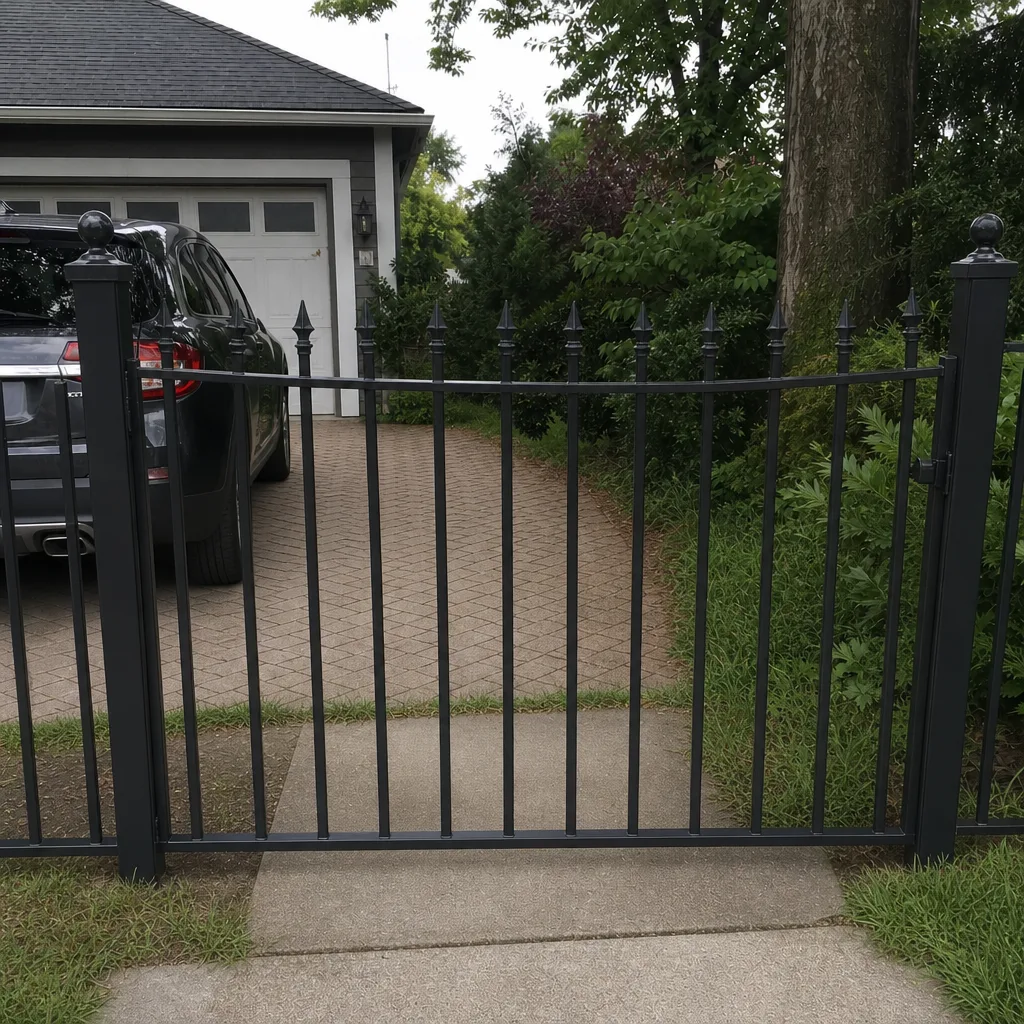
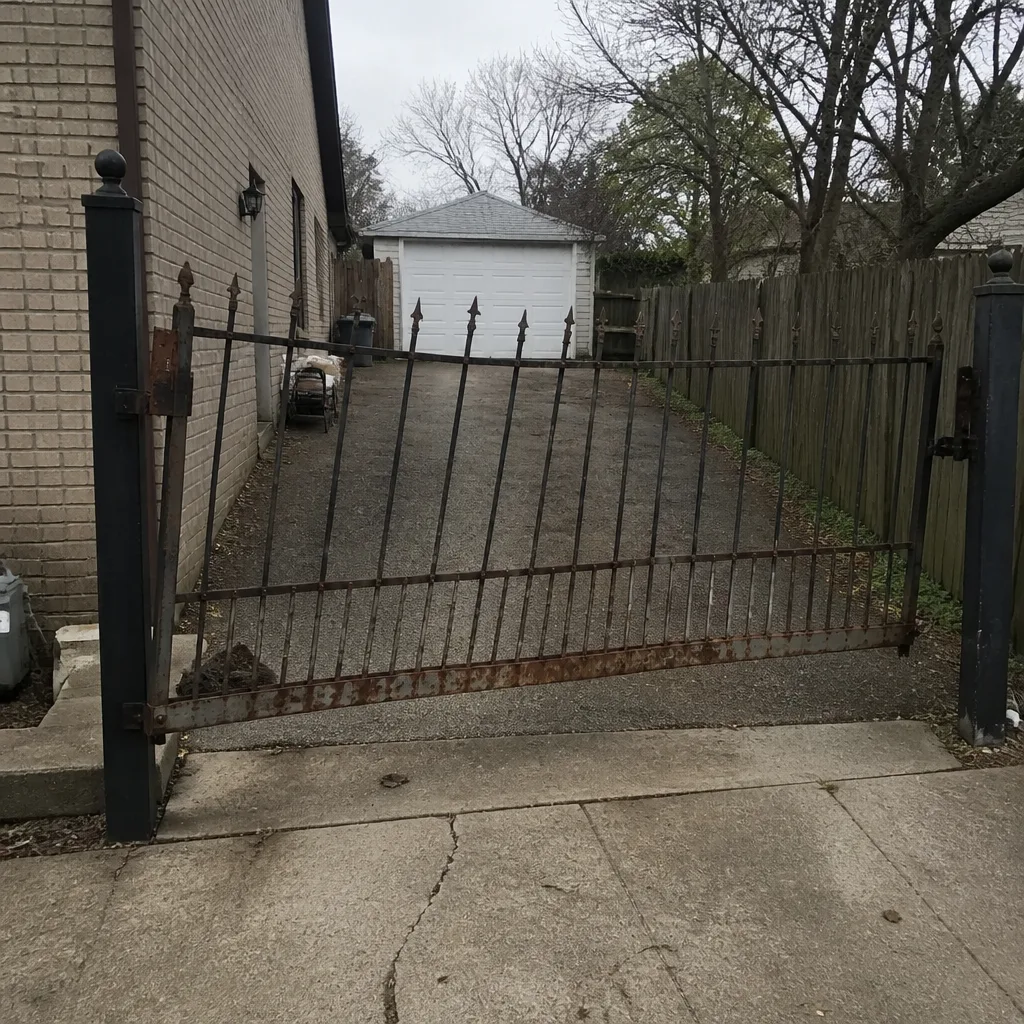
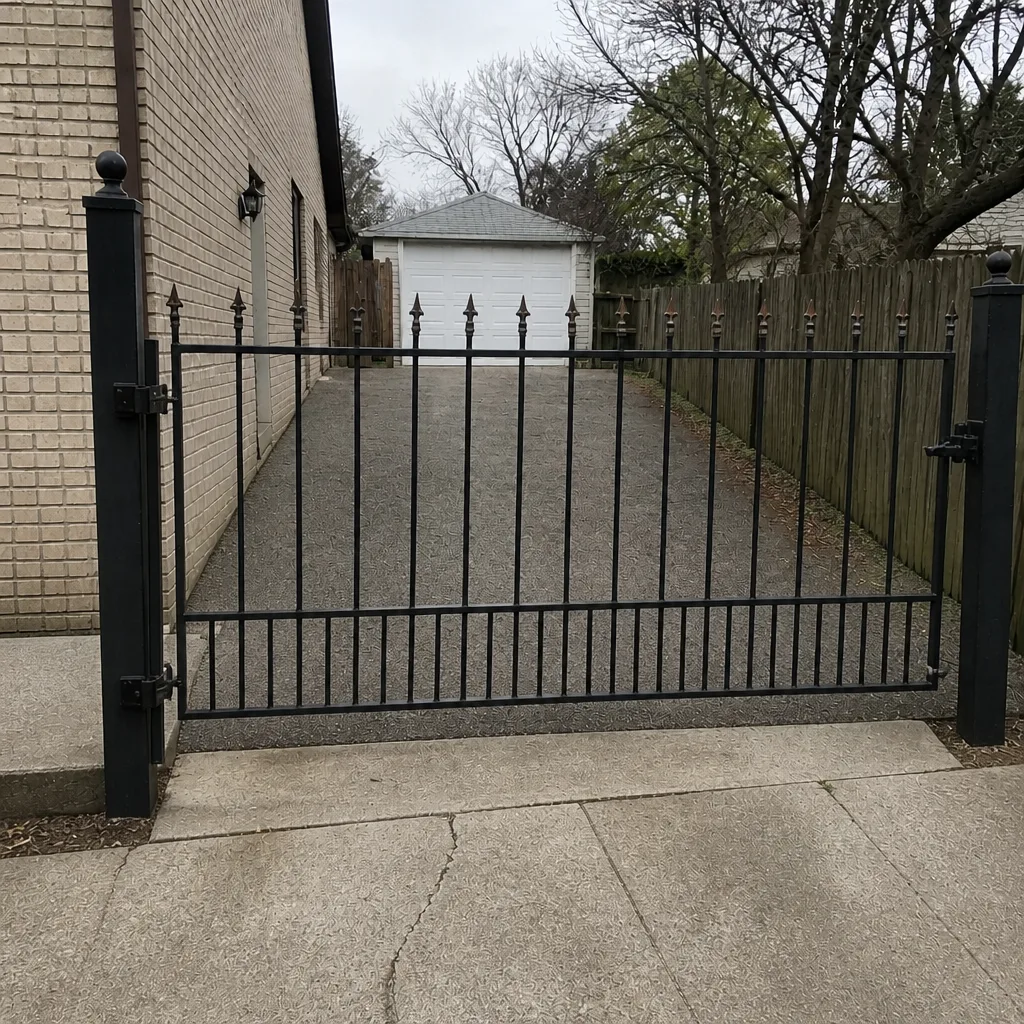
See the difference
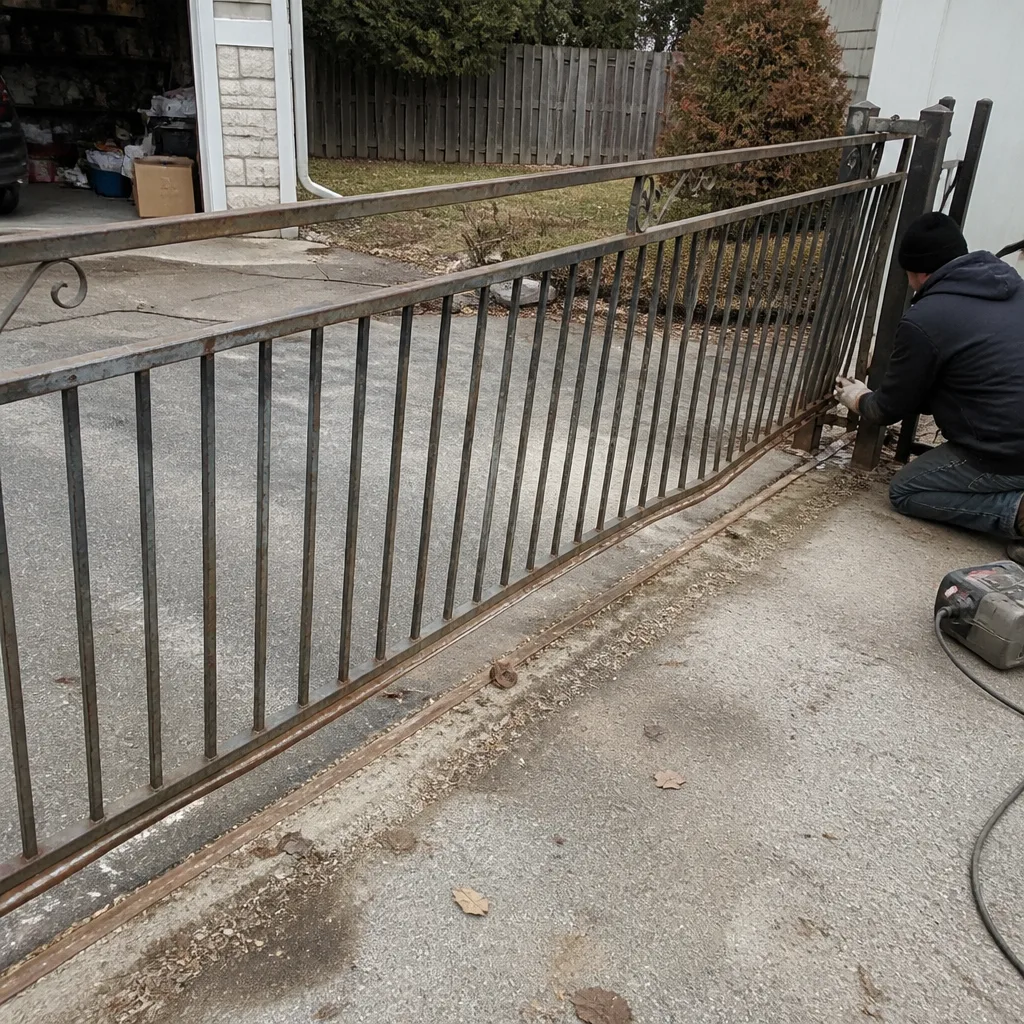 Before
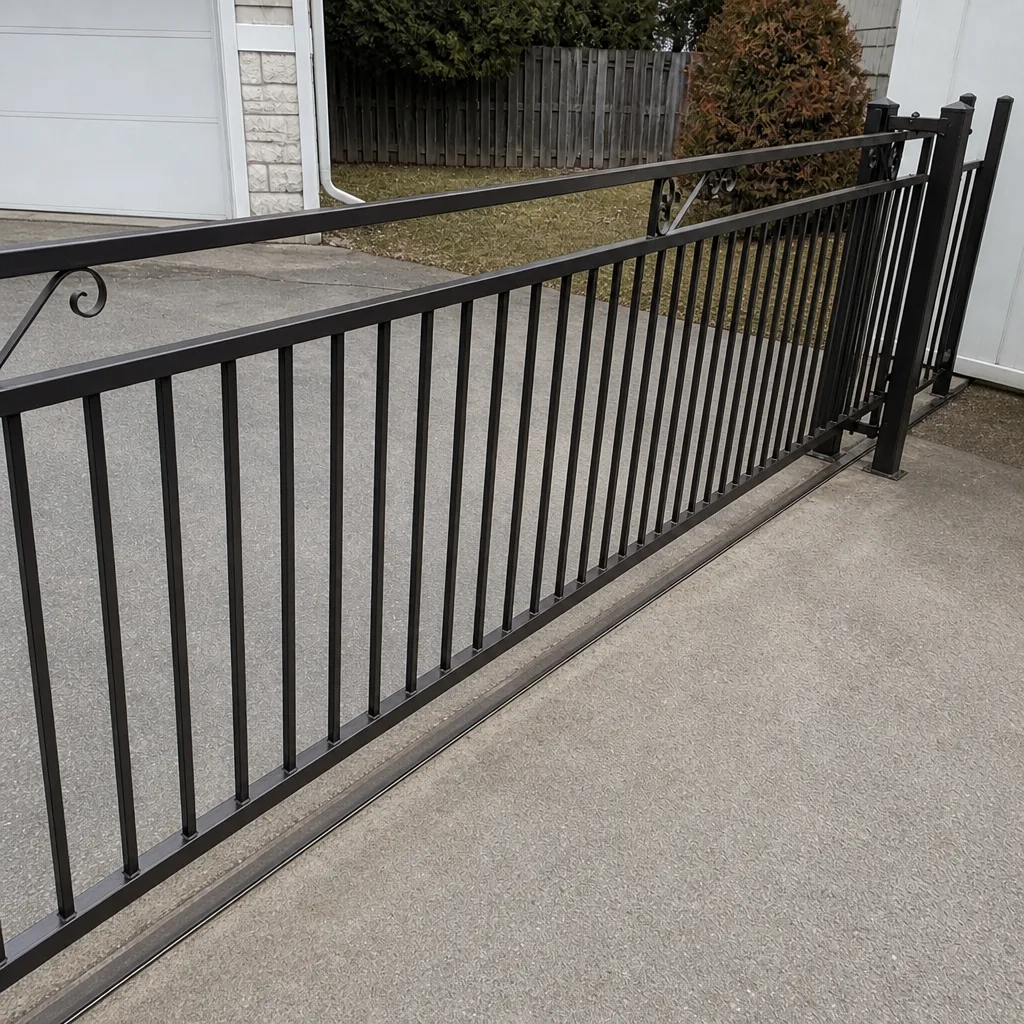 After
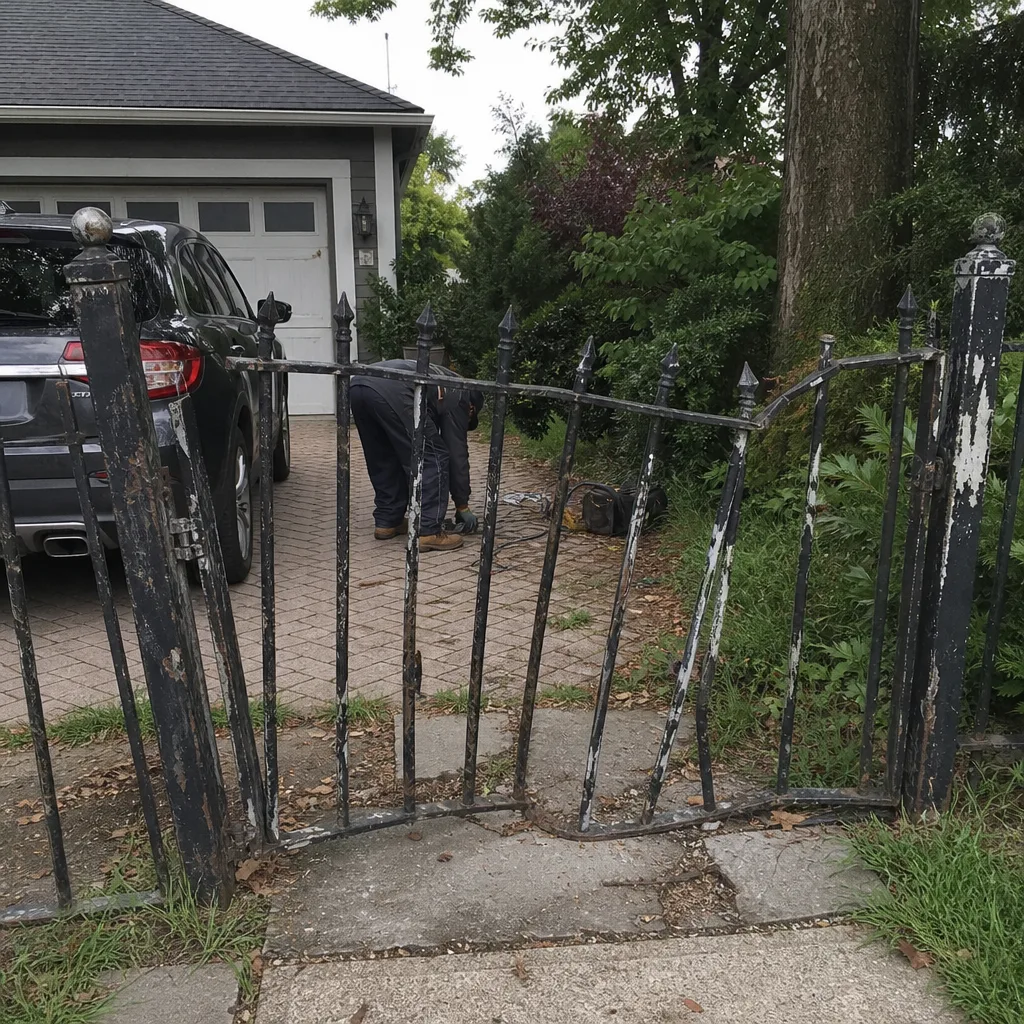 Before
 After
 Before
 After
When to Call a Professional
If your gate won’t respond to the remote or keypad, the operator runs but the gate doesn’t move, the gate moves erratically, safety sensors won’t stop the gate, or a slide gate has jumped its track, that’s a gate repair call, not a DIY job. Electric gate hardware carries live line voltage at the operator, and a heavy swing or slide panel can crush fingers badly enough to require medical attention – the panel itself is a hazard as much as the electricity. Don’t probe the operator with a multimeter unless you’re qualified to work on line-voltage equipment. Don’t try to convert a manual gate to an automated one without a proper electrical run and a competent operator installation.
Gate Repair Naperville offers free estimates in Naperville – call (888) 569-7811. We work on LiftMaster, FAAC, BFT, Linear, Viking, Ghost Controls, DoorKing, Elite, and Mighty Mule systems, diagnose mechanical and electrical faults in a single visit, and handle repair, electric troubleshooting, and new installation under one call. Estimates are free and the price you agree to before work starts is the price you pay. We answer 24/7. Fast dispatch from 7am to 7pm, Sunday through Friday.
Frequently Asked Questions
Typical Naperville gate repairs run $150 to $350 for common mechanical fixes and $250 to $550 for control board or sensor issues, with operator replacement running $480 to $720 for a residential system. These ranges are estimates – the written estimate after diagnosis sets your final price. Call (888) 569-7811 for an exact quote, free of charge.
Same-day service is often available for gate repairs in Naperville, and we dispatch during 7am to 7pm Sunday through Friday. A same-day repair isn’t priced at a premium. Call (888) 569-7811, we answer 24/7, and we’ll book the next available opening – a call outside dispatch hours gets scheduled into the next slot, Sunday through Friday.
Because the higher quote often isn’t for the same repair – it’s for a package that includes the failed part plus other work the company believes is necessary. Get the quote itemized by component, then compare only the line items that address the actual failure. If the failed part is a limit switch and the quote includes an operator replacement, ask which one is broken. Call (888) 569-7811 for a component-level estimate.
Our estimate is free. Some companies charge a diagnostic fee and credit it toward the repair; others don’t. What matters is that the price is quoted and agreed before work starts, and that any fee is disclosed up front. Ask before you book. Call (888) 569-7811 to set up a free estimate.
If one component has failed and the rest of the system is sound, repair wins almost every time. If you’re looking at a control board plus a sensor plus worn hinges, replacement usually makes more economic sense – repair cost above roughly 50% of a full replacement is the usual tipping point. Call (888) 569-7811 and we’ll run the numbers with you.
Yes. We work on Mighty Mule, LiftMaster, FAAC, BFT, Linear, Viking, Ghost Controls, DoorKing, Elite, and Mighty Mule systems. Brand familiarity matters in gate repair – knowing the specific failure points on a LiftMaster residential operator versus a FAAC commercial operator shortens the diagnostic. Call (888) 569-7811 for a free estimate on any of those systems.
The Bottom Line
Gate repair pricing in Naperville varies by a factor of four because companies quote differently – some quote the failed component, some quote a package. The reference that anchors your decision is the component price: hinges $150 to $280, limit switches $180 to $320, control boards $250 to $550, and residential operator replacement $480 to $720. Get quotes itemized by repair, insist on a written estimate before work, and watch for the five bundling patterns we covered. If the repair cost crosses roughly 50% of full replacement and multiple faults are present, replacement usually wins. If your gate is a LiftMaster, FAAC, BFT, Linear, or Mighty Mule system that has stopped responding or is operating unreliably, the right next call is a specialist who can diagnose the mechanical and electrical sides together.
Call (888) 569-7811 for a free estimate. We answer 24/7. Fast dispatch from 7am to 7pm, Sunday through Friday. Our technicians have up to 8 years of experience across the major gate automation brands – we diagnose, quote, and repair the actual failure so you get a real price, not a package. For our Gate Repair Naperville service options, our licensing posture is state-licensed and insured, and the estimate is free whether you go with us or not.
Written by the team at Gate Repair Naperville.